Podcast Recording Studio West London with Green Screen
Ravenor Farm Studios offers an accessible, production-focused green screen space in West London designed for creators who need professional results without prohibitive costs. Whether you want long-form interviews, branded video shorts, or live-streamed events, our setup supports audio-first shows as well as visually driven video podcast recording. This guide explains how our facilities, crew support and equipment combine to deliver a polished episode from setup to final cut, and how you can plan a smooth booking and shoot day.
multi camera podcast studio options and workflows
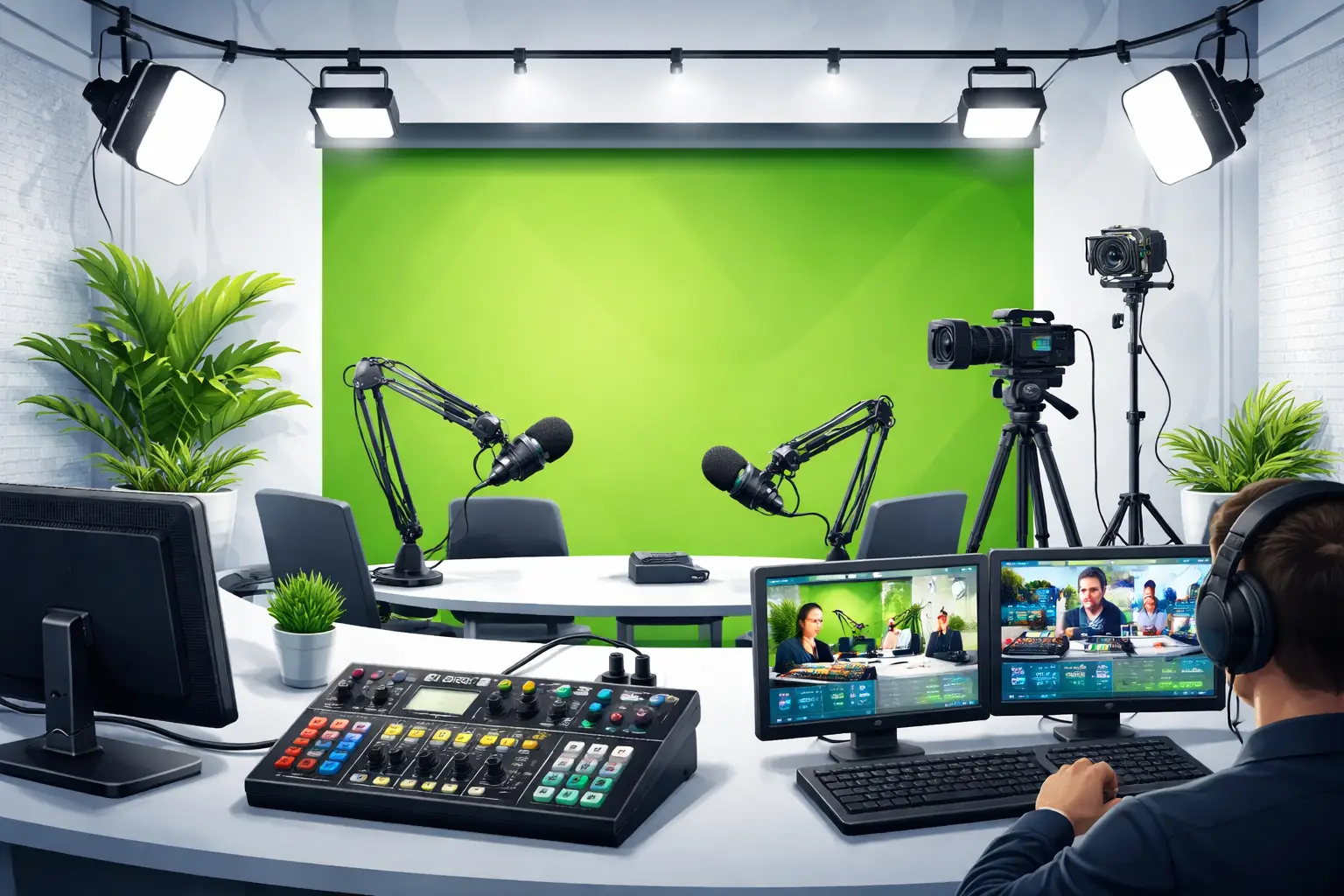
If your show benefits from several camera angles, a multi camera podcast studio reduces the post-production burden and improves audience engagement. At Ravenor Farm Studios we run simultaneous feeds to a switcher so a live director or engineer can perform a real-time mix. The result: minimal edit time, cleaner cuts, and the option to stream a finished program live. For creators focused on episodic shows or branded interviews, this workflow lets you record a confident, television-style program with a fraction of the post-production effort.
Typical multi-camera setup and roles
- Camera layout: a host camera, guest camera(s), and a wide master. Lighting keyed to the green screen to allow crisp chroma keying.
- Audio chain: dedicated desks and capture via console, paired with recorders such as a RØDECaster system or equivalent for backup.
- Production roles: director/producer, camera operator(s), and a podcast studio with engineer who manages sound, levels and on-the-fly edits.
RØDECaster Pro II studio features and benefits
We maintain a RØDECaster Pro II studio configuration as part of our audio-first package. That hardware provides tactile mixing, high-quality preamps and integrated effects that speed up voice processing for podcasts. For creators who prefer to handle their own editing, the RØDECaster Pro II studio produces clean, channel-separated files suitable for post, and for those who want escorted recording it pairs well with our engineer-led workflows.
Why choose a podcast recording studio with engineer
Booking a podcast studio with engineer transforms a recording from DIY to professional. An experienced engineer manages gain structure, mic placement, real-time processing and monitoring, which reduces retakes and prevents costly audio mistakes. Engineers also run sound checks and provide immediate solutions for acoustics, background noise or equipment quirks—allowing you to focus on content and performance.
Sample engineer responsibilities during a session
- Pre-session sound check and headphone mix setup.
- Live gain riding and de-essing to keep levels consistent.
- File management and delivery of multitrack stems or a mixed master at session end.
How a live cut podcast studio session works
For shows that want minimal editing, a live cut podcast studio approach produces a near-finished program in real time. Our engineers feed switched video and a mixed audio master to streaming and recording devices, enabling immediate upload or a short post session polish. This is ideal for sponsored content, time-sensitive interviews or live event coverage where turnaround is urgent.
Preparing for video podcast recording at Ravenor Farm Studios
To get the most from video podcast recording, plan your episode like a small TV shoot. Key practical steps include:
- Script anchors and segment timings so camera operators and the director can anticipate changes.
- Share any branding assets (graphics, lower-thirds, intro movies) ahead of the session so we load them into the switcher.
- Request our recommended mic list and dress/lighting notes to match your creative intent—full-body shots against green screen need different lighting to close-ups.
- Book a pre-shoot run or tech rehearsal when possible, especially with multi-camera shoots or guest talent.
We routinely accommodate remote guests, in-studio panels and hybrid setups. If you want to preview a similar booking, read about our podcast-focused facilities on our related page Podcast Recording Studio with RØDECaster in West London.
Production examples and day-in-the-life schedule
Here are two concrete, scenario-based schedules to help you visualize a booking.
Half-day interview with two cameras (typical)
- 09:00 Arrival and load-in, wardrobe and brief with producer.
- 09:30 Lighting and green screen set dressing; 20-minute lighting balance.
- 10:00 Soundcheck with RØDECaster Pro II studio and monitor mixes.
- 10:30 Rehearsal run and graphic check.
- 11:00 Record three segments with short breaks; live switching for minimal post.
- 12:30 Wrap, delivery of raw footage and final audio stems.
Full-day branded show with live cut and social edits
- 09:00 Load-in and creative meeting. Confirm sponsor reads and ad spots.
- 10:30 Full technical rehearsal and remote guest check.
- 11:30 Record show blocks with live cut; simultaneous edit station creates social clips.
- 16:00 Quick post-session polish, export final pro-res video and MP3 master, handover.
Technical checklist creators should confirm before booking
Before you arrive, confirm these items with the studio so your session runs smoothly:
- Number and type of camera outputs available (SDI/HDMI), and whether they support the specific codecs you need.
- Which microphones are included and whether lavaliers, dynamic or condenser mics are available.
- Provision of a RØDECaster Pro II studio or alternative console, plus multitrack capture options.
- Staffing: confirm if your booking includes a podcast studio with engineer and whether additional camera operators are provided.
- Green screen dimensions and floor-to-ceiling clearance to match your framing plan.
- Data transfer method for final assets (on-site hard drive, cloud upload, or drive courier).
If you want a visual tour of our venue and production areas, consider The Barn as an event and production space; read more about it at video production studio London at The Barn West London.
Deliverables and file types we provide
Typical post-session deliverables include multitrack WAV stems, a mixed stereo master, synced camera files and a switched program file. For video podcast recording we also supply ProRes or high-bitrate MP4 masters on request. Tell us your preferred delivery format at booking so we prepare capture settings in advance.
Pricing, bookings and what to expect on arrival
We keep bookings straightforward: packages are structured around studio time plus optional crew and equipment. During your booking confirmation we’ll outline the crew included, prep time, and load-out procedures. If you’d like to explore cost-effective half-day options or bundled days for episodic shows, our team will propose a tailored package when you enquire.
Start a booking or request a tour to inspect the green screen, check sightlines and test mic combinations. Use our online contact to schedule a site visit or ask for a sample recording from a similar session.
Diagnosis and Action Checklist
This checklist helps you confirm any uncertain technical or logistical details before booking so there are no surprises on shoot day.
-
What is uncertain: exact capture formats, number of simultaneous camera feeds, and which audio consoles are present.
Action: Ask the studio for a written equipment list that names camera models, switcher make/model, and the audio desk. - What to search in official sources: look for manufacturer specifications and compatibility notes. Search pages for terms such as “SDI output”, “frame rate support”, “multitrack recording”, “RØDECaster Pro II specifications”, and “green screen dimensions” on manufacturer and studio domains.
- Data to collect or tests to run: request a short tech rehearsal slot; during rehearsal record a 60–90 second test with your intended codec and camera angle, and ask for exported test files to examine color balance, audio levels and sync. Measure room noise by recording silence and checking noise floor in dB using audio software.
- Types of official sources to use: manufacturer product pages (for cameras, switchers, RØDE gear), industry bodies or standards (for recommended codecs and broadcast levels), and the studio’s official pages or PDF spec sheets. If acoustic data is needed, consult an industry guide or academic paper on studio acoustics.
- If multiple scenarios are possible: list the outcomes (e.g., “supports 3 SDI cameras” vs “supports 2 HDMI cameras only”). Decide which scenario fits your needs: choose the studio if hardware matches your required outputs, or request a temporary equipment upgrade or hire of additional camera operator/gear.
For manufacturer reference pages, consult domains such as rode.com for RØDE product specs and aes.org for industry guidance on audio practices.
Final practical tips and call to action
Bring branded assets and any sponsor copy in digital form, arrive 30–60 minutes early for microphones and make-up, and request a short test recording delivered after the session so you can confirm file integrity. If you want direct support planning a shoot or to book a production day, contact our bookings team to arrange a site tour and a tailored crew plan. For creators focused on affordable, professional results near Heathrow and West London, Ravenor Farm Studios combines green screen capability, live cut workflows and engineering support to elevate your podcast and video productions.
Ready to tour the studio or discuss a series package? Contact us to schedule a visit or ask about our production bundles.