

Commercial photography studio London hire West London
Choosing the right studio for a commercial shoot in West London means matching facilities, crew needs and logistics to your creative brief. This guide walks you through practical, scenario-driven decisions for product and advertising shoots, music video prep, live streaming and high-end commercial photography. It highlights what to check on site, how to compare dry hire vs full-service options, and how to structure an efficient booking and shoot day to reduce risk and cost.
filming studio hire London options and what they mean for commercial shoots
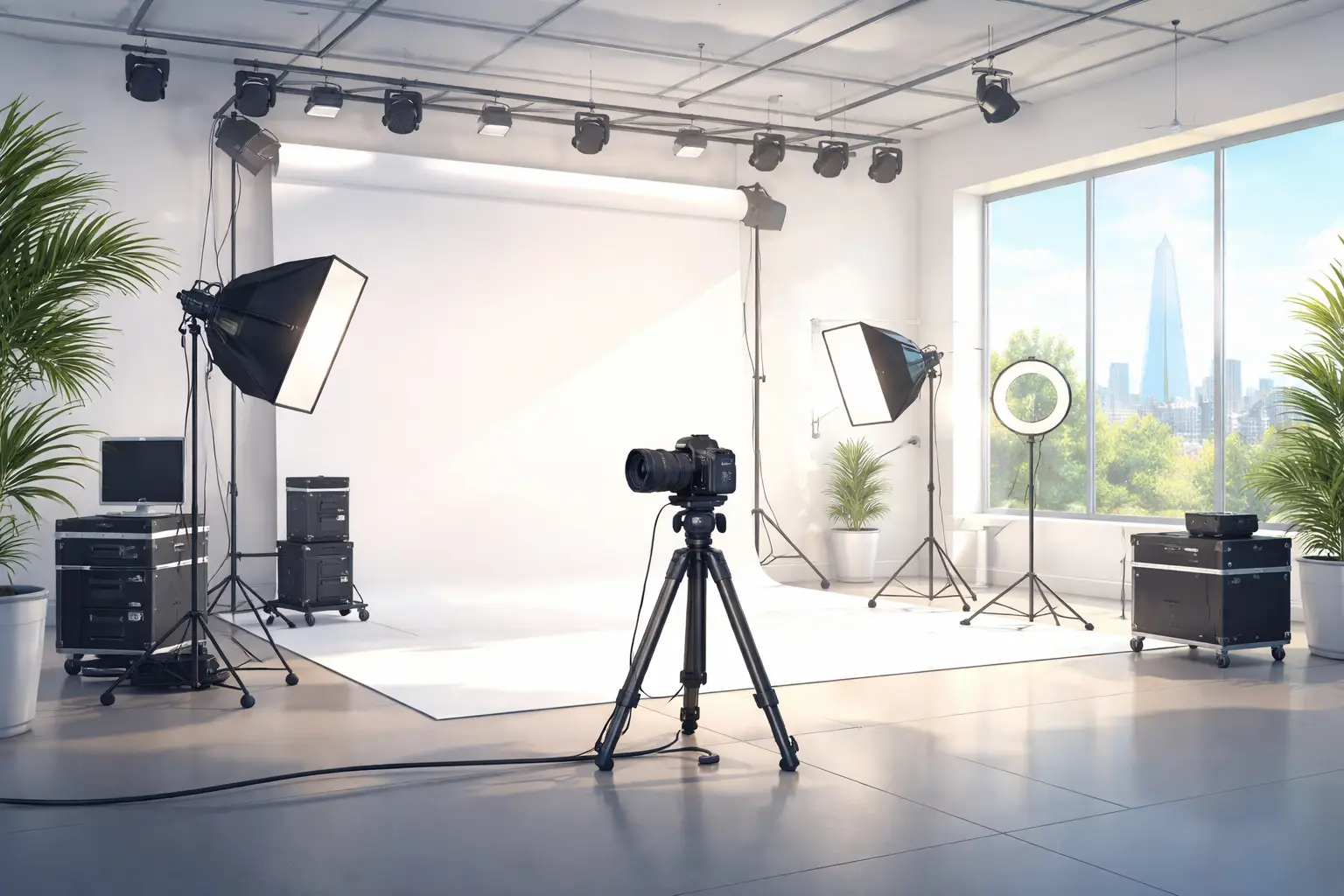
Studios in West London range from compact daylight studios for product photography to large soundproof spaces used for broadcast, music video and small film units. When you search for filming studio hire London or film location hire London, note whether a provider offers dry hire (space only), part-service (crew and equipment add-ons) or full-service packages with technical support and production management. Each model affects your schedule, crew size and budget planning.
Key features to prioritise for commercial photography studio London bookings
- Space and ceiling height — product shoots and sets need clear floor plans and accurate measurements.
- Power capacity and distribution — multiple strobes, tungsten fixtures and video lights require confirmed circuit details.
- Lighting infrastructure — on-grid rigs, available stands, grip kit and blackout options for controlled light.
- Cyclorama and floor finishes — white infinity curves, black floors or textured surfaces affect setup time and retouching needs.
- Parking and load-in — direct vehicle access, loading bays or lift access save hours during turnarounds.
- Soundproofing and noise sources — essential when your shoot includes live audio or location dialogue.
- Green screen and background options — confirm sizes and seam-free panels if you’re planning keying or compositing.
- Onsite facilities — client viewing area, makeup/wardrobe, kitchen, and secure kit storage for valuable gear.
- Wi‑Fi and streaming infrastructure — for live shoots, confirm bandwidth, wired ethernet and encoder support for live streaming studio London needs.
Dry hire versus full-service choices for product photography and commercial shoots
Dry hire studio London gives you flexibility and cost control if you bring your own crew and kit. Full-service hire includes technicians, kit packages and on‑call problem solving which can speed setups and mitigate technical risk. For complex shoots with multiple set changes, or when you need specialist lighting or camera support, the extra cost of a full-service or part-service package often translates to a smoother day and less overtime.
Practical pre-booking checklist
- Confirm the usable studio dimensions, cyclorama footprint and ceiling height in metres (or feet) and request a scaled floorplan.
- Request an electrical schedule: number of circuits, amp rating, and location of consumer units.
- Ask for a kit list if any kit is included and a clear hire rate for additional equipment.
- Check load-in access and parking arrangements for vehicles and catering vans.
- Verify location noise constraints, neighbouring businesses and permitted hours.
- Confirm on-site facilities for clients, talent and crew (wardrobe, makeup, rest areas).
- Book a pre-shoot site visit or schedule a technical walk-through on the morning prior to shoot day.
Step-by-step scenario: product photography day in West London
Example plan for a one-day product shoot using a dry hire studio:
- 48–72 hours before: confirm access times, parking permits and courier arrival windows with the studio manager.
- Day before: deliver large fixtures and props; confirm flooring protection and footprint with on-site staff.
- 06:30–08:00 load-in and set construction — secure rigging points, assemble background and test power distribution.
- 08:00–09:30 lighting tests and camera frame tests with the client present to lock look and white balance.
- 09:30–13:00 shoot primary packshots; rotate products on a dedicated table to maintain consistency.
- 13:00–14:00 lunch and kit maintenance; recharge batteries and verify card backups.
- 14:00–17:30 creative shots, retouch pass where required and finalize delivery file specs with client.
- 17:30–19:00 pack down and secure media; store raw files in multiple locations before clearing site.
How to evaluate a space for music video studio hire London or broadcast needs
Music video and broadcast projects often need both production space and control room capabilities. When considering music video studio hire London look for: high ceilings, rigging points for lighting and camera cranes, soundproofing for playback, and a dedicated area that can function as a mixing or live-sound control room. For broadcast or video podcast work validate multicamera cabling pathways, comms systems and the availability of a technical operator who understands live switching.
Onsite technical tests to run before committing
- Power soak test — run your hottest lights on-site to check for circuit trips and voltage drop.
- Lighting blackout test — confirm blackout curtains and reflective surfaces to prevent light bleed.
- Sound check — play loud playback to discover external noise and internal reverberation issues.
- Network speed test — use a wired connection to verify upload bandwidth for live streaming studio London sessions.
Booking negotiation tips and common terms to confirm
Negotiate clear terms for overtime rates, cancellation windows, kit replacement liabilities and insurance requirements. Ask whether the studio offers kit insurance add-ons and whether they require production insurance certificates. Confirm who is responsible for set damage and how security is handled for high-value equipment.
If you want an in-depth guide to typical studio packages and what Ravenor Farm Studios offers for professional teams, consult the studio overview and booking guide available internally on the site.
Professional studio hire West London Ravenor Farm Studios
Production day best practices to reduce risk and overruns
- Create a shot list with time allocations and a realistic call sheet; circulate it 24 hours before call time.
- Label and log all media cards to a single naming convention and assign a dedicated media manager for backups.
- Keep a small contingency kit of grips, gaffer tape, bulbs, DMX cables and batteries on-site.
- Run a morning brief with department heads to confirm timings, safety concerns and lunch windows.
filming location London and film location hire London considerations for mixed-location projects
When your schedule mixes studio days with on-location shoots search for filming location London attributes that complement studio work: proximity to the studio for fast transfers, available parking for trucks, and permissions for street closures or generator use. For film location hire London, always factor travel time, local noise regulations and the need for location releases into your schedule and budget.
Diagnosis and Action Checklist
- What is uncertain: exact usable dimensions, electrical capacity, load-in access, permitted hours, noise constraints, and on-site kit availability for your specific shoot.
- What phrases to look for in official or provider documents: “studio floorplan”, “ceiling height”, “electrical schedule”, “loading access”, “noise policy”, “fire egress”, “insurance requirements”, “house rules”, “equipment inventory”.
- Data to collect or tests to run:
- Request and save a scaled floorplan and labelled photos of the main space and load-in route.
- Obtain the electrical schedule with circuit amperage and socket positions; record serials or IDs of onsite kit.
- Do an on-site power soak test with your heaviest fixtures and a live noise check during peak external hours.
- Measure on-site upload test using a wired ethernet device; record Mbps for upload and latency.
- Collect contact details for the studio manager, technical lead and any subcontracted renters or security staff.
- Which official sources to consult:
- Studio-supplied technical pack and terms of hire (primary).
- Local authority or council pages for street permit and noise restrictions relevant to the studio postcode.
- Fire authority guidance for occupancy and egress if your set builds changes certified capacities.
- Industry guidance from recognised bodies for health and safety on sets (e.g., crew unions or H&S frameworks) when applicable.
- How to interpret multiple possible outcomes:
- If power tests show circuit overload risk: arrange for additional distro or schedule lighting changes to reduce concurrent draw.
- If noise checks reveal intermittent external noise: move critical audio capture to studio rooms with better soundproofing or plan ADR/session recording elsewhere.
- If load-in access is restricted: book a longer load-in window, arrange smaller transfer vehicles, or confirm lift usage with building management.
Final checklist before you sign the booking
- Have a signed hire agreement with clear dates, times, overtime rules and cancellation terms.
- Confirm the contact for the day and a backup contact for technical or access issues.
- Verify that invoices and payment terms match your production purchase order and that any deposits are documented.
- Send the final call sheet and floorplan to the studio 48 hours before call time and confirm arrival procedure for vans and couriers.
Using this approach will help you select the right space for commercial photography studio London needs and related production work such as filming studio hire London, film location hire London or music video studio hire London. Clear technical checks, an efficient booking process and scenario-tested run sheets will reduce surprises and keep your shoot on schedule.