

Green Screen Studio Hire for Professional Video in London
Choosing a green screen studio for a professional video production removes many variables that complicate location shoots. In West London, a controlled studio environment speeds setup, simplifies lighting and sound control, and gives producers creative freedom to composite complex scenes. This guide explains the practical benefits, production workflows, and booking considerations you should weigh when hiring a green screen studio for corporate video, broadcast, social content or film work.
Why a green screen studio makes production smoother
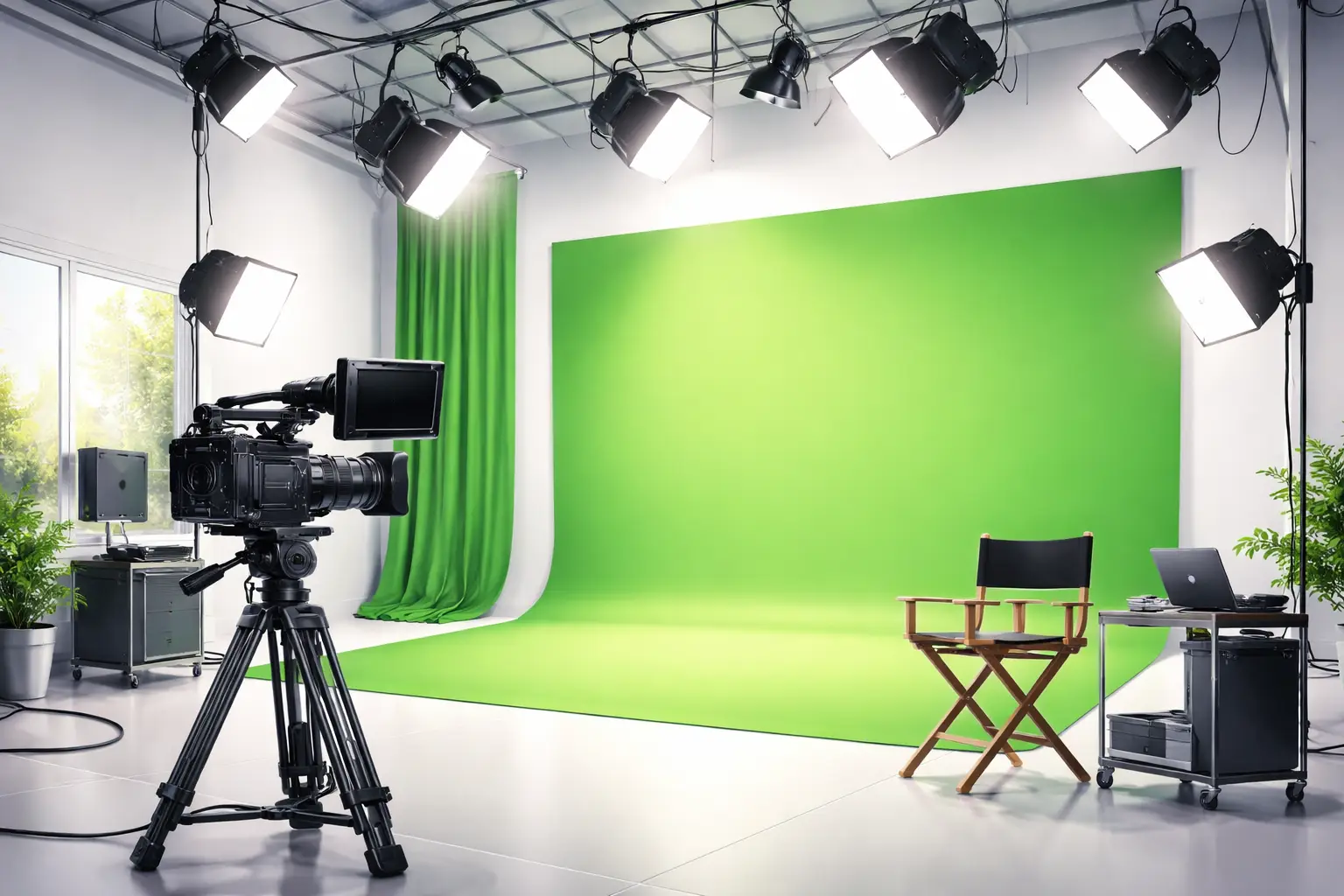
A dedicated chroma-key studio delivers repeatable lighting, flat and even backgrounds, and reliable camera positions. That predictability reduces retakes, lowers post-production complexity for keying and tracking, and shortens turnaround. For content creators and production teams working on brand spots, product demos, music promos or virtual sets, the studio approach converts location unknowns—busy public spaces, variable daylight, unpredictable noise—into repeatable outcomes you can schedule with confidence.
Key practical advantages
- Consistent lighting and background control that make chroma keying faster and cleaner in post.
- Secure, private space for client-led shoots, talent preparation and controlled access.
- On-site technical support and standardised kit availability that reduce gear logistics.
- Flexible scheduling without the limitations of public permissions or seasonal daylight.
How studio hire Ealing helps film and content teams
When you search for studio options near West London, consider facilities that combine green screen capability with production services. Ravenor Farm Studios operates in Greenford between Central London and Heathrow and offers fully equipped spaces for film, TV, podcast recording, photography, live streaming and content creation. That environment supports both short-form social content and longer, multi-day shoots with technical crew and dry hire options.
Practical benefits specific to a West London studio include easier logistics for London-based crews, access for travelling talent arriving via Heathrow, and proximity to agency and post houses across the city. If your brief includes an event component, a studio that also facilitates event venue hire West London or event space hire London gives you the convenience of staging presentations, screenings or client showcases in the same complex.
How different projects use a green screen studio
A green screen studio adapts to many formats. Here are practical scenarios showing how teams use the space.
Broadcast and film
For TV segments or film VFX plates, a chroma key stage enables controlled multi-angle coverage and headroom for motion tracking and digital set extension. On-set monitoring and metadata capture are essential: they keep post teams aligned on camera position, lens data and exposure info.
Corporate video and marketing
Brands use green screen to place spokespeople into custom virtual environments or to produce product animations with clean isolation. When creative direction changes mid-shoot, a studio reduces the need to reschedule external locations.
Social and long-form content
Content creators and YouTubers working with social media formats benefit from quick scene changes and consistent lighting for series production. A studio with social media content studio London positioning helps producers maintain a branded look across multiple episodes.
Photography and hybrid shoots
When photography integrates with video—say, motion stills or animated product sequences—a studio that also offers photography studio hire West London simplifies kit sharing, grip setup and lighting continuity across disciplines.
Audio and podcasts
Even if the media is primarily audio, proximity to video facilities matters for podcast shows with video capture. Teams searching for podcast studio hire West London can book both a treated audio space and a green screen stage for filmed interviews or livestreamed episodes.
Production workflow and step-by-step studio checklist
Below is a practical workflow you can follow the first time you book a green screen studio. It emphasises actions that save time on the shoot day and reduce post-production headaches.
- Pre-production planning — Confirm deliverables, required camera coverage, keying tolerances and whether practical props will enter the green area. Share script, shot list and lookbook with the studio tech team in advance.
- Test and tech recce — Arrange a site visit to verify green screen dimensions, ceiling height, power distribution and camera mock-ups. If a remote review is necessary, request sample photos of the painted surface and lighting grid.
- Session setup — On day one allocate time for lighting the screen evenly and measuring exposure levels across the surface. Establish safe walkways for crew and equipment to avoid reflections or green spill.
- Shoot protocol — Keep talent clear of the screen edge to avoid shadows; use non-reflective wardrobe; capture reference plates and grey/colour charts for grading and keying.
- On-set media management — Record and back up camera cards immediately; log lens metadata and capture slate information to speed VFX handover.
- Post-production handover — Deliver high-resolution raw footage, camera metadata, plate shots and any LUTs used on set to the post team to ensure consistent grading and matte extraction.
Booking and logistics tips for a stress-free shoot
When booking, ask about technician availability, kit lists, parking for production vehicles, load-in points and catering options. A written agreement should confirm insurance requirements, access windows and any venue-specific rules for rigging or audience capacity if you plan to stage live elements.
- Request a kit list and on-site tech support hours before confirming the booking.
- Clarify load-in/load-out times to coordinate crew schedules and transport.
- Discuss power distribution and backup options for camera and lighting systems.
- Confirm internet speeds and connectivity if you plan live streaming or large file transfers.
For projects that combine production with events, the ability to offer event venue hire West London or event space hire London within the same facility reduces logistical overhead and keeps attendees in a familiar environment.
If your brief focuses on photography-led campaigns, pairing a green screen shoot with a photography studio hire West London session keeps creative continuity and simplifies retouch and composite workflows. For producers seeking a nearby base, consider whether studio hire Ealing or studio hire Greenford fits your crew travel plans and kit staging needs.
Learn more about tailored photography and podcast solutions in these related posts:
- Photography Studio Hire in Greenford for Your Project
- Podcast Studio Hire London for Creative Projects and Events
Diagnosis and Action Checklist
This checklist helps resolve common uncertainties before you commit to a studio booking. Follow each step to gather definitive information from official sources or direct tests.
-
Uncertain item: Studio physical dimensions, ceiling height and usable green area.
- Search terms to use in venue materials: “stage dimensions”, “ceiling height”, “chroma key wall size”.
- What to collect/test: request as-built floor plans, photos showing tape-measured distances, and an overhead grid image; measure door widths for kit entry.
- Official sources to consult: venue technical rider, building plans, on-site technician validation.
-
Uncertain item: Power capacity and distribution for lighting and camera systems.
- Search terms: “power distribution”, “studio power capacity”, “electrical sockets per stage”.
- What to collect/test: ask for a photo of the consumer unit, list of dedicated circuits, and confirm whether RCD-protected distro or stage boxes are available.
- Official sources: studio technical spec sheet, on-site electrical inspection by a qualified electrician, venue’s facilities manager.
-
Uncertain item: Acoustic treatment and noise levels for recording.
- Search terms: “soundproofing”, “acoustic treatment”, “background noise level”.
- What to collect/test: request a recent noise log from the studio, perform an on-site sound check (capture ambient noise in dB using a sound meter app/device), and ask for details of treatment type.
- Official sources: studio acoustics spec, a qualified acoustician report, and guidance from the Health and Safety Executive or local authority on noise control.
-
Uncertain item: Broadband and upload capacity for live streaming.
- Search terms: “internet bandwidth”, “upload speed”, “wired ethernet availability”.
- What to collect/test: request a recent speed test over wired connection at the studio, and ask about service level agreements or redundancy.
- Official sources: ISP documentation, the studio’s IT/network specification, and on-site verification with a speed test.
-
Uncertain item: Event licensing, capacity limits and public liability requirements for live events.
- Search terms: “event licence”, “temporary events notice”, “public liability insurance minimum”.
- What to collect/test: request copies of the venue’s event licence (if any), confirm maximum occupancies for intended layouts, and check the venue’s insurance wording versus your production’s policy.
- Official sources: local council licensing office, the venue’s licence documents, and government or local authority guidance on event permissions.
-
Uncertain item: Green screen surface spec and paint or fabric properties for keying.
- Search terms: “chroma key paint”, “green screen recommended colour”, “seamless fabric specifications”.
- What to collect/test: request manufacturer/spec sheets for paint or cloth, ask for sample swatches or high-resolution photos lit evenly, and run a short camera test to confirm evenness and spill control.
- Official sources: material datasheets from paint/fabric manufacturers, studio technical documentation, and a practical camera test performed on site.
Follow these steps and gather the specified documents or test results. If multiple scenarios are possible—such as different power distributions or variable acoustic treatment—compare the collected data against your shoot requirements (lighting wattage needed, preferred RT characteristics for voice recording, minimum upload bandwidth for your stream). That comparison will tell you whether the studio configuration meets your production spec or if additional hire items or site work are necessary.
Final considerations and next steps
Booking a green screen studio centrally located in West London simplifies logistics for London production teams while delivering the technical control required for high-quality keying and compositing. Prepare a short technical brief, confirm the items on the Diagnosis and Action Checklist with the studio team, and arrange a tech recce where possible. For a practical site visit and tailored advice, contact Ravenor Farm Studios to discuss your brief and arrange a walkthrough of the spaces and technical options available.