

Private Event Venue West London for Creative Productions
Choosing an event space for a creative production in West London requires balancing technical needs, logistics and the vibe you want on camera or for guests. This guide walks a production planner, photographer or podcaster through practical decisions and tests you can run before you book a venue, with examples tailored to Ravenor Farm Studios in Greenford and West London contexts.
Quick planning checklist before you start searching
- Define the format: film shoot, photography day, podcast recording, live stream or a mixed event.
- List essential technical requirements: power, sound isolation, rigging points, natural light control, green room, internet bandwidth.
- Decide capacity and footprint: crew size, equipment areas, audience seating if relevant.
- Set non-negotiables: parking, loading access, permitted hours and insurance needs.
Compare venue hire West London options
When you narrow suppliers, compare similar spaces against your checklist. Use consistent criteria: available floor area, ceiling height, power distribution (amps and accessible circuits), acoustic treatment, nearby parking and transport links. Prioritise venues that can flex between production modes—Ravenor Farm Studios offers dry hire and production support which is useful when plans change on the day.
Match the space to production type
Different productions push venues in different ways:
- Film and TV: require controlled lighting, rigging points, dressing rooms, and strong, reliable power with distribution options.
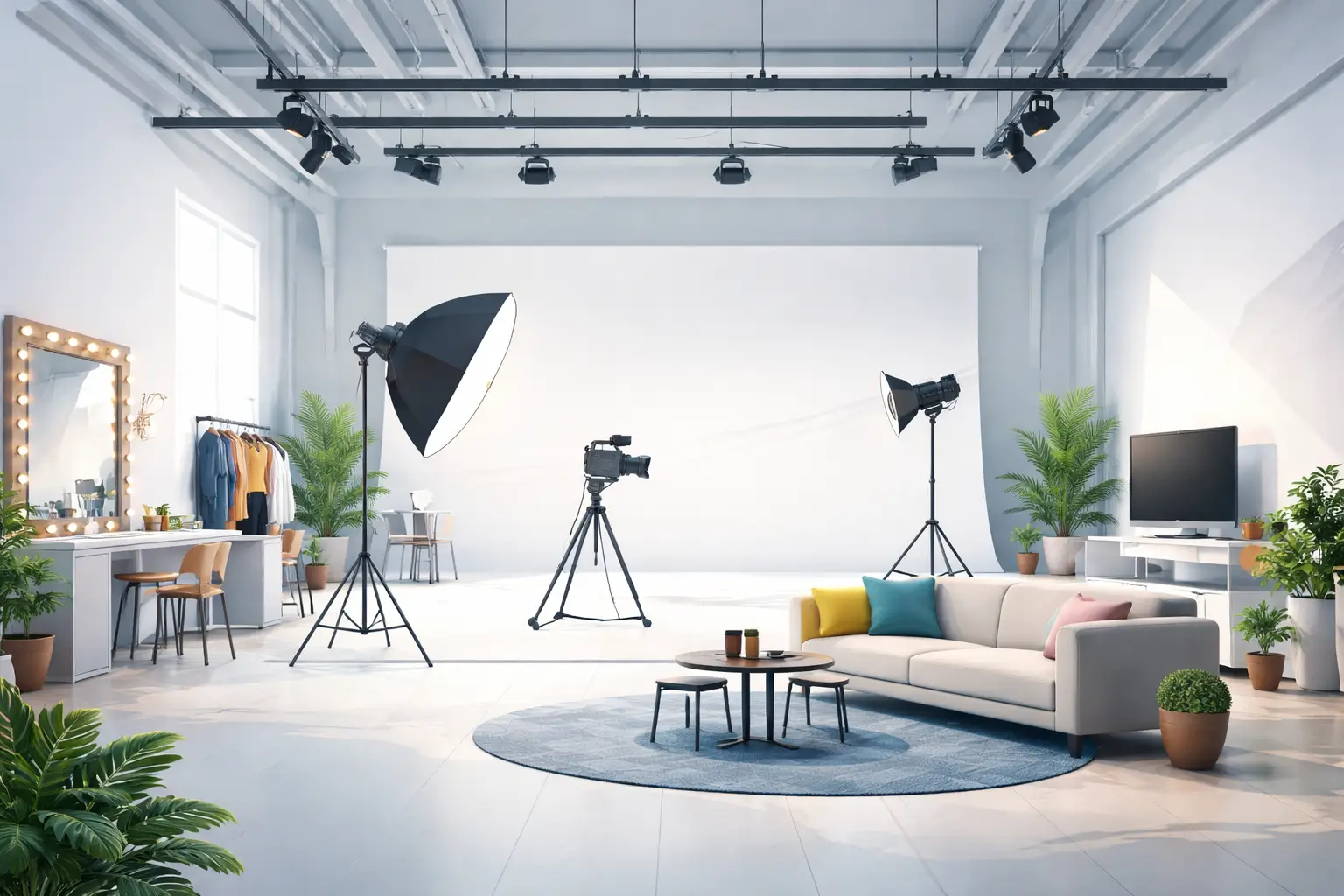
- Photography: look for moveable cycloramas, blackout, high ceilings and parking for kit vans—search phrases like photography studio hire West London when comparing listings.
- Podcasts and broadcast: need quiet, sound-treated rooms and stable internet for livestreams or remote guests; consider nearby support for engineering if you don’t bring your own tech.
- Live events or launches: factor crowd flow, audience sightlines, FOH power and safety exits alongside hospitality areas.
Technical infrastructure and on-site facilities
Verify the venue’s technical baseline and what you must bring. Key items to confirm and test on site:
- Power access: number of circuits and locations of consumer units; presence of isolated/clean power if you have sensitive equipment.
- Rigging and load limits: ceiling beams, truss points and permitted load per point; confirm if venue provides rigging hardware or requires you to bring certified gear.
- Lighting grid and blackout capability: can you lock out daylight for continuity, and are there adequate hanging points and DMX runs?
- Acoustics and isolation: how much ambient noise leaks in from outside (traffic, neighbouring units) and whether the space has acoustic treatment or requires temporary baffles.
- Connectivity: wired Ethernet options, Wi‑Fi policy, and upstream bandwidth—critical for live streaming and remote recordings.
Access, logistics and permissions
Logistics can make or break a day. Check these before booking:
- Loading access: height, width and distance from parking to studio entry for unpacking large sets or vehicles.
- Parking and vehicle permits: spaces for production vans and crew cars and any costs or restrictions.
- Operational hours and noise curfews: confirm permitted work hours and whether late wrap is allowed.
- Health & safety: venue emergency procedures, nearest hospital route, and whether the venue provides risk assessments or expects you to supply one.
On-site support and equipment hire
Decide how much you want to rely on in-house services. A venue that offers experienced technical support can save time and risk, especially for complex shoots. Typical support options:
- Venue technicians for load-in, rigging and power distribution.
- In-house kit hire for lighting, grip, cameras or audio to reduce transport.
- Production office or green room facilities for talent and crew.
When contacting venues, ask for a technical rider and a list of available hire items so you can budget and plan what to bring.
Acoustics and soundproofing for recordings
If your production includes audio-sensitive work, run these checks during a site visit:
- Listen for background hums at different times of day (traffic, delivery noise, HVAC).
- Test with a simple impulse or clap test to assess reverberation times.
- Ask whether the venue permits temporary baffles, mattress walls or portable acoustic panels.
Event space hire London options for hybrid productions
Many productions now blend live audience elements with filmed segments. For hybrid projects, confirm split zones (audience vs. production), sightlines, power for FOH and backline, and camera positions that don’t obstruct guests. Consider rehearsal time on site to validate blocking and camera coverage.
Contracts, insurance and inclusions
Before signing, ensure your contract clearly covers:
- Exact hire hours and what counts as setup/strike time.
- Included technical staff, equipment and any limits on what you can install.
- Cancellation terms and force majeure clauses.
- Insurance requirements, including public liability and equipment cover.
Site visit tests and what to bring
On a site visit, bring a checklist and simple tools: a tape measure, a ladder or laser measure for heights, a power meter or outlet tester, a laptop for network checks and a portable recorder or smartphone to test ambient sound. Walk through your full production workflow and map kit positions, cable runs and talent paths.
Example scenario and step-by-step booking flow
Scenario: a mid-sized agency needs a one-day shoot with a small live audience, a podcast recording zone and a photography set. Step-by-step:
- Define headcount, kit list and minimum floor footprint.
- Shortlist venues that advertise multi-use spaces and confirm they support photography studio hire West London and podcast space—these two are core needs.
- Book a site visit and run the sound, power and rigging checks above.
- Request a written technical rider and confirm what the venue will supply vs what you must bring.
- Confirm insurance and timings, then sign the hire agreement that matches your required setup and strike windows.
For practical examples of local studio options, review Ravenor Farm Studios’ services and comparative guides such as Studio Hire West London Professional Film Podcasts and the Commercial photography studio London hire West London article for photography-specific considerations. If you plan an event with live music elements, see Live Music Venue Hire West London and Podcast Studio London for combined venue advice.
Diagnosis and Action Checklist
This checklist helps resolve common uncertainties before you commit to a venue hire.
- What is uncertain: exact power capacity, noise levels at production times, rigging load limits, and internet upload speed reliability.
- Where to look in venue documentation: search the venue’s technical rider or facility spec for terms like “power distribution”, “max load”, “rigging points”, “dB rating”, “isolation”, “bandwidth” and “Ethernet”. If the venue provides a floor plan, look for labeled power outlets and rigging points.
-
Data and tests to run on a site visit:
- Measure and record distance from loading bay to studio entry and exact door dimensions in millimetres.
- Test each power outlet with a plug-in power meter; note circuit labels and trip behaviour while running typical loads.
- Perform a clap or impulse test in the intended recording location and record results; note reverberation and any dominant frequencies.
- Run a wired speed test from the venue’s Ethernet point to measure upload/download and packet loss at the planned production time.
- Inspect ceiling and structural points, photograph brackets and note any visible load ratings on beams or truss fixtures.
-
How to decide between possible scenarios:
- If power capacity is insufficient: either hire a generator or a venue with higher-rated circuits; confirm generator noise and fuel logistics before committing.
- If ambient noise exceeds acceptable levels: schedule the production at a quieter time or choose a venue with better soundproofing; use temporary acoustic solutions where permitted.
- If rigging capacity is limited: redesign the lighting plan for ground supports or select a venue with certified rigging points.
- If internet bandwidth is borderline: arrange an independent bonded connection or confirm local SIM LTE/5G backup for critical uplinks.
Final decision tips and booking checklist
Before you sign, walk through this final checklist with the venue contact and your production manager:
- Confirm arrival and departure times for vehicles and crew, and ensure they match the hire contract.
- Get a written inventory of included equipment and staff hours.
- Confirm emergency and contact procedures during the hire period.
- Request a final floor plan with labelled power and network points.
Choosing the right private event venue West London for creative productions comes down to matching technical capability with logistics and atmosphere. Use the tests and checklist above to remove uncertainty and to build a booking that supports a smooth production day. If you need a flexible studio with production support in Greenford, Ravenor Farm Studios can be a practical starting point—contact their team to walk through your technical rider and site needs.