


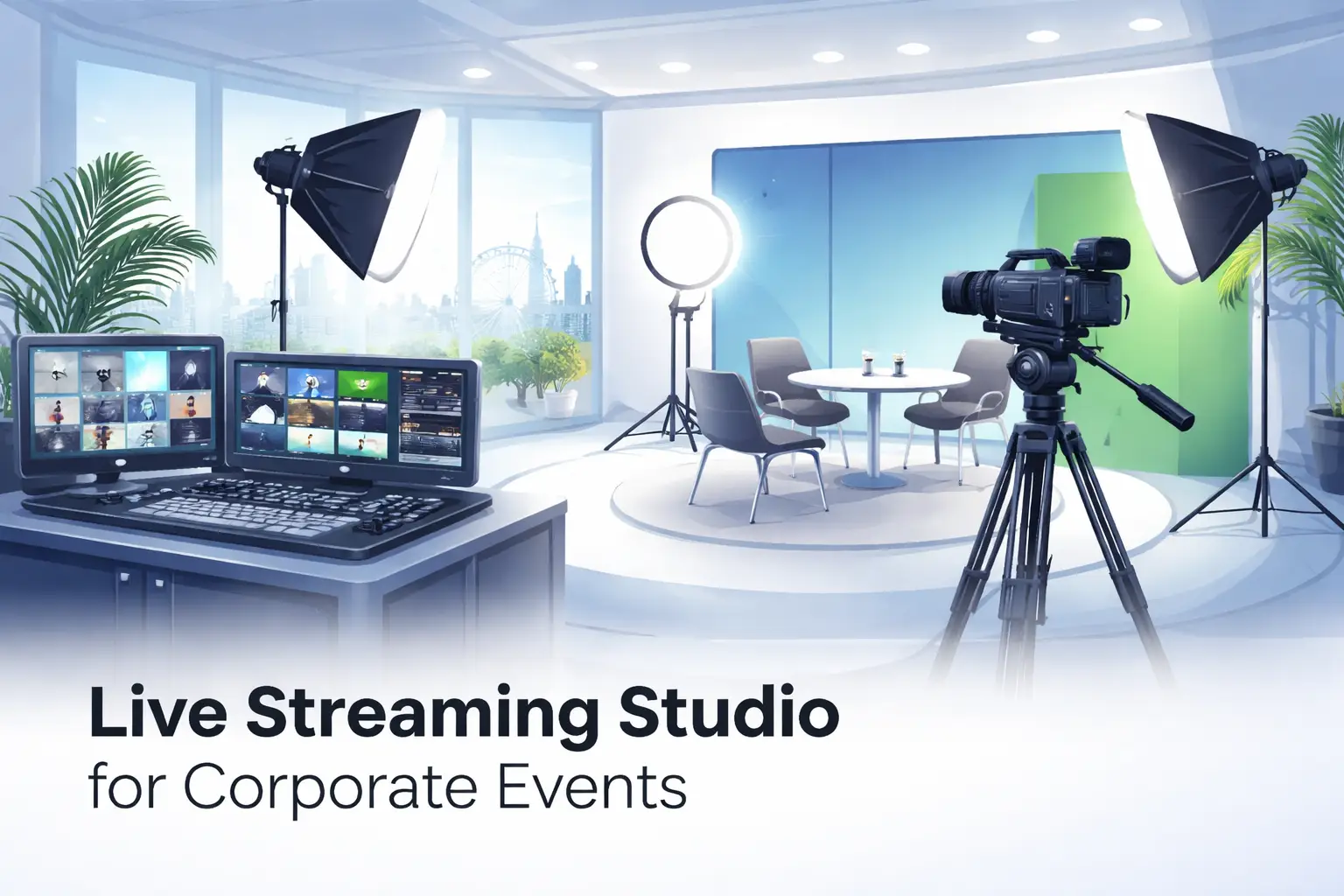
Live Streaming Studio Hire for Corporate Events West London
Corporate events have moved online as often as they happen in person. Choosing a purpose-built live streaming studio turns a standard webinar, hybrid conference, product launch or awards ceremony into a confident broadcast. This guide explains the practical benefits of hiring a professional studio in West London, how dedicated facilities and crews reduce risk, and how Ravenor Farm Studios studio hire can support event organisers from brief to broadcast.
studio hire London advantages for corporate live streams
When you compare a makeshift room with a purpose-built studio, the differences are operational and perceptual. studio hire London offers controlled acoustics, reliable connectivity and lighting rigs designed for camera work. For corporate teams that must protect brand image, that technical confidence is the core benefit: consistent picture and sound, predictable schedules and staff who know how to deliver live feeds without improvisation.
Why a live streaming studio matters for corporate formats
Corporate live streams often require more than a single camera and a laptop. A professional studio streamlines tasks that otherwise fall on inexperienced staff:
- Broadcast-quality camera placement and multi-camera switching for dynamic presentation.
- Audio capture with dedicated mixing to avoid echoes, room noise and dropouts.
- Colour-controlled lighting for consistent on-camera appearance across presenters.
- Technical rehearsal space to test transitions, slides, captions and remote contributors.
Scenarios where studio hire transforms an event
Think in scenarios rather than specs. Example scenarios where studio hire provides measurable operational advantage:
- Hybrid conference: Presenters on-site at the studio, remote panelists linked via managed video backhaul, and a technical director handling live switching.
- Product launch: Controlled lighting and camera framing producing premium product shots while a separate camera captures presenter close-ups.
- Awards ceremony: Seamless roll-ins, pre-recorded packages cued by an off-stage producer and live acceptances mixed and transmitted with low latency.
Key benefits of venue hire West London for corporate organisers
Hiring a local facility for event production reduces logistical friction. venue hire West London typically means shorter travel for talent and crew, simplified load-ins and the ability to run multiple rehearsals. For London-based marketing teams or agencies, proximity reduces the number of unknowns on the day and allows more flexible scheduling of production time.
Production support and crew
A major advantage of studio hire is access to experienced technicians—producers, vision mixers, camera operators and audio engineers—who understand the cadence of corporate broadcasts. Bringing this expertise internally requires either training or hiring freelance crews; hiring studio time bundles that expertise with the space and equipment, keeping responsibility and communication channels straightforward.
How Ravenor Farm Studios studio hire supports corporate briefs
Ravenor Farm Studios provides flexible spaces that fit different production scales: a broadcast-style set for keynote presentations, configurable areas for product shoots, and a dedicated space for multi-camera interviews or live podcasts. For organisers who want both production gear and a client-friendly environment, partnering with a single supplier simplifies contracting and coordination.
Practical ways Ravenor Farm Studios studio hire helps organisers:
- Single point of contact for bookings, technical planning and on-site crew.
- Pre-show rehearsals and camera blocking to avoid surprises on event day.
- Options for dry hire or full production packages depending on team capability.
Designing a live stream that reflects your brand
A polished stream requires design decisions: set dressing, lower-thirds graphics, branded slides and camera framing. Studios provide the tools and technical workflow to make those elements appear native to the live output rather than afterthoughts. A consistent visual identity—good colour balance, clean audio and tidy scene composition—translates directly into perceived professionalism.
Using a private event venue West London for hybrid experiences
When an event blends attendees and online viewers, a private event venue West London that also offers production facilities removes the tension between hospitality and broadcast. Dedicated green rooms, secure networking points and production parking all contribute to a smooth execution.
Practical checklist for planning a studio-based corporate stream
Follow this step-by-step flow to avoid common pitfalls:
- Define the format: panel, keynote, interview, product demo, awards.
- List technical needs: number of cameras, feed destinations, remote contributor links, slides and captions.
- Book time for a full technical rehearsal at the studio with all presenters present or connected.
- Confirm connectivity requirements with the studio and plan fallback links (uplink redundancy or alternative encoders).
- Assign a single decision-maker on the day for creative calls and a technical lead for feed monitoring.
Consider reading our practical guide on hosting private events at a studio by visiting Studio Hire Ealing for Unforgettable West London Events to compare venue workflows and client experiences.
Technical considerations without jargon
You don’t need to be an engineer to plan a successful studio stream, but you should confirm a few technical facts in plain language:
- How many simultaneous camera angles will you need? More angles require more operators or PTZ control.
- Will you include pre-recorded segments? These must be encoded and queued during rehearsal.
- Who manages remote guests? A dedicated producer for remote links significantly reduces troubleshooting time.
For teams focused on audio-first formats—town halls or podcasts—also see our related post about booking podcast-ready spaces at Ravenor Farm Studios in West London: Ravenor Farm Studios West London Podcast Studio Hire.
Budgeting and resource allocation advice
Rather than quoting figures, plan resource categories: studio time, crew, equipment, and post-event deliverables. Allocate rehearsal blocks and allow buffer time for load-in and technical checks. This structure helps avoid last-minute overruns and preserves the creative focus for your presenters.
Event formats and how studio features map to them
Here are common corporate formats and how a studio improves each:
- Town hall: Controlled audio and a clear sightline to keep remote audiences engaged.
- Product demo: Dedicated rigging for product shots, lighting control and high-resolution capture.
- Panel discussion: Multiple microphones and camera coverage with an on-site director for pacing.
- Hybrid networking: Separate rooms for networking and broadcast to keep channels distinct.
Diagnosis and Action Checklist
This checklist helps you verify details you may not have full information on yet and convert uncertainty into decisions.
- What is uncertain: exact bandwidth and redundancy available at the studio for your stream.
- Search terms to check in official sources: “internet uplink”, “dedicated bandwidth”, “redundant ISP”.
- Data to collect: studio technical spec sheet, IP address types offered (static/DHCP), documented upload speed tests, and service-level notes about outages.
- Source types to use: studio technical spec documents, venue network diagrams provided by the studio, or an operations guide from the studio team.
- How to decide: if the studio provides a guaranteed uplink with documented speeds and documented redundancy, accept it; if not, request a secondary encoder or mobile fallback solution be listed in the production plan.
- What is uncertain: the number of qualified crew available on your chosen date.
- Search terms to check in official sources: “crew availability”, “on-site engineer”, “technical team”.
- Data to collect: booking confirmation listing crew roles, CVs or bios for key roles, and the studio’s escalation contacts for last-minute replacements.
- Source types to use: studio booking agreements, crew confirmations or contract riders, and internal crew rosters from the studio.
- How to decide: require a written confirmation of crew roles and backups in your production agreement; if unavailable, consider adding a contingency line in the plan for sourcing freelancers.
- What is uncertain: how remote contributors will connect and whether their connections meet latency needs.
- Search terms to check in official sources: “remote contribution”, “RTMP ingest”, “SRT”, “WebRTC compatibility”.
- Data to collect: preferred codecs/formats, remote contributor test results from rehearsal, and any NAT/firewall constraints that remote contributors report.
- Source types to use: studio technical briefs, remote guest connection guides, and logs from rehearsal test calls.
- How to decide: if rehearsal test calls meet quality thresholds (stable video and audio for the required duration), proceed; otherwise, plan an alternative method (pre-record or monitor-only participation).
- What is uncertain: suitability of the studio layout for your set design.
- Search terms to check in official sources: “studio floor plan”, “set dimensions”, “grid points”.
- Data to collect: floor plans with dimensions, photos from other events, and a list of available set pieces and rig points.
- Source types to use: studio floor plans, site visit reports, and client case studies hosted by the studio.
- How to decide: perform a site visit or request a virtual walkthrough and compare physical dimensions against your set design; if tight, request alternative set options or extra setup time.
Booking workflow and next steps
To move from planning to a confirmed booking:
- Create a one-page brief listing format, ideal dates, run-time and any essential technical elements.
- Arrange a studio walkthrough or virtual tour with your production lead.
- Schedule a technical rehearsal that includes all external contributors and any playback assets.
- Confirm invoicing items and delivery milestones in writing.
If you want practical examples of dry-hire or full production scenarios, our article on dry hire options can help you compare approaches: Dry Hire Studio Advantages for Creatives in West London.
Final recommendations
For corporate teams focused on quality and reliability, a professional live streaming studio eliminates technical guesswork and offers a production-grade environment that elevates your brand. Whether you need a full technical crew, a configurable set or a private event venue West London that doubles as a broadcast centre, a purpose-built studio reduces risk and frees your team to concentrate on content.
Contact the studio team early in the planning cycle, prioritise rehearsal time and document responsibilities in the production brief. With those steps in place, a studio-based stream becomes not just a safer option but a demonstrable competitive advantage for your event.