


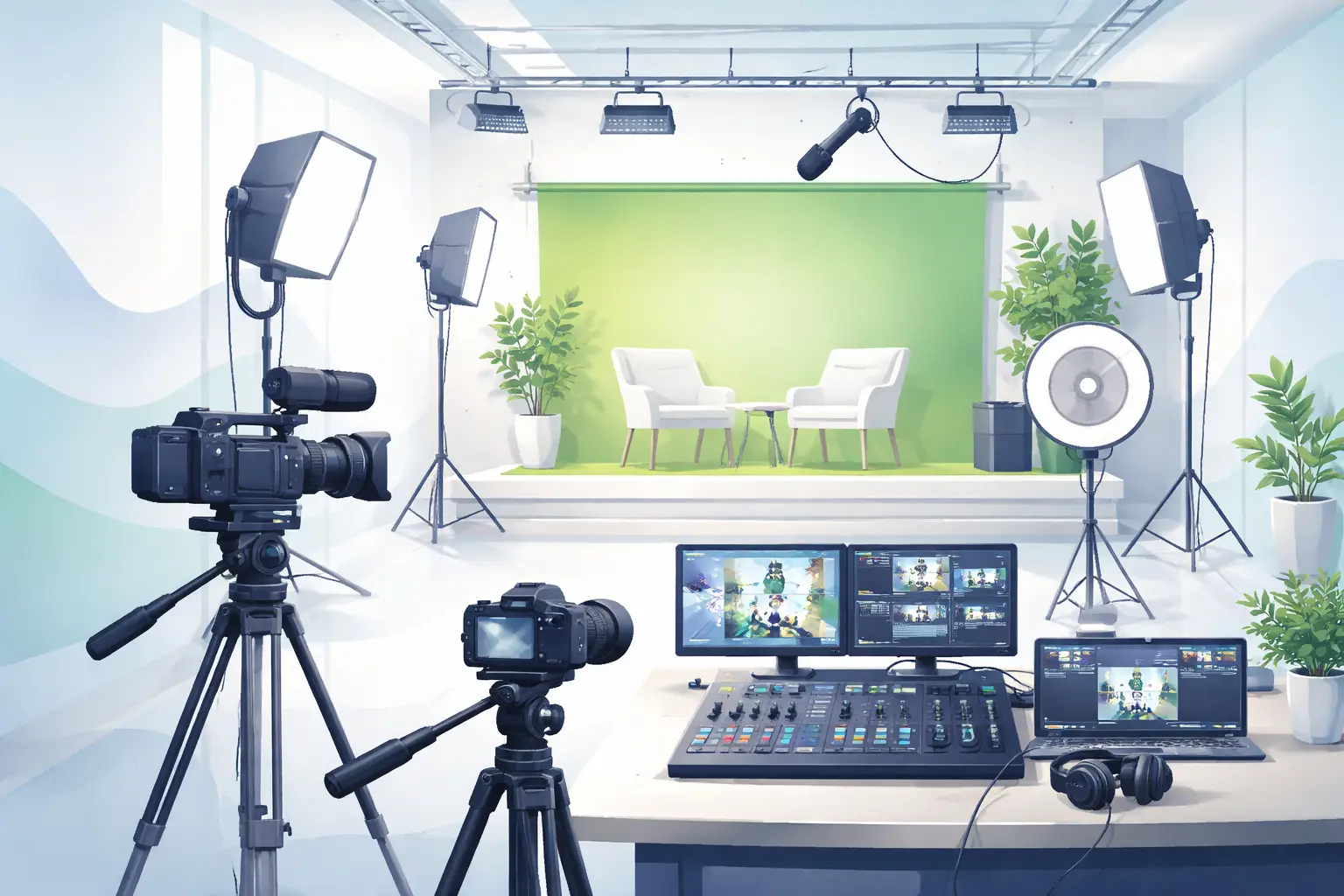
Live Streaming Studio London and Video Production Benefits
Hiring a professional video production studio in West London changes the way projects are planned and executed. For creators and production teams the difference is not just about nicer cameras or bigger stages — it’s about access to systems, people and workflows that reduce risk, accelerate delivery, and raise the final quality. This guide explains the concrete advantages, walks through real production scenarios, and gives practical steps to prepare and book a studio like Ravenor Farm Studios in Greenford.
What a professional West London studio brings to your project
At a high level, a dedicated studio provides three interlinked benefits: specialist facilities, experienced technical crew and operational reliability. These translate directly into faster shoot days, fewer technical problems, and final media that meets broadcast or commercial standards. For teams juggling budgets and timelines, those outcomes matter more than merely owning gear.
Equipment and technical systems
Studios maintain calibrated cameras, lighting grids, professional sound recording chains and control-room connectivity that would be expensive or impractical to replicate for a short production. That means whether you need a multi-camera live stream, a product shoot or a music video, you arrive and can start shooting instead of assembling racks and troubleshooting. This is why many agencies and brands prefer studio hire over buying ad-hoc rentals.
Dedicated crew and production support
Booking a studio often includes access to experienced engineers, gaffers, and technical stagehands. These professionals understand the idiosyncrasies of lighting for chroma, camera shading for broadcast, and routing multi-channel audio for live streams or podcasts. Their presence shortens setup, helps maintain continuity across takes, and frees creative leads to focus on direction and performance.
Acoustics and soundproofing
For audio-sensitive work — podcasts, ADR, or music sessions — acoustic treatment and true sound isolation matter. A soundproof studio hire London facility lets you record clean dialogue without intrusive bleed from traffic or neighbouring spaces. The result is less post-production cleanup and a more natural, professional sound.
Benefits for live streaming studio London projects
live streaming studio London setups combine multi-camera switching, encoder redundancy, low-latency audio and reliable uplink options so you can broadcast confidently to audiences worldwide. When you pick a studio that specialises in streaming you gain tested workflows for graphics insertion, remote guest feeds, and simultaneous recording for on-demand repurposing. For brands and broadcasters this reduces the chance of interruptions and preserves the viewing experience.
Green screen and set options
green screen studio hire London and modular set areas provide creative flexibility. Properly lit chroma rigs and experienced lighting techs make keying straightforward and consistent, saving hours in post. Studios also store and adapt set elements — furniture, cyc walls, and props — so creative teams can iterate quickly during a shoot rather than rebuild between days.
Photography and product capability
For product work and campaigns, a product photography studio hire London or commercial photography studio London gives controlled light, speciality lenses and rigging that reveal texture and finish. Whether you need large softboxes, motorised turntables for 360-degree captures, or high-resolution tethered setups for immediate QC, purpose-built spaces speed creative decision-making and reduce re-shoot risk.
Flexible booking models including dry hire
Many West London studios publish dry hire studio London options so experienced teams can bring their own operators while using the space and infrastructure. Dry hire reduces overall cost for crews that only need space and power, but still benefits from the building’s facilities, parking, and loading access. For hybrid projects you can combine dry hire hours with time blocks that include in-house crew.
Typical production scenarios and step-by-step workflows
Below are three common use-cases with practical sequences you can adapt to your team.
Case 1 — Brand commercial with mixed photography and video
- Pre-production: Confirm shot list and required set builds; request facility floorplan and power specs from studio.
- Day 1 (photo): Use the product photography studio hire London space to capture hero stills and packable lifestyle shots; tether to on-site workstation for instant review.
- Day 2 (video): Switch to multi-camera coverage in the same space, reusing lighting positions to maintain look; record separate clean audio tracks in a soundproof recording area.
- Delivery: Export final stills and high-frame-rate camera masters; the studio’s ingest system can provide drive copies and secure file transfer to your editor.
Case 2 — Video podcast with remote guest
- Pre-production: Confirm recording format, remote guest codecs and backup recording strategy.
- Load-in: Use a podcast recording studio London room for host mics and mix-minus routing; set up a separate multi-track recorder as redundancy.
- Recording: Route the guest’s feed through the studio’s streaming infrastructure and capture a local clean recording in case of network dropouts.
- Post: Use the studio’s editing bay or deliver raw stems for offline finishing.
Case 3 — Live event broadcast
- Pre-production: Map camera positions, streaming destinations, and stage risers. Confirm technical rider and power distribution.
- Rehearsal: Run a full systems check with remote contributors and practice switching to ensure low-latency feeds.
- Show day: Use the studio’s broadcast-ready encoder and redundant internet links to maintain uptime; record ISO tracks for highlights later.
- Wrap: Archive multi-camera footage and hand over assets to post-production.
Practical checklist to evaluate and book a studio
- Confirm the studio’s camera and lighting inventory aligns with your creative brief and deliverable format.
- Ask about backup power, encoder redundancy and internet uplink capacity if you plan live streaming.
- Check for on-site facilities such as makeup, client viewing, green rooms and secure load-in access.
- Clarify what is included in any dry hire studio London booking versus crewed sessions.
- Discuss data management: media ingest procedures, drive formatting, and secure file delivery.
Diagnosis and Action Checklist
When you face uncertainty about equipment, acoustics, availability or technical specs, follow this checklist to verify details and make a confident booking decision.
- What is uncertain — Examples: uplink bandwidth for a large live stream, exact microphone models in the studio’s inventory, studio dimensions and rigging points, availability of a soundproof recording booth, or whether green screen lighting meets broadcast keying standards.
- Where to look in official sources — Search the studio’s technical rider, equipment list, floorplan PDF or service manual pages. Look for sections titled “Internet and Connectivity”, “Lighting Inventory”, “Sound Facilities”, “Stage Dimensions”, “Rigging Points”, and “Technical Rider”. If the studio publishes an FAQ or booking terms, check subheadings for “dry hire”, “crew”, and “data management”.
- Data and tests to collect — Request a current equipment list with model numbers and serial references; ask for a recent speed test (upload and download) taken from the on-site router; request sample audio recorded inside the soundproof booth; ask for a short test keying clip shot on the studio’s green screen under the intended lighting setup; get floorplan with labelled power outlets and rigging load ratings.
- How to run simple verification tests — For internet: ask the studio to run an upload test to a specified server or to share a screenshot from speedtest.net showing server and time. For audio: request a short WAV or AIFF file recorded on the studio mic at conversational levels. For green screen: ask for a 10–15 second MP4 shot at your planned framing and camera settings. For space: request a short walkthrough video from load-in to stage to confirm vehicle access and door widths.
- How to interpret multiple scenarios — If the test upload is high but inconsistent, treat the connection as “suitable with redundancy” and plan for an encoder fallback. If the green screen sample shows uneven spill, classify the stage as “usable with additional lighting” and budget for extra lamps or a lighting tech. If the sound sample has low-level traffic bleed, plan to use the soundproof booth for critical dialogue and schedule external pickups in quieter hours.
Preparation tips for first-time studio bookings
Book a site visit and arrive with a clear technical rider. Label the key deliverables, frame rates, codecs and track counts you require. Provide the studio with a call sheet that includes load-in times, crew list, parking or vehicle needs and any food or access requirements. If you plan to mix in-house and bring your own engineers, confirm how the dry hire studio London slot integrates with the studio’s technical manager.
Ravenor Farm Studios in Greenford positions itself between central London and Heathrow, offering flexible spaces suitable for film, TV, podcasts and photography. If geographical access, on-site parking and mid-sized stage availability are priorities for your team, consider those operational aspects alongside technical fit.
How to maximise value on the booking day
- Prepare assets and reference stills in advance so the art and lighting teams can match shots quickly.
- Use call sheets and a dedicated stage manager to keep roll times and lighting changes tight.
- Record clean reference files for every camera and audio channel to simplify post-production sync.
- Build in a contingency hour for unexpected rigging or last-minute keying adjustments.
For more on flexible space options, explore our guide to Dry Hire Studio Options for West London Creative Professionals and why versatile spaces matter in Versatile studio hire in West London for media projects.
Final thoughts
Choosing a professional studio in West London is a strategic decision that reduces production friction and elevates the final output. Whether you need a product shoot, a broadcast-capable stage, or a soundproof environment for podcast recording, a well-equipped studio brings systems and people that protect your schedule and creative vision. Use the checklists above to confirm technical fit and bring your project safely from brief to deliverable.