

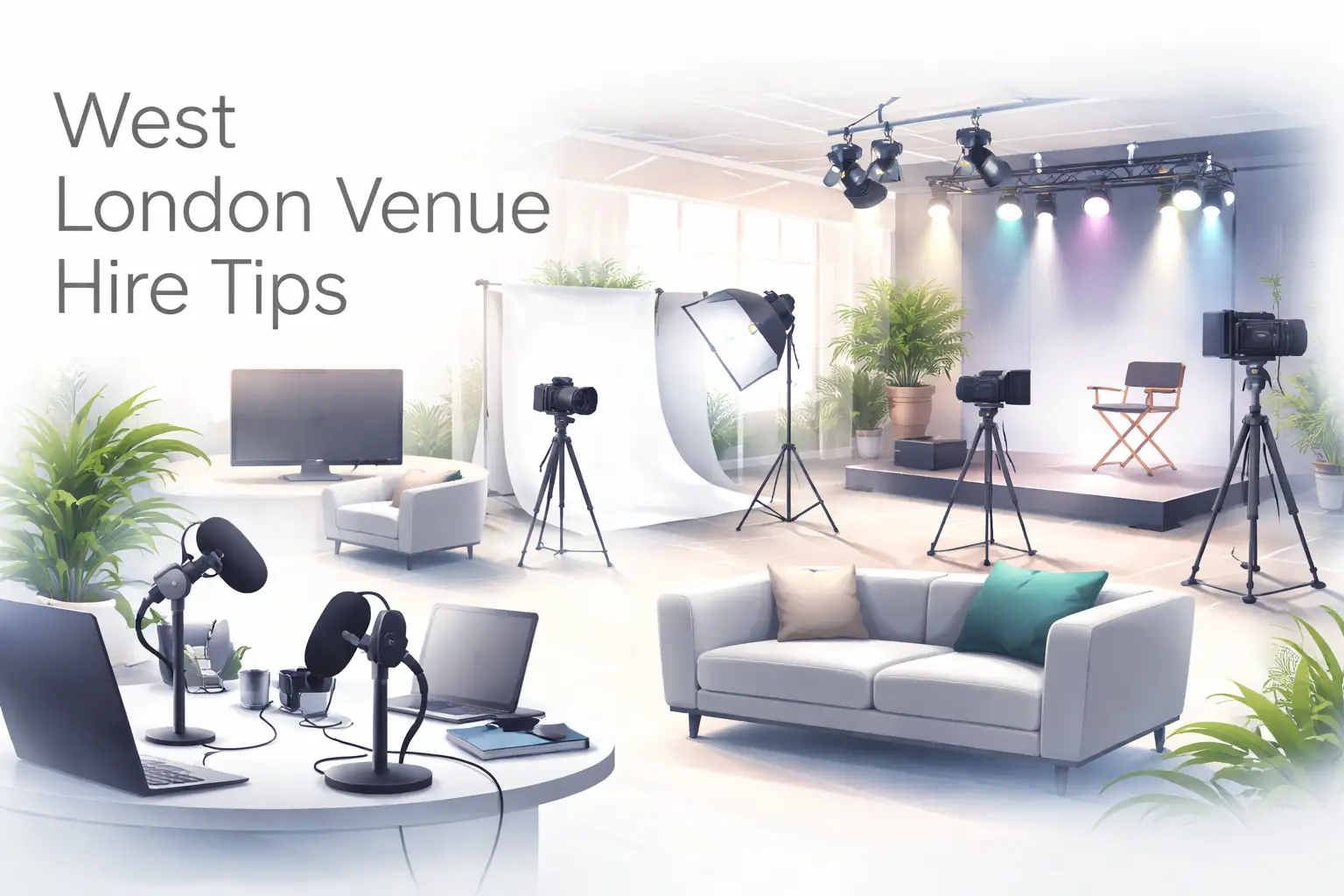
West London Venue Hire Tips for Productions and Events
Choosing the right venue hire in West London can make or break a production, shoot, podcast or live event. This guide walks you through practical, scenario-based decisions—from planning and technical checks to on-site logistics—so you can shortlist, evaluate and book a venue with confidence. Examples and action steps focus on studios and event spaces that serve film, TV, podcasting, photography and live streaming workflows.
Start with a clear brief and realistic priorities
Before you contact venues, write a one‑page brief that lists the project’s non-negotiables and nice-to-haves. Keep it short and shareable so venue managers can respond accurately. Include:
- Type of production: film, TV, live streaming, photoshoot, podcast, or hybrid event.
- Estimated crew and guest numbers with roles (e.g., director, producer, audience, talent).
- Core technical needs: camera count, lighting rigs, sound isolation, playback, live switching.
- Key time constraints: rehearsal windows, load-in/out times and preferred date(s).
Example brief snippet: “Two-camera interview with audience of 30, 90 minutes filming, needs isolation for podcast recording, wireless mics, live streaming via an encoder.” This level of clarity speeds up accurate quotes and availability checks.
Technical checklist for live streaming studio London
Include a technical checklist early in venue conversations. If your plan includes remote audiences or broadcast deliverables, confirm these items:
- Network: dedicated wired Ethernet with measured upload bandwidth and an option for a backup connection.
- Power: sufficient circuits, accessible distro points and UPS for critical gear.
- Control space: room for a vision mixer, audio desk and operator stations.
- Camera positions: floor load capacity for tripods, safe railings for raised platforms and sightlines for different shot types.
- Sound: treatment, isolation, and room tone; a rehearsal to measure ambient noise.
Use the phrase live streaming studio London when discussing these items with venue tech teams to ensure they understand the live-broadcast expectations and can offer matching facilities.
Site visit: what to inspect and how to test
Always arrange a site visit with a technical walkthrough using the brief. Treat the visit like an on-set tech rehearsal and follow these steps:
- Walk every intended camera position and note sightlines, background elements and light sources.
- Test power at the points you’ll use: plug in key devices and confirm circuits don’t trip when multiple loads are combined.
- Measure the actual usable floor area with the planned set and crew movement in mind—mark gear and cable runs on a simple floor sketch.
- Run a short audio test in the recording area to assess reverb and external noise (doors, HVAC, street noise).
- Check internet by running an upload/download test from the venue’s network and ask for a screenshot to save with your notes.
Bring a copy of your brief and a one-page tech rider to the visit so venue staff can match equipment and identify gaps on the spot.
Space, accessibility and logistics
Evaluate the venue’s practical suitability beyond sound and sight. Key considerations:
- Access for load-in: size of entrance, vehicle access, parking or short-term loading bays.
- Storage and green rooms: safe, lockable spaces for kit and changing rooms for talent.
- Accessibility for all attendees: ramps, lifts and restroom locations.
- Local transport links and proximity to crew base—West London locations like Greenford offer a balance between Central London access and proximity to Heathrow for travel.
When you need combined production and event space, consider venues that offer both dry hire and event facilities such as The Barn at Ravenor Farm Studios for flexible staging and hospitality areas.
Check staff expertise and included services
Venues differ in what they include. Ask specifically whether technicians, rigging staff, or in-house AV operators are part of the hire or available as add-ons. Clarify:
- Who operates venue-supplied equipment and what certifications or experience they hold.
- What is included in the quoted hire: basic lighting, stagecraft, or playback systems.
- Turnaround support and emergency contact for the day of the event or shoot.
Having experienced technical support on site reduces setup time and mitigates on-the-day risks for complex shoots like multi-camera live streams or TV recordings.
Audio and recording considerations for podcast recording studio London
If your project involves podcasting, treat the venue like a recording studio: assess isolation, mic selection, and monitoring. Confirm whether the venue offers multi-track recording, headphone mixes and room treatment. Use the exact phrase podcast recording studio London when querying those needs so the venue provides relevant answers and equipment lists.
Lighting and backdrop options for photo studio hire London and production shoots
For photography and mixed-production shoots, availability of cycs, blackout capability, rigging points and natural light control is crucial. If you require a green screen, state green screen studio hire London in your brief to ensure the venue can supply or facilitate an appropriate chroma setup and appropriate distances for keying.
Contracts, insurance and terms to confirm
Before booking, confirm these contract elements and record them in writing:
- Exact hire time windows including load-in and load-out slots.
- Cancellation policy and how date changes are handled.
- Insurance requirements for hired equipment and whether the venue requires evidence of public liability from the production company.
- Health and safety procedures, including on-site fire marshals or first-aid provision.
Request a written facility guide or terms and annotate them with any verbal agreements from site visits so everything is clear before deposit and scheduling.
Day-of planning and crew call sheet essentials
Create a simple call sheet that includes arrival times, contact numbers, parking instructions, nearest transport stops, and a basic floor plan. Share this at least 48 hours before the event and reconfirm access codes or security procedures on the morning of the shoot. Include contingency slots for overruns and a clear plan for load-out that minimises disruption to the venue’s calendar.
Examples and scenarios
Scenario A — A brand shoot with a small audience: You need a space that combines a broadcast-style studio with audience seating. Priorities: sightlines, power distribution, and a dedicated control area for switching and playback.
Scenario B — A hybrid podcast and livestream: You need isolation for clean audio plus a clean video background. Priorities: multi-track recording, network uptime, and green screen capabilities if you plan overlays.
Use these scenarios to align venue questions and site tests with what the production will actually demand on the day.
How to compare shortlisted venues quickly
Build a one-page comparison table (digital or on paper) with the following columns: Availability, Technical fit, Access & Loading, Included staff/equipment, Insurance & Terms, and Intangibles (natural light, ambience, extra spaces). Score each venue against your brief and prioritise the ones that meet critical requirements without heavy add-ons.
Diagnosis and Action Checklist
This checklist helps you resolve any uncertainty about venue capabilities or suitability in a repeatable way.
- What is uncertain: precisely list unknowns such as network upload speeds, number of power circuits, mic inventory, green screen size, or load-in bay dimensions.
- What to search for in venue documentation: look for words/sections titled “Technical Specification”, “Power & Electrical”, “Internet and Connectivity”, “Rigging Points”, “Stage Dimensions”, “Noise Policy”, “Insurance Requirements”, “Loading Access”, and “House Rules”. These section names are commonly used in facility guides.
- Data to collect or tests to run:
- Ask the venue for a PDF of their technical spec and take screenshots of the network speed test they run on-site.
- Measure door and corridor clearances during your visit with a tape measure and photograph them alongside your kit to verify fit.
- Perform a short audio test: record 30 seconds of room tone in the exact recording area and save the file for post-visit evaluation.
- Plug in critical devices to test live power distribution if allowed, or request a load diagram from venue tech staff.
- How to decide between multiple scenarios:
- If the network upload is >= your encoder’s required steady bitrate plus headroom and there is a backup option, mark network as green; if not, plan for a bonded cellular backup and note the extra logistics.
- If power circuits are limited but the venue can provide temporary distro with certified electricians, accept with condition that electricians are booked and costed separately; if distro or electricians are unavailable, rule the venue out for heavy-camera or lighting setups.
- If sound isolation fails your room tone test, consider on-location dampening, move to a smaller set, or change to a different venue with better acoustics.
Final steps and booking tips
When you’ve selected a venue, confirm everything in writing: dates, times, included equipment and staff, cancellation terms, and a contact list for day-of. If you need inspiration or a venue that combines production studios with event spaces, review facilities that offer both studio hire and event spaces to avoid multiple site logistics. For example, venues that support production workflows alongside event venues make hybrid productions simpler to manage.
If you want a practical next step, prepare your one-page brief and tech checklist, then request a coordinated site visit that includes a technical demo and a copy of the venue’s technical specification and facility guide. Compare two or three shortlisted venues against the checklist and select the one that best matches your critical requirements.
For further reading on studio options in West London, see related articles on professional studio hire and podcast studio hire costs within our blog to refine your budgeting and planning approach.