


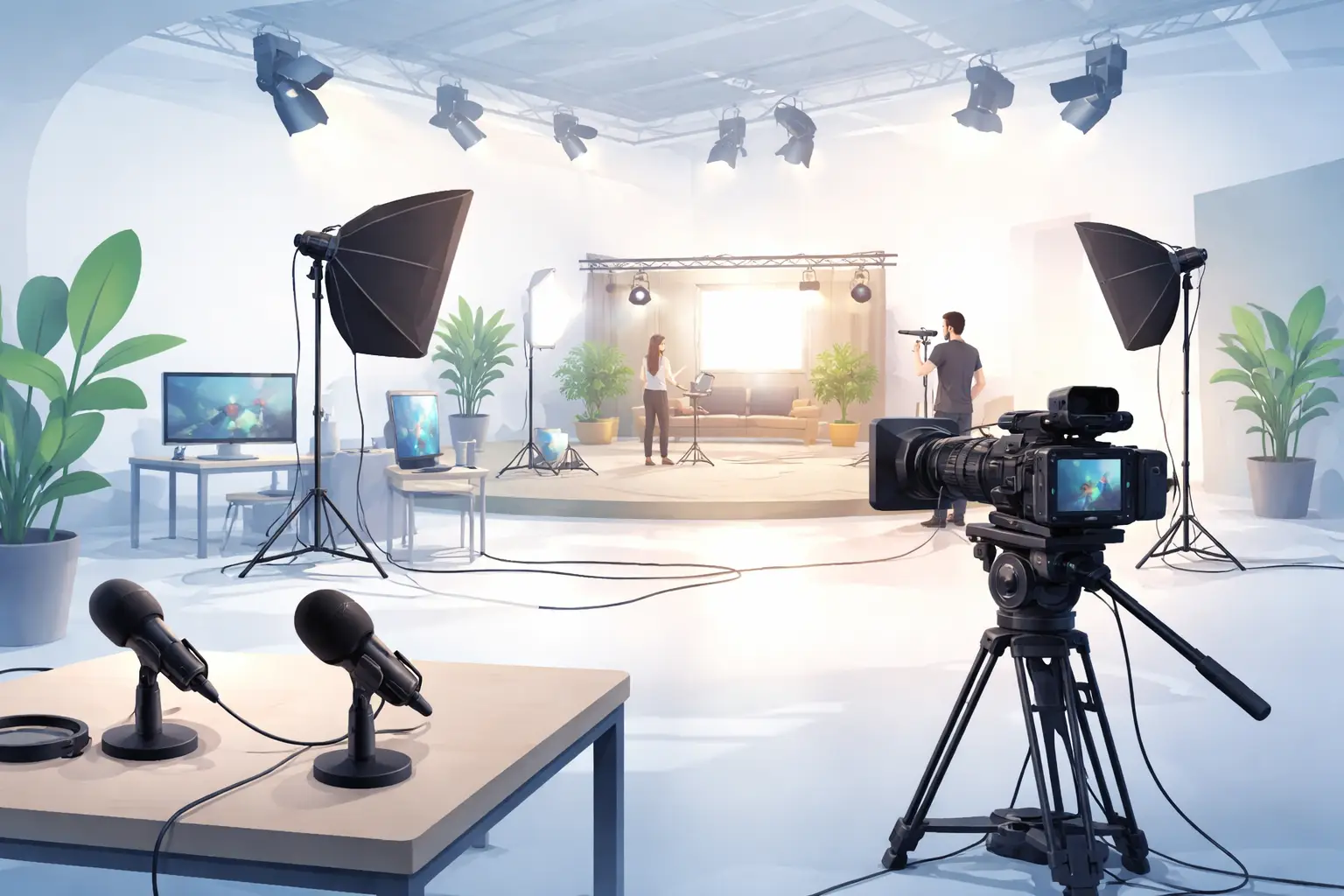
Film studio London hire in West London for creators
Independent creators and small production teams often need a practical, budget-aware path from idea to finished footage. This guide explains how to find and book an affordable, well-equipped space in West London that works for film, TV, podcast and photography projects. It focuses on choosing the right space, what to check before you book, how to plan a shoot or session, and practical tips to reduce costs without compromising production value. Where it helps, examples reference services available from a Greenford-based facility that provides flexible studio rooms, dry hire and technical support.
film studio London options in West London
West London hosts a range of studio types: fully serviced TV suites, simple dry-hire stages for camera and lighting setups, podcast rooms with broadcast-grade acoustics, and photography studios with cyc walls. When you search for a film studio London near Greenford, look for venues that advertise flexible studio sizes, clear kit lists and on-site technical support. A studio that offers multi-use spaces can cover a photography shoot one day, a small TV shoot the next, and podcast recording in a treated room.
If your project is largely digital-first—YouTube series, social content or a short film—prioritise spaces that list production-ready power, lighting grids, blackout options and reliable internet for remote clients or live streaming. For audio-first projects, compare podcaster-focused rooms that advertise soundproofing and monitoring. For photography, confirm access to cyc walls, adjustable daylight/flash setups, and safe rigging for lights and backdrop support.
How to compare production studio hire London offers
Not all listings use the same language. When evaluating options, translate common terms into practical checks:
- “Dry hire” means you bring crew and equipment; confirm whether a venue still provides a technician for health-and-safety oversight or power distribution.
- “Fully serviced” usually includes a tech crew, camera package or lighting package; ask what’s included and which items are optional extras.
- “Green screen” or “cyc wall” should be confirmed for size and finish; ask for exact dimensions and photos taken from multiple angles.
- “Live streaming capable” should be validated by testing upload speeds and asking about encoder options and on-site routing.
Preparing a production plan for a content studio hire London booking
A compact production plan reduces time on set—time that often costs the most. Build a plan with these sections: objectives, creative brief, shot list, equipment matrix, crew list, schedule, and contingency steps. Below is a short, scenario-based approach for a one-day shoot that combines simple interview segments and B-roll footage.
- Define deliverables: video length, final file formats, and any graphics or captions required.
- Shot list: block the shoot into interview portion, product or performance B-roll, and pickup shots for continuity.
- Equipment matrix: which camera bodies, lenses, microphones, lights and grip will travel with you versus what you will hire from the studio.
- Schedule: allow time for load-in, set build, lighting setup, soundcheck, rehearsals, rolling cameras, and a short break between scenes.
- Backup plan: identify a secondary room or a weather-safe alternative if practical (important when using natural light or external sets).
When your needs lean more towards audio, search listings that call out podcast studio London features: treated rooms, ISDN/USB connectivity options, headphone monitoring and multitrack recording. For photographers, compare spaces by available backdrop sizes and daylight options labeled explicitly as photography studio London.
On the day logistics
Arrive with clear role assignments for load-in, set dressing, camera, sound and production runner. Run a full technical rehearsal: camera white balance and framing, lighting levels and diffusion, and a multi-channel audio test to check levels and confirm no unwanted interference. If you will stream or invite remote clients to watch, allocate time to test the upload path and any remote viewing software.
Practical cost-saving strategies
Affordable production does not mean low-quality. Consider these scenarios:
- Short bookings: consolidate tasks so you maximise studio time—for example, shoot multiple interviews back-to-back with a single lighting rig.
- Mix dry hire with key rentals: bring your cameras and microphones but hire lights or a grip package from the studio to avoid transport complexity.
- Use modular sets: lightweight flats and portable backdrops speed turnaround between scenes.
- Book off-peak windows when possible—many studios offer more flexible rates for non-peak weekday times. (Confirm via the studio’s booking calendar.)
Ravenor Farm Studios supports mixed needs: film studio London shoots, TV studio London setups for multi-camera shoots, photography studio London sessions with cyc walls, and podcast studio London bookings in a treated booth. Check the studio’s available packages and whether they meet your mix of crew and equipment needs.
Preparing creatives and talent for a session
Ensure cast and contributors have arrival times, wardrobe instructions (colours and fabrics to avoid moiré), and call sheets. For voice work or podcast sessions, advise on hydration and avoid noisy snacks before recording. For visual shoots, provide hair and makeup arrival windows and a quiet staging area where talent can wait ready without disturbing continuity.
When you book production studio hire London, request floor plans and photos of dressing rooms, catering areas and parking so you can plan logistics for cast transport and kit cases. Confirm the studio’s policies on visitors and craft services in advance.
Booking steps and paperwork
Before you finalise a booking, complete these steps: confirm the studio’s technical rider, request a written kit list for any included equipment, confirm load-in and load-out windows, and check insurance and health-and-safety requirements. If you need special rigging or aerial work, ask for the studio’s certified rigger list and submit a risk assessment ahead of the day.
For creators focused on live or social-first workflows, ask whether the venue supports content studio hire London workflows such as multi-camera switching, ISO recording for each camera, and a clear path for offsite editors to receive raw footage.
Diagnosis and Action Checklist
This checklist covers common uncertainties when booking a West London studio: availability, exact equipment specifications, on-site services, power and load-in constraints, and insurance/responsibility terms. Follow each step to reach a definitive answer.
-
What is uncertain: exact equipment included in a package (models, counts, and condition).
Action steps:- Look in: the studio’s published technical spec sheet, equipment list PDF or “kit list” section of their booking page.
- Search keywords in the studio’s site: “technical specification”, “kit list”, “included equipment”, “camera package”.
- Collect: a screenshot or PDF of the kit list, serial or model numbers if listed, and photos of the gear if available.
- Confirm scenarios: if the kit list names only categories (e.g., “camera package”) request model names; if models differ from your minimum requirements, negotiate an equipment supplement or plan to bring your gear.
-
What is uncertain: studio availability and booking windows for your exact dates.
Action steps:- Look in: the venue’s live booking calendar or booking enquiry form.
- Search keywords: “availability”, “bookings calendar”, “hire calendar”.
- Collect: timestamps of available slots, any posted minimum hire durations, and confirmation emails.
- Confirm scenarios: if the calendar shows tentative holds, request written confirmation; if only long blocks are free, ask about partial-day hire or split days.
-
What is uncertain: power capacity and distribution for heavy lighting or charging rigs.
Action steps:- Look in: the studio’s technical rider or electrical spec section; request an electrical certificate or distribution diagram.
- Search keywords: “power supply”, “electrical”, “single phase”, “three phase”, “consumer unit”.
- Collect: RMS or breaker ratings, available socket types and counts, and whether there is on-site distro or an electrician.
- Confirm scenarios: if available power is limited, plan to stagger high-draw items or hire a local distro and electrician; if the venue confirms three-phase supply with specified distribution, you can plan larger lighting rigs confidently.
-
What is uncertain: insurance and liability for equipment or on-site damage.
Action steps:- Look in: the studio’s terms and conditions, hire agreement, and insurance requirements section.
- Search keywords: “public liability”, “equipment insurance”, “hire terms”, “damage waiver”.
- Collect: the hire contract text, any required certificate examples, and the studio’s stated liability limits.
- Confirm scenarios: if the studio requires production insurance you do not have, obtain a day policy or add the venue as an interested party; if the venue accepts a bond instead, document refund terms.
-
What is uncertain: technical support level on the day (engineer, assistant, full crew).
Action steps:- Look in: package descriptions and the booking confirmation email for staff inclusions.
- Search keywords: “technician included”, “on-site engineer”, “crew support”.
- Collect: names and contact details of assigned staff, scope of their responsibilities, and any hourly rates for additional support.
- Confirm scenarios: if only minimal support is included, plan for additional freelance technicians; if the studio includes an engineer, request a short pre-shoot call to align expectations.
Useful internal resources and next steps
If you want further practical reading that aligns with podcast, green screen or production-focused bookings, check these guides from the same studio network:
- Ravenor Farm Studios West London Podcast Studio Hire
- Podcast studio Greenford Booking Guide for Pro Recordings
- Production studio hire London at Ravenor Farm Studios
Final practical tip: treat the studio as a production partner. Share your shot list and tech rider early, ask for a short site walk or photos, and confirm technical contact details for the day. With a focused plan and the right checks, you can deliver high-quality content while keeping costs manageable.