

Multipurpose Podcast and Film Studio Benefits West London
When you plan a podcast, video series, film shoot, or live event, the choice of studio shapes the whole project. A multipurpose studio in West London brings gear, acoustics, crew and location convenience under one roof. Below are practical, scenario-based benefits and clear steps for getting the best outcome from a single booking — designed for podcasters, filmmakers, creators and event organisers who want professional results without unnecessary complexity.
Why a multipurpose studio shortens your production timeline
Scenario: you have a two-day shoot that includes a filmed interview, an audio-only episode, and one short live-streamed panel. Booking separate spaces means staggered setup, repeated kit rentals and schedule risk. In a multipurpose studio you can plan contiguous sessions: the same lighting rig and camera positions can be adapted for the interview and video inserts, while a dedicated booth handles the audio-only session. This reduces turnover time between formats and cuts transport and crew-hours.
- Single load-in and load-out — saves crew time and vehicle movements.
- On-site technical staff — reduces troubleshooting delays and speeds transitions.
- Shared equipment inventory — avoids back-to-back rental gaps and mismatched kit.
soundproof podcast studio
Recording clean audio is non-negotiable for professional podcasts. A soundproof podcast studio offers controlled background noise and predictable acoustics, so your takes are usable and need less post-production. For podcasters who need both intimate conversation tracks and occasional live performances, properly isolated booths plus a flexible main space let you switch formats without relocating.
Real-world example
A two-host interview recorded in the soundproof booth yields a usable master in one session. If you then move to the main room for a short live performance, you retain the same production team, eliminating the need to sync different acoustic profiles later. That consistency improves listener experience and reduces editing time.
High-quality audio options for every format
Whether you need spoken word clarity or a full-band live capture, an audio podcast studio London setup with professional microphones, preamps and monitoring will dramatically improve your end product. Engineers on-site can set gain structures, manage headphone mixes for guests, and apply real-time processing so that you record broadcast-ready tracks.
Why on-site engineers matter
Engineers anticipate problems — clipping, latency, noisy computer fans — and resolve them before they ruin a take. For creators without an in-house sound person, this support keeps sessions efficient and focused on content rather than equipment troubleshooting.
Video production and hybrid formats
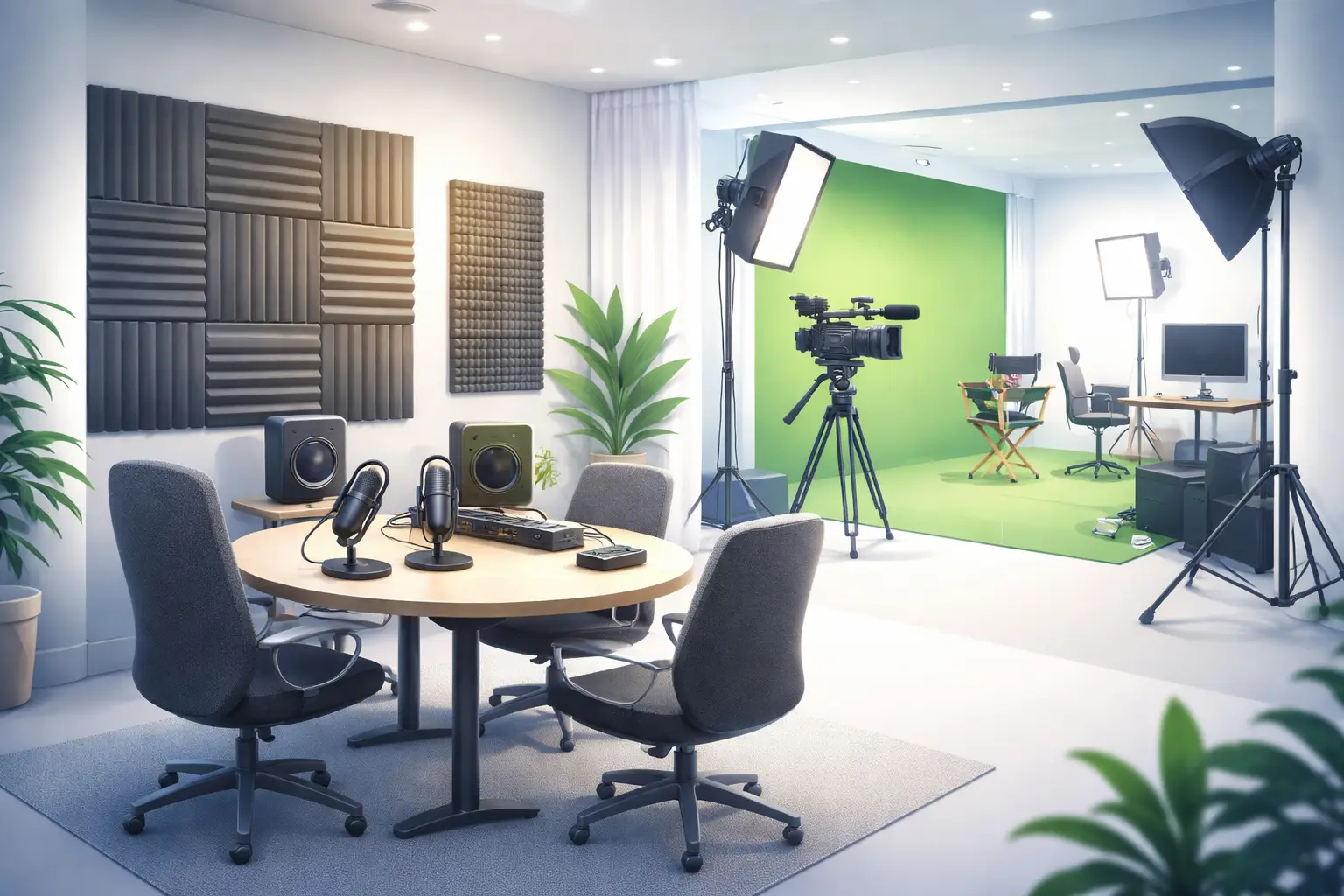
For video-first projects a video podcast studio London facility provides camera packages, lighting grids, multi-camera switching and green-screen options. A single booking that includes both audio and video workflows removes the need to rebook separate teams, and enables matched aesthetics across your audio releases and video content.
Example production flow
- Arrival and load-in for camera and audio rigs.
- Lighting and camera blocking while sound checks happen in a soundproof booth.
- Record the video interview with ISO tracks captured for each microphone.
- Move to a casual setup for b-roll and live-streamed Q&A with the same crew.
Cost control and predictable booking
Book a multipurpose space and you often get bundled rates for kit, crew and room time. That predictability helps producers create realistic budgets and reduces hidden costs caused by late changes or repeated venue hire. If you need flexibility, ask about dry hire versus full production support — both are common options at multipurpose studios.
Logistics that affect budgets
- Free or on-site parking — saves time and parking fees when moving gear. Look for a studio with free parking if heavy kit is involved.
- Access to nearby transport links — a studio near Heathrow or near Central London can reduce travel time for remote guests or cast.
- In-house crew rates — often lower than sourcing freelancers for each micro-task.
If your project specifically values site convenience, consider studios listed for podcast studio hire West London that advertise parking and easy airport access.
Technical support and risk reduction
Multipurpose studios often include on-site technicians, tested equipment and established workflows. That reduces the risk of failed recordings, late finishes, or incompatible file formats. For teams without full production experience, technical support is the single biggest value-add for ensuring deliverables are completed on time and on brief.
What the team usually provides
- Experienced engineers and camera operators
- File management and delivery in broadcast formats
- Lighting, grip and basic set dressing
Host, audience and event-friendly options
Multipurpose studios often double as venues for small live audiences, workshops and screenings. If you plan a hybrid episode — recorded conversation plus a small live audience — the right venue can accommodate seating, FOH sound and live-stream encoding in one contract.
Easy add-ons that boost production value
Look for a studio that offers practical extras: instant dailies, hair and make-up rooms, catering options, and gear extras like handheld gimbals or live-stream encoders. These add-ons save time sourcing third parties and let you stay focused on the creative work.
For detail on features creators value, see our post on studio hire West London podcast features for creators.
Booking and day-of workflow
Practical checklist for a smooth studio day:
- Confirm arrival and load-in windows, ask for parking details if bringing a vehicle.
- Request an equipment list and confirm engineer availability.
- Plan a technical rehearsal (even 30 minutes) to test audio routing, camera framing and streaming bandwidth.
- Agree deliverables and file formats before wrap so the studio can prepare masters.
For creators travelling via airport or needing parking, review studios that advertise a creative production space near Heathrow with free parking to simplify logistics.
Diagnosis and Action Checklist
- What is uncertain: specific acoustic isolation performance, parking availability, exact equipment list, technician experience level, power capacity for heavy lighting rigs, and live-stream bandwidth reliability.
- Where to look in official sources: search for “sound insulation”, “acoustic performance”, “building electrical capacity”, “live streaming bandwidth requirements”, “public parking permits” on official domains such as bsi.org.uk for British Standards, your local council website for permits, and gov.uk for business and event guidance.
- What data to collect on-site or ask the studio to provide:
- Measured background noise level in dB(A) and any RT60 or reverberation metrics if available.
- Complete inventory of microphones, consoles, cameras, lighting and capture formats (recording codec and file container).
- Proof of PAT testing and certified electrical inspections for temporary power loads.
- Photographs or a video walk-through of load-in routes, parking bays and door widths for gear transport.
- Sample session files or references from recent clients to verify delivery quality.
- What tests to perform:
- Do a 5–10 minute test recording with the same mic and set-up you plan to use and listen back on high-quality monitors or headphones.
- Run a bandwidth test from the studio network during business hours to check upload capacity for live streaming.
- Check power circuits by contacting the studio engineer to confirm total amperage available on stage circuits.
- How to decide between scenarios:
- If background noise is below conversational thresholds and a test recording is clean, proceed with in-studio audio capture.
- If noise or acoustics are marginal, use the dedicated booth for critical voice tracks and schedule any noisy segments (e.g., live music) in the main room with different mic techniques.
- If upload bandwidth is insufficient for direct live streaming, record a local stream and use an external bonded service or schedule a lower-bitrate live option.
- If parking or load-in is restricted, consider hiring local grip services with a van to shuttle gear in stages rather than attempting all gear on arrival.
- Official sources to consult: British Standards Institution (bsi.org.uk) for acoustic and electrical standards, local council planning and environmental health pages for venue permits and noise guidance, and the British Film Institute (https://www.bfi.org.uk) for production best-practice references.
When you follow this checklist, you convert common uncertainties into concrete checks that reduce day-of risk and improve final delivery.
Next steps to book and test the space
1) Request a site visit or a short test slot. 2) Ask for an engineer to run a mic check using the exact mics you plan to use. 3) Confirm file delivery formats and turnaround for masters. 4) Secure written confirmation of parking and load-in times.
If you want a compact guide to facilities and features, our post on creative production space near Heathrow with free parking highlights logistical benefits for teams arriving by car or air.
Final practical advice
Pick a multipurpose studio if you value consolidated logistics, consistent audio and video quality, technical support and faster turnaround. For podcasters specifically, a podcast recording studio and a reliable soundproof podcast studio will reduce editing time and improve listener experience. If you’re planning video and hybrid work, choose a studio that lists both audio and video gear and offers experienced technical staff to manage multi-format sessions. When in doubt, use the Diagnosis and Action Checklist above to confirm the details before you book.
For industry guidelines and production resources, see the British Film Institute at bfi.org.uk.