

Green Screen Studio Hire with Production Support West London
Booking a green screen studio is more than reserving space: it’s planning crew, kit, schedule and support so your shoot or event runs smoothly. This guide walks you through how to book a green screen studio with professional production support at Ravenor Farm Studios, a fully equipped media hub in West London. You’ll get practical steps, sample production scenarios, and the exact checks to make before you arrive.
Choosing a workshop venue West London
Start by matching the studio’s strengths to your project. If you plan training sessions, multi-speaker panels or hands-on tutorials, look for clear floor space, seating flexibility, and reliable AV. Use the following checklist when you compare options:
- Floor dimensions and ceiling height for camera rigs, grip, and set builds.
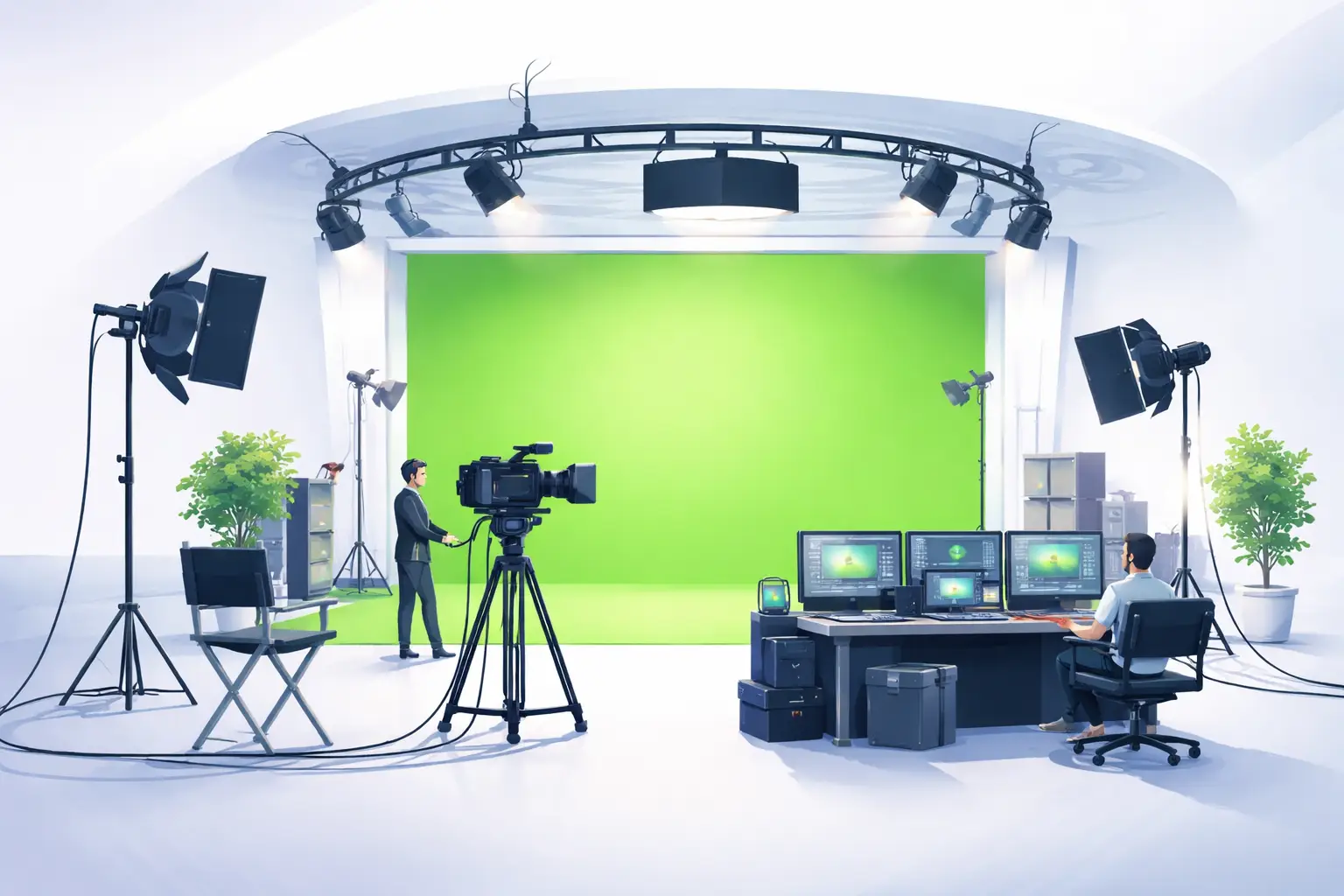
- Green screen width/height, seamless cyclorama or fabric, and whether the surface is keyed by a lighting plan.
- On-site production support available during setup, shoot and strike (engineer, gaffer, camera assistant).
- Available kit: cameras, lenses, lighting packages, grip, playback monitors and streaming encoder equipment.
- Backstage/warming rooms, catering access, parking and load-in logistics.
Ravenor Farm Studios combines flexible set space with The Barn for private gatherings, so you can run a day of production and follow it with a brand showcase or workshop without changing venues.
What production support should include
Production support reduces risk and speeds the shoot. Confirm whether the studio provides:
- Technical crew: gaffer, DIT/engineer, sound tech, and a production manager.
- Pre-rigged lighting grids or in-house lighting packages tuned for chroma key work.
- Live streaming infrastructure and encoding support for remote guests or audiences.
- On-site equipment hire for last-minute needs and consumables like tape, sandbags and gaffer supplies.
Ask for a technical rider or equipment list and compare it with your own crew’s rider to avoid duplication or gaps.
How to prepare your booking request
A concise booking request saves time and gets you accurate availability and quotes. Include the following in your initial message:
- Project type (e.g., commercial shoot, podcast recording, product demo, workshop).
- Preferred dates and alternative dates; estimate of full-day or multi-day hire.
- Number of people on site (crew, talent, audience).
- Essential kit and services (green screen, grip, camera package, streaming, set build, gaffer).
- Access needs (vehicle load-in, parking, lift access) and any public-facing elements like ticketing or catering.
Include a short production schedule (call time, setup, shoot windows, strike) so the studio can confirm crew availability and site prep time.
Using The Barn venue hire for presentations and events
If your production finishes with a live presentation, consider The Barn venue hire. It’s suited to screenings, brand launches and private events that need a warm, adaptable space connected to the studio. Confirm seating layout, AV playback options and whether the studio can handle audience check-in, live-streaming the presentation, or multi-camera capture for later edits.
For brand launches or product demos that require both production and hospitality, The Barn keeps everything under one roof — reducing transit time and logistics complexity.
Technical and logistical checklist for green screen shoots
Before you confirm a booking, verify these practical items with the studio and your crew:
- Green screen size and material, and whether it’s a cyclorama or fabric backdrop.
- Lighting inventory: soft sources, key lights, back lights and flags specifically for chroma key separation.
- Camera formats supported and whether the studio offers test captures to confirm keying behaviour.
- Monitor & playback options for director and client—how many and where they will be positioned.
- Sound isolation and on-site recording spaces for voiceover or ADR if needed.
- Internet upload speed and streaming encoder availability for live shows or remote guests.
- Load-in logistics including vehicle access, loading bay dimensions and timing windows.
- Insurance requirements and whether the studio requires a production insurance certificate on file.
Request photos or a floor plan if you need to plan camera positions and set builds in advance. Many teams use a simple scaled sketch to confirm distances between camera, subject and green screen for correct lens choices and lighting coverage.
Scheduling and on-site workflow example
Here’s a typical one-day production timeline to adapt to your shoot. Use it to confirm crew call times and studio support coverage:
- 08:00 — Load-in and parking for trucks and vans.
- 08:30 — Production meeting with studio manager and technical team to confirm plan.
- 09:00 — Rigging lights, setting green screen, camera prep and cable runs.
- 11:00 — Camera rehearsal, colour check and chroma key test pulls.
- 12:00 — Lunch break (confirm catering and client access area).
- 13:00 — Shoot blocks with talent and director; live-stream tests if needed.
- 17:00 — Wrap principal photography, begin quick backups and DIT ingest.
- 18:00 — Strike set, pack equipment; final checks and handover to studio for venue reset if The Barn event follows.
Share a call sheet and shot list at least 48 hours before the shoot so the studio can allocate the correct number of technicians and equipment.
Pricing, deposits and contracts
Every studio handles pricing differently; instead of asking for figures here, prepare to negotiate around these variables so you can compare quotes fairly:
- Hourly vs day rates and whether technical crew is included or charged separately.
- Kit packages and any dry-hire vs full-service options.
- Cancellation and rescheduling policy, and how overtime is calculated.
- Payment terms, required deposits and final invoicing triggers (delivery of files, completion of event).
Make sure the contract explicitly lists what’s included in the hire: which crew roles, how many hours, which pieces of equipment, and responsibilities for damage or third-party vendors.
Venue and event use cases
Ravenor Farm Studios is designed for a broad range of clients: YouTubers and podcasters needing a content creation studio, production companies staging a commercial with set construction, or agencies hosting a brand launch venue London attendees expect to remember. The flexibility to combine studio time with an event space makes it a strong option for projects that cross production and hospitality.
For smaller creative gatherings or internal workshops, the facilities also serve as a private event venue London and a place to test live formats. If your plan includes an audience, confirm audience capacity, seating, sightlines, and any licensing or safety checks required for public events.
Preparing your technical rider and files for handover
Deliverables and data management are part of the booking conversation. Agree in advance who will handle backups, how dailies are transferred, and the preferred file formats. If the studio will provide DIT or post-transfer services, list the expected deliverables and labels so post-production can start immediately after the shoot.
Event logistics and accessibility
Practical comforts make a production day more efficient. Confirm the following with the studio:
- Parking spaces for crew and load-in vehicles and nearby public transport links.
- Catering options on-site or recommended local caterers who understand production schedules.
- Accessibility for talent and audience, including step-free access and restroom availability.
- Nearby accommodation if you have multi-day bookings or late wrap times.
For projects near Heathrow or that require easy parking, see Ravenor Farm Studios’ guidance on production parking and transport in our blog about creative production space near Heathrow with free parking.
Diagnosis and Action Checklist
This checklist helps you resolve common uncertainties before you book. Follow each step methodically to reach a clear decision.
- What is uncertain: whether the studio’s green screen, lighting and crew meet your technical keying and streaming needs.
- Where to check in official sources: request the studio’s technical rider and floor plan; search for keywords in their documentation like “green screen dimensions”, “lighting inventory”, “streaming encoder”, “crew roles”, and “load-in access”.
- What data to collect or tests to run:
- Ask the studio for sample test footage or a short chroma key test capture using your camera settings.
- Collect the studio’s stated internet upload speed and request a live-stream test at scheduled time to confirm latency and bitrate.
- Obtain a photo or PDF of the loading bay dimensions and door heights for vehicle planning.
- Ask for crew CVs or role descriptions to ensure the necessary experience (gaffer, DIT, sound tech) will be present.
- How to distinguish scenarios:
- If test captures key cleanly with your camera and lighting, the studio setup is suitable.
- If live-stream tests show sustained upload and encoder stability during a simulated session, streaming support is sufficient.
- If dimensions or door heights restrict your rig, request a site visit or ask the studio to propose alternative set-ups or additional gear to fit your needs.
Legal, safety and external guidance
Confirm the studio’s health and safety procedures, fire risk assessment and equipment safety certificates. For official guidance on event and workplace safety, consult the UK Health and Safety Executive at hse.gov.uk to align your production practices with recognised standards.
Booking and next steps
To convert an enquiry into a confirmed booking:
- Send the preparatory booking email with the project summary and schedule items listed above.
- Request the studio’s technical rider, floor plan and a sample chroma key test capture.
- Arrange a site visit or virtual tour to confirm logistics and meet the technical team.
- Confirm insurance requirements, booking terms and a crew list before signing the hire agreement.
If you want a focused walkthrough on green screen setup, equipment hire, or how The Barn can stage your brand launch, book a tour or contact Ravenor Farm Studios. For more on green screen options for podcasters and creators see our related article on Podcast Recording Studio West London with Green Screen and our overview of studio hire benefits for TV, film and podcast teams.
With the right preparation and on-site support, your green screen production can be efficient, creative and stress-free. Use this guide to ask the right questions, confirm the technical fit, and secure a studio day that delivers great footage and a smooth event experience.