


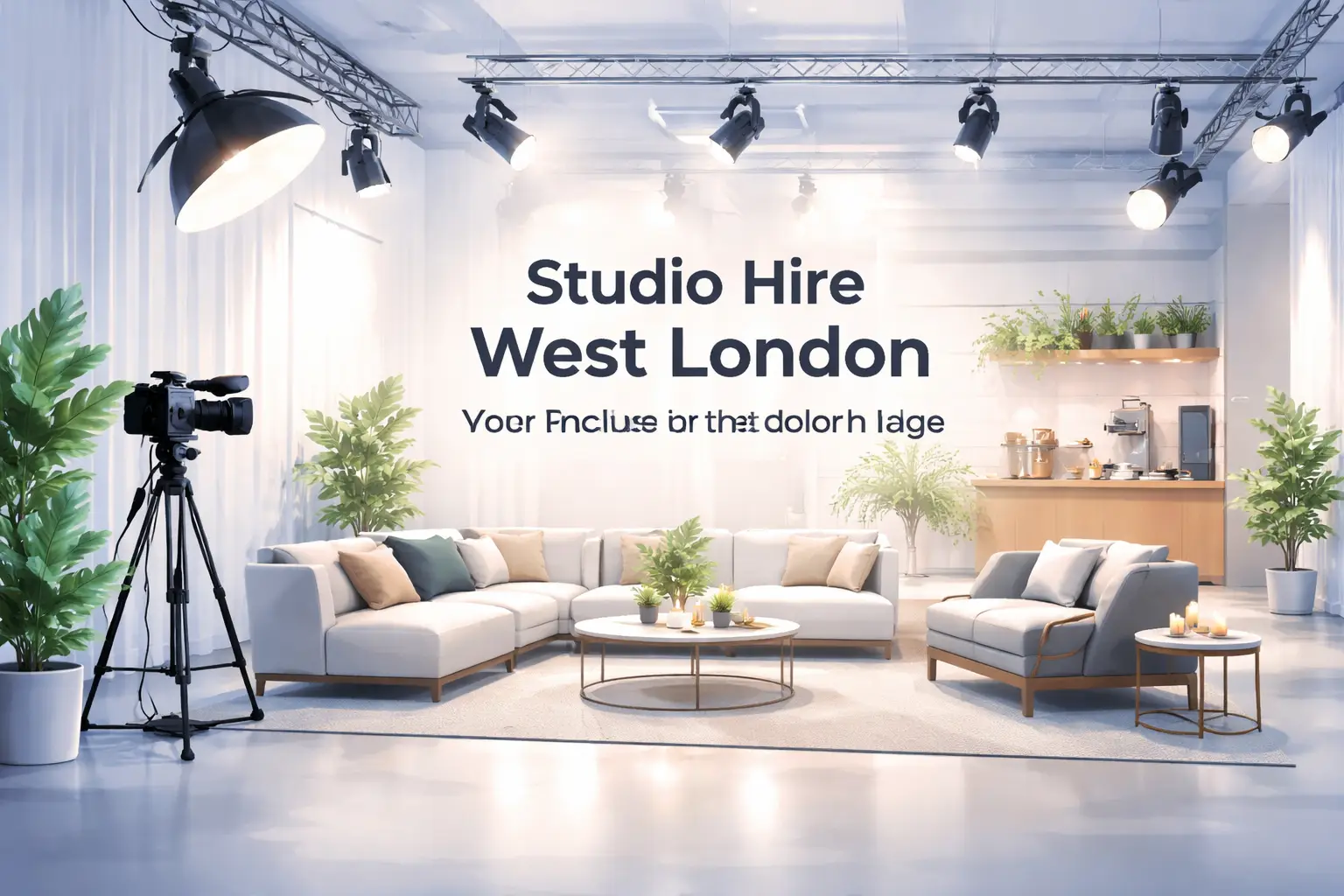
Studio Hire West London for Private Events and Gatherings
Choosing a flexible event space in West London transforms a private gathering from a logistics headache into a polished, memorable experience. For producers, agencies and hosts who need adaptable layouts, production-grade AV, and easy access to London and Heathrow, a studio-style venue combines the privacy of a dedicated hire space with the technical readiness of a media facility. Below I explain practical benefits, show scenario-driven examples, and give a step-by-step plan you can follow when booking a studio for birthdays, launches, screenings, rehearsed performances, or hybrid events.
Why production studio hire London works for private gatherings
Production studio hire London spaces are designed for repeatable, reliable technical results: sound-treated rooms, flexible lighting grids, clear load-in routes and reliable power. That infrastructure shortens setup time, reduces technical risk and gives organisers confidence that AV-led moments — keynote livestreams, pre-recorded video content or a live band—will run smoothly. When your event needs both hospitality and production quality, a studio hire model removes many of the on-the-day surprises you get in non-technical venues.
Flexible layouts and production-ready facilities
Flexible studios let you combine practical zones—arrival and reception, seated or standing audience, technical control, catering and green rooms—without permanent fixtures. For private gatherings this means the same venue can host a rehearsal in the morning, a filmed interview in the afternoon and a reception in the evening by reconfiguring furniture, lighting and camera positions. Facilities often include rigging points, blackout capability for controlled lighting, and reinforced floors for small staging, which speeds up changeovers and reduces crew requirements.
Content and audience benefits with content studio hire London
Using a content studio hire London gives hosts two parallel advantages: the live guest experience and the recorded output quality. If you plan to film highlights, record a podcast episode, or capture interviews, the same acoustic treatments and camera-ready backgrounds used in production save time and post-production costs. For private gatherings that also serve as brand content opportunities—anniversaries, product showcases or artist showcases—this dual capability maximises the value of the day.
On-site support for video and live streaming with video studio hire London
When your event includes live streaming or a multi-camera shoot, choosing video studio hire London ensures technicians and kit are on hand. This reduces the need to coordinate multiple suppliers and provides a single point of responsibility for image quality, stream health and archiving. For hybrid events that mix in-person attendance with remote viewers, the technical continuity a studio provides makes the experience seamless for both audiences.
Podcast-ready spaces and intimate formats with podcast studio hire London
For private events centred on conversation—fireside chats, live podcast tapings or panel discussions—a podcast studio hire London option delivers controlled acoustics, close-mic setups and isolated recording booths. That makes live recordings publishable with minimal editing and gives guests a professional, comfortable environment for longer-form content and interviews.
Scenario: an evening launch and social with a recorded talk
Imagine hosting a product launch: an intimate presentation, followed by a panel discussion and a social reception. Book a flexible studio that supports a stage area with a camera position, a control desk for live switching, and a reception zone that can be opened after the talk. The production team captures the talk on multiple cameras, records a podcast-style interview with the founder in a sound-treated booth, and provides high-quality masters for marketing within days—reducing post-event turnaround and increasing shareable content.
Booking process step by step
- Brief the space: List event aims, number of guests (estimate), required AV elements, catering needs and desired run order.
- Request technical spec: Ask for a venue technical rider, floorplan, power breakdown and rigging notes so you can match equipment and crew to the room.
- Schedule a site visit: Walk the space at the time you plan to run the event to test sightlines, load-in and backstage flow.
- Run a tech scout: Bring key crew (producer, LD, sound engineer) to confirm camera positions, lighting plots and audio patching.
- Confirm logistics: Agree on load-in times, rehearsal windows, catering access, waste removal and parking or deliveries.
- Agree contract and insurance: Check what the venue provides (staffing, security) and what you must supply (public liability, performers’ insurance).
- Pre-event test: Schedule a full tech run or dress rehearsal to troubleshoot AV, connectivity and timing.
How Ravenor Farm Studios supports private gatherings
Ravenor Farm Studios in Greenford combines media-grade rooms and an event Barn that suit private gatherings for brands, agencies and creators. With local access between Central London and Heathrow, the studio offers dry hire and production support for film, TV and live content. Whether you need a photography day, a structured panel recording or a streamed launch, the site’s dual role as a studio and venue simplifies coordination: production technical support, flexible studio spaces and a venue-ready Barn reduce the number of external suppliers you must manage.
If you want context on adjacent services, see related guidance on Creative Content Studio Hire Benefits in West London and practical tips for filming in West London in Filming Studio Hire London Affordable Options in West London.
Venue selection checklist for producers
- Confirm whether the venue can supply a technical rider that matches your schematic and power needs.
- Inspect load-in dimensions and parking or delivery windows—measure van access and door heights on site.
- Test network and streaming bandwidth on-site during your visit if you plan to live stream or upload rushes.
- Check blackout capability and available rigging points for lights and backdrops.
- Clarify staffing: who will run front-of-house, security, and venue tech vs. what you must bring.
- Confirm catering flow and waste handling to ensure service doesn’t interfere with camera or sound positions.
Typical on-the-day timeline (example)
- Load-in and set build
- Technical setup and camera checks
- Rehearsal and soundcheck
- Doors open / guest arrival
- Show / recording
- Breakdown and load-out
Adjust each phase based on the complexity of your tech and the venue’s turnaround rules. Studios usually allow staged changeovers that minimise downtime, but confirm exact windows in advance.
Common production questions and practical answers
- Can I record and livestream simultaneously? Yes, with a video studio hire London setup you can record multi-camera masters while streaming a live mix—but confirm encoder capability and uplink details during the tech scout.
- Will the space handle live music? Many studios accommodate live bands with appropriate stage areas and power, but you must confirm load-in, on-site monitoring, and sound isolation to manage noise and audience safety.
- Do studios provide AV operators? Some venues include basic technical staff while others operate on dry hire; get clarity in writing so your crew schedule matches what the venue supplies.
Diagnosis and Action Checklist
- What is uncertain: venue maximum occupancy, noise restrictions, alcohol licensing, power capacity, and permitted load-in times.
- Exact keywords/sections to look for in official sources:
- “maximum occupancy” or “maximum capacity”
- “premises licence” or “licensing act” or “licence conditions”
- “temporary event notice” or “TEN” (where relevant)
- “noise abatement” or “noise control conditions”
- “fire risk assessment” or “means of escape”
- “planning permission” or “change of use”
- “power supply amps” or “electrical distribution” or “single-phase/three-phase”
- What data to collect and tests to run:
- Ask the venue for a written technical rider, fire risk assessment summary, and their premises licence copy (redacted if needed).
- Request a floorplan with labelled ingress/egress points and measured door heights; measure your largest load item against these dimensions.
- Obtain a power schedule: total available amps, distribution panel positions and available circuits.
- Collect the venue’s wifi/network spec and run a live-stream bandwidth test on-site at the time of day you expect to stream.
- Request recent noise complaints history or guidance from the venue and, if necessary, plan a sound test with your PA at the volume you require.
- Record a short video walkthrough on your phone showing route from parking/delivery to stage to demonstrate to your crew and suppliers.
- Which official sources to consult:
- Local council licensing and planning pages for the venue’s borough (search the council site for the venue name and “premises licence”).
- Venue-supplied documents: technical rider, premises licence, fire risk assessment, insurance requirements.
- UK Government or local authority guidance pages on temporary events and noise control for exact legal terms.
- Professional bodies or industry-standard guides for productions (e.g., trade association technical standards) for safe rigging and power usage.
- How to distinguish scenarios:
- If the premises licence explicitly lists “regulated entertainment” and alcohol hours that match your plan, proceed with the venue’s supply of bar services. If not listed, you will need to arrange TENs or external licensing—confirm with the council.
- If power capacity lists three-phase distribution and labelled circuit loads exceed your equipment needs, you can power high-draw lighting; if the power schedule is limited, plan to reduce headcount of high-draw equipment or bring external power solutions approved by the venue electrician.
- If the venue has strict noise limits in licence conditions, schedule amplified components earlier or use in-room acoustic mitigation; if no explicit limits appear, plan a conservative maximum dB target and test it during soundcheck.
- If the fire risk assessment lists a specific maximum occupancy, use that number for safety planning; if not included, ask the venue to provide a certified occupancy figure before selling tickets or finalising guest lists.
Final practical tips
- Communicate the run sheet to the venue early and schedule a single point of contact for technical decisions on the event day.
- Bundle production bookings where possible: studios that provide in-house tech, lighting and sound simplify logistics and reduce cross-supplier friction.
- Use the studio’s production capabilities to produce content assets during downtime—record a short highlight reel or podcast while the crew is already set up.
- Confirm insurance and liability items early to avoid last-minute cancellations or restricted access on the day.
Choosing a flexible studio-based venue in West London gives private gatherings a production-grade backbone: predictable technical delivery, more control over the guest experience, and the chance to leave the event with properly mastered content. Follow the booking steps, use the diagnosis checklist where specifics are uncertain, and plan a tech scout to turn an event idea into a smoothly executed reality.