


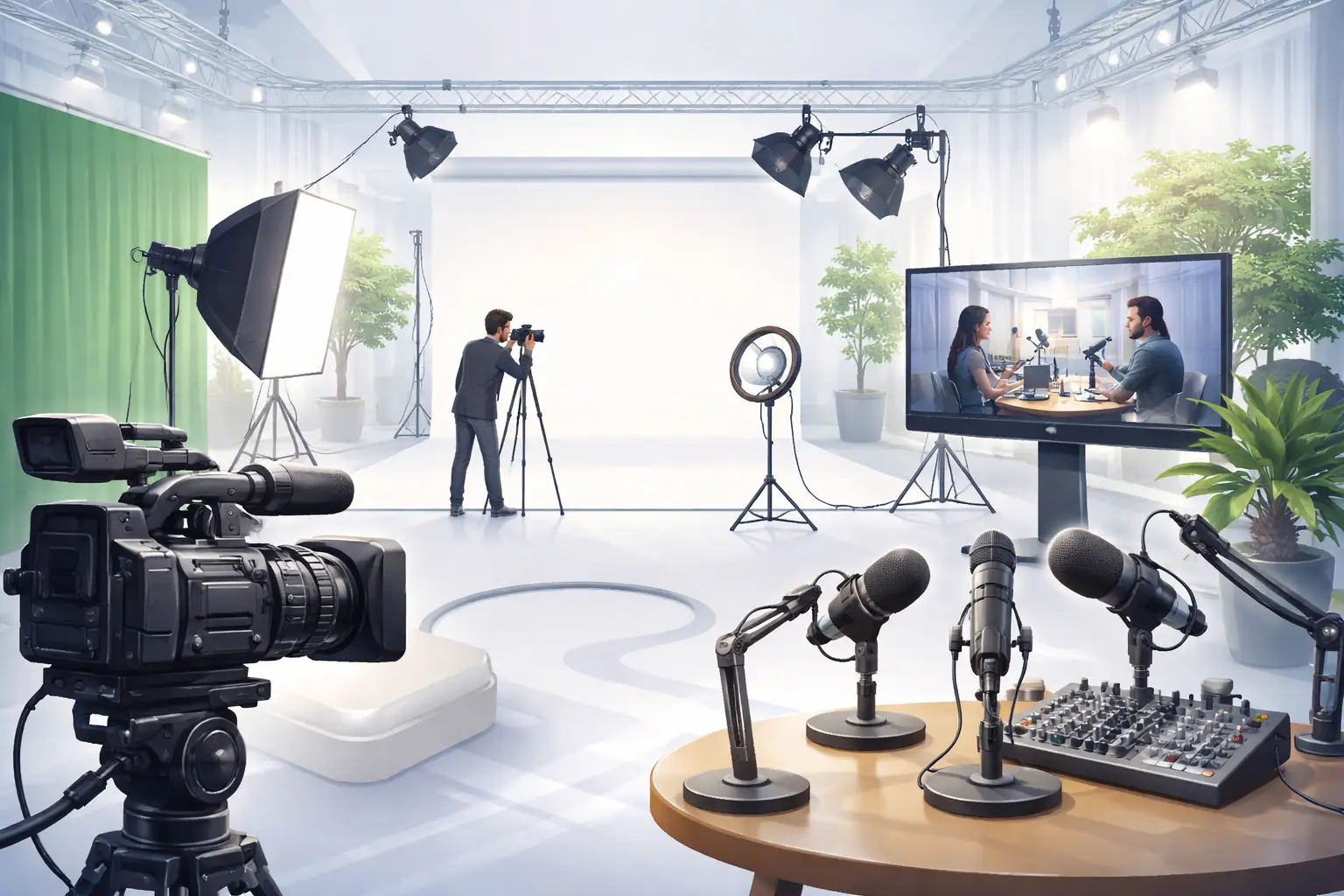
Creative Benefits of Film and Photo Studio Hire West London
Hiring a combined film and photography studio in West London transforms how teams plan and execute projects. When film crews, photographers and content teams share a single, flexible space, production becomes faster, more integrated and creatively richer. This guide explains practical benefits, gives scenario-driven workflows for typical shoots and offers actionable steps you can follow to evaluate and book the right studio for your production needs.
Why live streaming studio London works well with hybrid shoots
Integrating a live streaming rig into a shoot reduces duplication of effort: you can record high-resolution footage and simultaneously stream a tailored feed, without rebuilding set or lighting. A live streaming studio London setup in a combined facility helps brands run product launches, panel discussions and behind-the-scenes broadcasts while the primary photography or film unit captures controlled assets for later use.
Practical scenario: product launch with a photoshoot and livestream
- Pre-production: define final deliverables (hero photo, 90s product film, 30-minute live stream).
- Single studio day: reserve contiguous time blocks so the photographer, director and streaming operator can overlap during lighting and camera setup.
- Camera strategy: use the same camera system where possible. For example, primary camera records the hero film; a secondary feed from the same operator sends a clean live stream. Shared lenses and lighting reduce kit needs.
- Sound and audience: use a podcast recording studio London-style vocal chain (isolation, preamps) for live voice clarity, then route the feed to the livestream operator for low-latency output.
- Deliverables: capture stills during take pauses, then run a continuous record for edit and a parallel stream for audience engagement.
How combined spaces accelerate creative decisions
When photographers and filmmakers occupy the same studio, creative feedback loops are immediate. A director can review stills on set, the photographer can test lighting angles for a continuity plate and the colourist can advise on lighting ratios early. This eliminates transit time between separate hires and encourages iterative experimentation.
- Shared prep areas mean wardrobe, props and set dressing are assembled once and reused for both stills and motion.
- On-site technical support reduces setup friction: a single technician can switch between camera standards, manage timecode and troubleshoot audio or streaming issues.
- Creative continuity is simpler: white balance, skin tones and lighting moods can be matched for a unified campaign.
Typical bookings and how to structure them for efficiency
Plan bookings around phases rather than departments. Example structured day for a small brand shoot:
- Morning: set build, lighting tests, camera profiling.
- Midday: photography hero shots with short breaks for director review.
- Afternoon: film plates, motion takes and B-roll using the same set and lighting setups.
- Late afternoon: live streaming session or recorded interview using the podcast recording studio London configuration for clear audio.
This reduces the need to re-rig lights or relocate cast multiple times and maximises booked hours.
Key technical benefits for creative teams
- Sound control: A sound-treated space or soundproof studio hire London option lets you capture clean dialogue and live podcast audio in the same venue as noisy pre-production activity.
- Versatile backdrops: Use cyc walls, movable flats and green screens in one space—make a green screen studio hire London block part of your day to capture complex composites without moving locations.
- Shared kit and crew: Combining rentals reduces transport and setup time; lighting and grip can be repurposed across stills and motion shoots.
- Connectivity: Built-in broadcast and streaming infrastructure supports a broadcast studio hire London workflow for higher-quality output and reliable feeds.
How video podcast studio London setups fit into a combined facility
Video podcast studio London configurations benefit from film-grade lighting and photography-level camera framing. Recording in the same place where you shoot brand films or product photography allows consistent talent appearance and makes repurposing content for social channels straightforward.
Example: record a three-episode video podcast series using the same set and lighting as a short documentary shoot; this maintains visual continuity and reduces overall prep time.
Operational checklist for a combined shoot
- Define deliverables and designate which items must be captured first (e.g., stills that require pristine lighting).
- Create a call sheet that lists shared kit and primary contacts (stream operator, sound engineer, photographer, DOP).
- Book a soundcheck using the podcast recording studio London setup before any live stream or interview recording.
- Reserve green screen or cyc time in blocks to allow keying tests and colour profiling.
- Plan hand-offs: schedule short overlap windows so teams can finish setup without pressure.
Budget and logistics advantages without guessing numbers
Combining film and photography booking lines reduces logistics complexity: fewer travel slots, less duplicated crew time and streamlined equipment handovers. Rather than estimating cost savings, focus on objective scheduling gains: compare number of setup transitions, total crew travel legs and kit load-ins between separate-location and single-location scenarios to quantify savings yourself.
When to choose a dry hire versus a fully supported day rate
If your team is self-sufficient with crew and kit, a dry hire gives flexible studio access for both stills and motion. If you need local support—camera prep, live streaming operation or technical engineering—book a package that includes skilled onsite technicians. Match your choice to the complexity of simultaneous outputs: live streaming and broadcast demands favour supported hires; single-camera photo days may suit dry hire.
For more detail on production options tailored to creators in West London, see this resource on production studio hire London for creators in West London.
production studio hire London for creators in West London
Preparing for broadcast and livestream elements
Broadcast standards and streaming reliability are operational concerns. If your shoot involves a live element, confirm the studio can provide clean video outputs, redundancy for encoder feeds and an upload pipeline suited to your streaming platform. Book a rehearsal to test transitions and graphics roll-ins; rehearsal will reveal frame-rate or colour-space mismatches early.
For corporate streaming needs and venue-specific guidance, see the live streaming studio hire West London resource linked below.
Live Streaming Studio Hire for Corporate Events West London
Repurposing assets: get more content from the same shoot
When you book a combined studio, plan for asset multipurposing:
- Shoot stills concurrently with motion to create hero images from high-resolution frames.
- Record longer-form interviews that can be edited down into social clips, behind-the-scenes reels and audio podcasts.
- Use a green screen session to produce multiple virtual backgrounds for localized campaigns.
These steps increase the content yield per studio hour and reduce the number of separate bookings required.
Booking tips specific to West London facilities
West London studios often sit conveniently between Central London and Heathrow, making them accessible for cast and crew arriving from different directions. When evaluating venues, check for:
- Loading access and parking availability for kit trucks.
- Adjacent green rooms or staging areas for talent changeovers.
- Onsite parking or nearby public transport links for crew logistics.
If you want guidance on podcast-focused features, consult this practical guide for Podcast Studio London in West London.
Podcast Studio London Guide for West London
Diagnosis and Action Checklist
This checklist helps you confirm uncertain technical or operational details before you book a combined film and photography studio.
-
What is uncertain: Acoustics and sound isolation (is the room suitable for broadcast-quality dialogue?), and whether the studio can deliver required upload bandwidth for streaming.
What to look for in official sources: search the studio’s technical specification sheet or “technical rider”, looking for terms like “RT60”, “soundproof”, “isolation”, “noise floor”, “internet upload”, “redundant connection”.
Data to collect / tests to run: request a room acoustic report or ask to run an on-site RT60 test; measure ambient noise with an SPL meter during typical hours; perform a dedicated upload speed test from the studio network at the time you will stream.
How to decide: if RT60 and noise floor figures meet your dialogue clarity needs and upload speed tests show stable throughput with low jitter during your planned time slot, proceed; if not, negotiate alternative time slots, bring additional acoustic treatment or book a different studio. -
What is uncertain: Green screen and cyc dimensions—will your camera framing and lens choices fit the background and lighting requirements?
What to look for in official sources: the studio spec sheet, floor plans or “studio dimensions” that list cyc width, height and floor-to-ceiling clearance.
Data to collect / tests to run: supply your camera sensor size and lens focal lengths to the studio and ask for test frames or a scale overlay; request photos of the cyc at the heights you need.
How to decide: if the studio’s cyc dimensions accommodate your widest planned focal length at your working distance, book; if not, adjust lens choice or request a different studio space. -
What is uncertain: Available power and rigging capacity for lighting and motorised set pieces.
What to look for in official sources: “power distribution”, “maximum load”, “rigging points”, “load ratings” in the technical rider or facilities document.
Data to collect / tests to run: list total wattage and amperage of your lighting package and motorised elements; ask the studio to confirm available circuits and whether distribution boxes are provided.
How to decide: if the studio can supply dedicated circuits or distribution that matches your package, proceed; otherwise reduce equipment or arrange additional distro. -
What is uncertain: On-site kit availability and technician skillsets for tasks like multicam switching or timecode sync.
What to look for in official sources: “equipment list”, “staffing”, “technician”, “engineer” sections in hire pages or support packages.
Data to collect / tests to run: request an up-to-date kit list and CVs or role descriptions of key on-site technicians; schedule a tech call to describe your workflow and confirm competence.
How to decide: if the kit list and personnel capabilities align with your workflow (e.g., NDI/SDI switching, timecode, intercom), proceed; otherwise hire external technicians or adjust requirements. -
What is uncertain: Health and safety, insurance and COVID-era operational rules.
What to look for in official sources: “health and safety”, “public liability”, “risk assessment”, “COVID policy” on the studio’s website or PDF documents.
Data to collect / tests to run: request copies of the studio’s risk assessment, PAT test records for electrical equipment, and proof of public liability coverage limits.
How to decide: if documentation meets your production company’s minimum standards or your client requirements, confirm the booking; if not, request additional documentation or mitigation measures.
Final checklist before the shoot day
- Confirm arrival windows and loading access with the studio manager.
- Run a tech rehearsal for any live streaming or broadcast elements.
- Share a single consolidated call sheet with shared kit responsibilities and contact numbers.
- Plan short overlap windows to hand off from photography to film and to the streaming team.
Combining film and photography within a single West London studio simplifies logistics, tightens creative control and increases content yield when you plan workflows around shared resources. Use the Diagnosis and Action Checklist above to remove uncertainty and to confirm a facility’s technical fit for your project.