

Photography studio London hire in Greenford for creatives
Booking a studio is more than choosing a room with white walls. For photographers, filmmakers and content creators working in West London, the right space affects lighting choices, crew workflow, sound control and final delivery. This guide walks through how to find a photography studio hire in Greenford that matches creative and technical needs, how to evaluate facilities step-by-step, and a practical booking workflow you can use to get your production confirmed quickly.
Start with a clear brief and production priorities
Before you contact studios, write a short brief (one page) that lists:
- Project type: stills, commercial photography, music video, interview or hybrid content.
- Key deliverables: number of final images or video length, file formats and turnaround.
- Required kit: grip and lighting, camera mounts, dolly, teleprompter, or podcasting rigs.
- Personnel and space: number of crew, talent, wardrobe and set-build needs.
- Schedule: setup time, shoot hours, and strike time.
With this brief you can ask studios targeted questions and compare like-for-like offers.
photography studio London choices and how to assess them
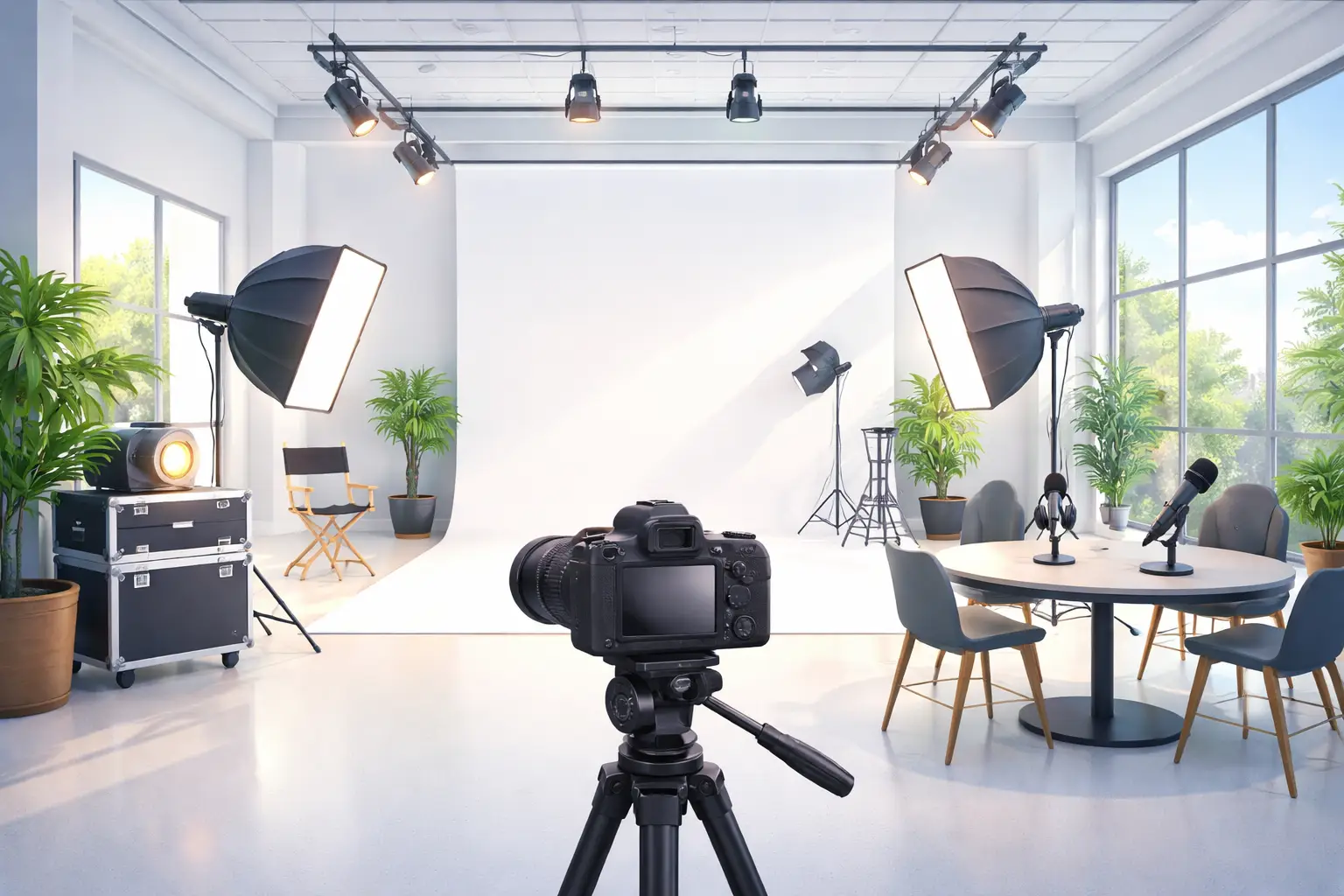
When you search for a photography studio London, evaluate spaces against the brief. Key physical and technical criteria include:
- Floor area and ceiling height — can your set, lighting grid and movement fit comfortably?
- Power distribution — number of circuits, accessible sockets, and dedicated lighting circuits.
- Natural light control — blackout options, adjustable north light or large windows.
- Backdrops and grip — infinity cove, cyc walls, rails, stands and flags.
- Load-in logistics — parking, goods lift, loading doors and distance from parking to studio.
- Facilities — client room, changing/wardrobe, hair & makeup area, kitchen and restroom count.
Technical specs and support services to request
Request a technical rider or specification sheet. If they don’t provide one, ask for these details directly:
- Lighting inventory and rental rates (if you plan to hire on-site).
- Available camera support gear: C-stands, scaffolding, jibs, dollies.
- On-site technical support hours and credentials (who operates heavy kit or rigging).
- Network and streaming capabilities — wired ethernet speed, dedicated bandwidth and encoder options.
- Acoustic treatment and isolation if you’ll capture sound for a podcast studio London session or sync audio.
Audio and podcast production considerations
If your project includes audio or you need a podcast recording studio London setup, check:
- Room acoustics and untreated reverberation times.
- Available microphones, mixers and headphone monitoring systems.
- Direct recording paths to a DAW and multi-track capability for post-production.
- Quiet hours and external noise risks (traffic, nearby businesses).
For hybrid shoots that include video and audio, confirm the studio supports multi-camera feeds and timecode sync for post.
How to compare quotes and dry hire vs full service
Quotes often vary because of what they include. Ask each studio to itemise:
- Base hire hours and overtime rates.
- Included kit and consumables (gels, tape, gaffer, batteries).
- Technical crew rates and minimum call times.
- Insurance requirements and whether the studio carries public liability.
- Cancellation policy and payment schedule.
Decide between dry hire (space only) and full service (crew, kit and post). For example, a commercial photographer used to bringing all kit may prefer dry hire, while a brand shoot may want full service to simplify logistics.
Logistics for production day and load-in
Confirm practical details in writing:
- Arrival and parking instructions for trucks and vans.
- Keys, on-site contact and emergency phone numbers.
- Waste disposal and catering restrictions.
- Nearest studio access points, local accommodation and travel times to Central London or Heathrow.
Safety, insurance and legal checks
Always verify insurance and safety compliance. Ask for:
- Public liability certificate and employer’s liability if the studio employs staff.
- Risk assessment templates and whether the studio will complete a site-specific RA.
- Electrical safety documentation for high-draw equipment.
- Any licensing required for live events or music playback on premises.
Podcasting, video and TV use cases
Greenford studios can serve many production needs. If your brief includes a video or live element, mention the format and expected audience. For example:
- For a live-streamed interview consider a studio with dedicated streaming kit and stable upload bandwidth; search for facilities advertising video podcast studio London capability.
- Music videos or multi-camera shoots need rigging points and often higher power capacity — confirm the studio can accommodate that instead of just stills.
- Large scale or broadcast-style shoots should check TV-grade compliance if you need a TV studio London style workflow.
Booking workflow and sample timeline
Use this standard timeline to move from brief to confirmed booking:
- Share your one-page brief with 3 shortlisted studios and request a technical spec and availability.
- Compare itemised quotes and ask follow-up technical questions within 48 hours.
- Visit your top choice for a site inspection with key crew or request a floor plan and photos if remote.
- Confirm insurance, sign contract, pay deposit and circulate call sheet 7–14 days before the shoot.
- Run a simple tech check on the day before the shoot: power, internet, playback and a short sound check for any podcast elements.
If you want practical reading about studio hire and local benefits, Ravenor Farm Studios publishes focused guides for filming and podcast hire in West London that are useful when comparing options. See related advice on filming and podcast bookings at Ravenor Farm Studios:
- Filming studio hire West London practical booking guide
- Podcast Studio Hire West London for Creative Content Makers
- Ravenor Farm Studios studio hire for West London creators
Diagnosis and Action Checklist
This checklist tells you exactly what to verify when a detail is unclear during studio selection and how to reach a definitive answer.
- What is uncertain: capacity, power capacity, internet speed, noise restrictions, permitted use and insurance coverage.
- Search keywords in official sources: use terms like “premises licence”, “maximum occupancy”, “electrical supply maximum load”, “broadband committed information rate”, “noise abatement notice”, “public liability certificate” on council, HSE and broadband provider pages.
- What to request from the studio: a current public liability certificate, an electrical test certificate or PAT list, a floor plan with measurements, a PDF of their technical rider, and a recent speedtest result showing both upload and download speeds performed at the studio.
- Tests and data to collect: measure interior dimensions, take photos of power distribution boards and socket locations, perform an internal speed test using a laptop and wired ethernet (run a web-based speed test and save the result), record 30 seconds of ambient room audio on a phone in all corners to check background noise.
- How to interpret outcomes:
- If measured upload bandwidth meets your encoder needs (compare your encoder bitrate requirement to the measured available upload minus a safety margin), the studio is suitable for live streaming.
- If ambient audio recordings show intermittent spikes or consistent traffic noise, schedule a site visit at your planned shoot time and test again; persistent noise suggests you need additional acoustic treatment or to choose a different studio.
- If the electrical panel photos show limited dedicated circuits near work areas, confirm whether the studio can provide additional distribution boxes or a hire generator for high-power lighting.
- Official sources to use: local council planning/licensing pages for venue use and event permits, Health and Safety Executive (HSE) guidance for workplace safety, official broadband provider or Ofcom pages for connectivity standards, and your own insurer or commercial insurance provider for cover limits and endorsed wording.
- If multiple scenarios are possible: create a short decision table listing Scenario A (dry hire, bring everything), Scenario B (partial kit & support), Scenario C (full service). For each scenario, note who supplies kit, who is responsible for PAT and rigging, and the incremental cost. Choose the scenario where responsibility and cost match your project risk tolerance and budget.
Final tips for Greenford bookings
Greenford’s location between Central London and Heathrow makes it efficient for national and international crews. When you contact a studio, be concise: attach your one-page brief, request a technical spec and a site visit slot, and confirm payment/cancellation terms. Mention any special needs early — live audience, catering scale, or late-night shoots — so the studio can confirm compliance and staffing.
Many creatives find that a short site inspection and a clear brief reduce surprises on the day and shorten the time to booking. If you want a practical West London partner that offers flexible spaces for photography, podcasting, video and events, Ravenor Farm Studios lists its facilities and booking options on the site and can provide a tailored walk-through for your brief.