

Studio Hire Greenford for Film and Content Production
Booking a professional studio in West London needs more than a calendar check. Whether you are planning a social campaign, a product photoshoot or a multi-camera commercial, this guide walks you through every step to secure reliable studio hire Greenford that fits the creative brief, schedule and technical needs. The approach below focuses on practical decisions, real-world scenarios and the checklist items production teams use when booking a content-ready space.
studio hire Greenford options and spaces
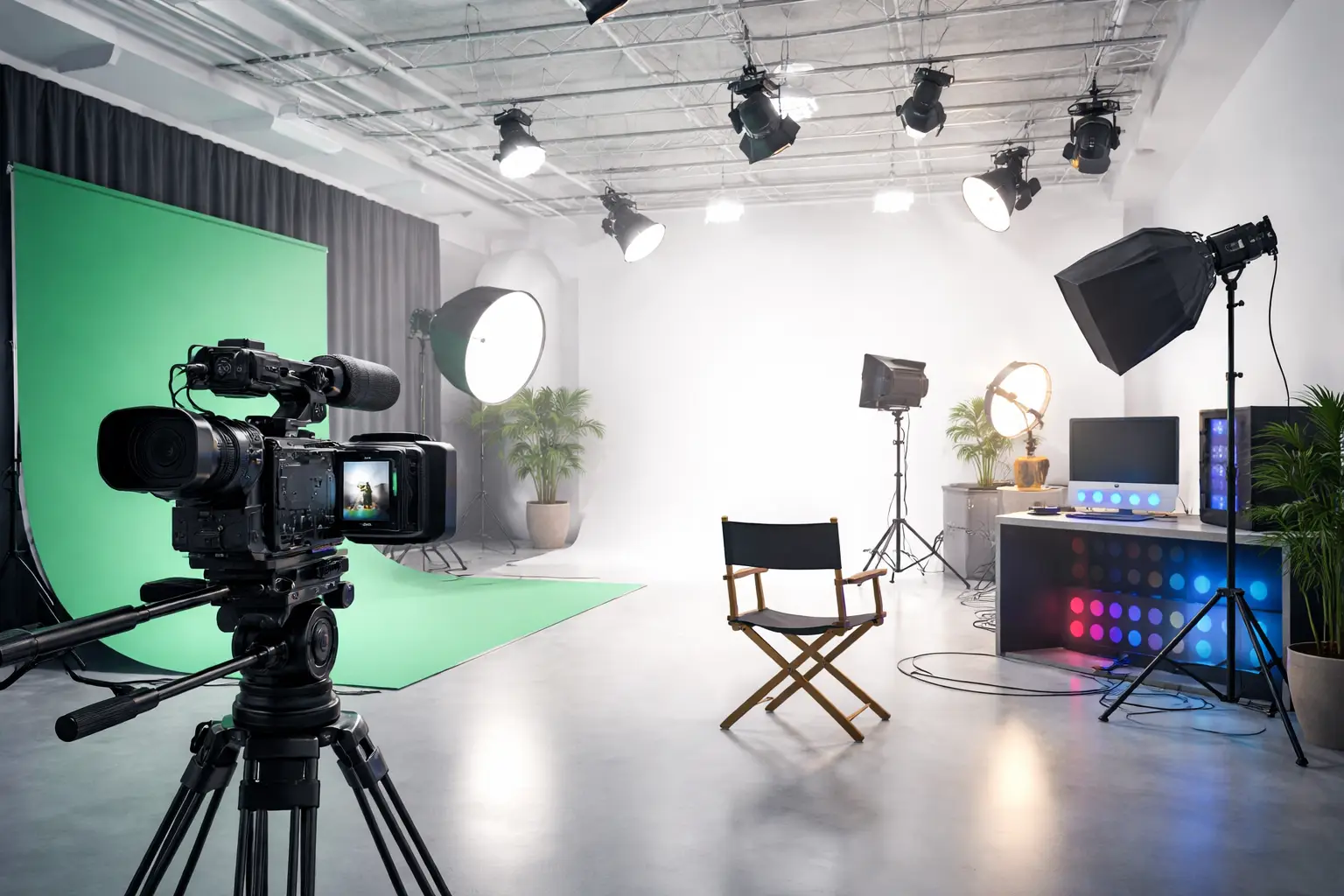
Start by mapping the production needs to available spaces. A content creation studio London typically offers a selection of configurable areas: cyc walls, multipurpose rooms, dedicated podcast booths and production offices. For film and TV shoots you’ll need clear dimensions, rigging points, power distribution and load-in access. For photography and social-first campaigns, backdrops, natural light control and grip kit matter more.
- Define your minimum studio footprint: camera positions, lighting grid, set build area and catering/green room access.
- List hard requirements: ceiling height, blackout capability, floor type, and dedicated power circuits.
- Note soft requirements: wheelchair access, parking, nearby accommodation for crews, and local transport links.
How to scope technical requirements
Turn creative intent into a technical brief. If you’re producing social media video production London content, identify shot formats (vertical vs horizontal), frame rates, and delivery codecs. For commercial video production London, include camera package preferences, camera movement needs (dolly, crane, Steadicam), and whether you need practicals or a full set build. For photography, specify lens requirements, strobe power and background sizes.
Write a one-page tech spec that answers:
- How many shoot days and setup/strike days are needed?
- What camera package and accessories are required?
- How many crew and cast will be on site at peak?
- Do you need on-site storage for props and equipment overnight?
Booking workflow and timeline
Follow a simple booking workflow to avoid double-booking and rushed setups:
- Contact studio with your tech spec and preferred dates — request available slots and sample floorplans or photos.
- Arrange a site visit or live video walkthrough to verify space, power, access and on-site facilities.
- Confirm technical support scope: in-house technician, rigger, stagehands, and what is included in dry hire.
- Request terms and booking contract with cancellation, rescheduling, insurance and health & safety clauses.
- Confirm final call sheet and arrival windows one week before the shoot.
What to inspect during a site visit
A site visit is the moment to validate assumptions. Use this quick inspection script:
- Measure key distances on the floorplan against your shot list and mark camera positions physically if possible.
- Test power: confirm dedicated circuits, number of sockets, and whether the studio can support lighting loads without tripping.
- Check acoustics and noise sources—both internal (HVAC) and external (road, trains)—if recording sound or podcasts.
- Confirm access routes for large items and parking/loading bays. Measure door widths and corridor turns for dollies, wardrobes and set-pieces.
Production services you can add
Many studios offer expanded services to reduce vendor hunting. Look for a studio that maps to your post production and production pipeline:
- post production services London such as offline editing suites, colour grading rooms and on-site ingest workflows.
- Content creation studio London support with lighting kits, grip hire and experienced studio technicians.
- On-site viewing/monitoring for client approvals and secure asset transfers at day-end.
Permits, insurance and legal essentials
Clarify permit and insurance responsibilities early. Commercial video production London shoots may require location notices, local authority permits for external filming or road closures, and public liability coverage. Studios often require proof of insurance from production companies and will outline any site-specific rules (flammables, smoke machines, drones). Add this to your booking checklist and confirm the accepted certificate types and limits in writing.
Scheduling crew, kit and logistics
Scheduling is where projects slip. Build a practical timetable that separates load-in, lighting and camera blocking, rehearsal and client viewing. Allow slack for last-minute changes. If the shoot will create content aimed at social platforms, schedule time for vertical framing checks and on-set social edits where relevant.
Example day plan for a mixed shoot
Scenario: half-day photography session followed by an afternoon of social media video production London shoots.
- 08:00–09:30 Load-in and set build for photography.
- 09:30–13:30 Product photography with hair/makeup rotation.
- 13:30–14:30 Lunch and quick set turn.
- 14:30–18:30 Social media video production London: vertical edits, influencer segments and B-roll capture.
- 18:30–20:00 Strike, secure assets and load-out.
Budgeting without price guesses
Do not base supplier selection on unclear numbers. Instead, request fully itemised quotes that separate studio hire, equipment rentals, technician hours, and post production services. Ask for clear billing terms on overtime, cancellations and consumption items (power, cleaning, extras). If any cost line is ambiguous, add it to the Diagnosis and Action Checklist below so you and the studio resolve it before signing.
Preparing a clear booking request email
A concise booking request speeds responses. Include these elements:
- Project title, production company and single point of contact with phone number.
- Preferred dates and contingency dates.
- Estimated crew and cast numbers, load-in time and expected strike time.
- Attach the technical brief and any floorplan requests.
- Request specific inclusions: in-house technician, background paper, on-site parking and storage.
Once you receive a quote, compare inclusions across studios—what looks like a similar price can vary widely once technicians, rigging and post production are itemised.
On the day operations and client handling
Run a short production meeting on arrival: confirm health & safety, emergency exits, first aid, smoking areas and any noise restrictions. Issue a final call sheet and contact list. For clients watching remotely, confirm the streaming link and monitoring workflow early and set a cut-off time for last-minute changes to avoid overtime.
Follow-up and post production handover
Clarify the handover procedure for footage and stills: who ingests media, where assets are stored, and when proxies or rushes are delivered. If you rely on the studio for post work, confirm delivery formats and review rounds. Using a studio that bundles post production services can streamline turnaround for time-sensitive social campaigns.
After the shoot, conduct a quick debrief with the studio about what worked and what can be improved: access times, cleanliness, equipment condition and technician responsiveness. This creates a smoother relationship for future bookings.
Internal resources and deeper reading
If you need detailed guides on specific hire types, these studio pages cover photography, filming and podcast bookings in West London:
- Photography studio London hire in Greenford for creatives
- Filming studio hire West London practical booking guide
- Ravenor Farm Studios studio hire for West London creators
Diagnosis and Action Checklist
This checklist helps resolve uncertainties before you commit. Follow each step precisely.
- What is uncertain: Studio capacity, equipment inclusions, power capacity, insurance requirements, parking/load-in rules, noise restrictions, and overtime billing policies.
- What to search for in official sources: Look in the studio’s booking terms and conditions for keywords or sections titled “Power”, “Technical specifications”, “Insurance”, “Load-in / Loading bay”, “Noise and nuisance”, “Cancellation”, “Overtime” and “Included kit”. If a studio publishes a PDF technical rider, open it and find “ceiling height”, “power circuits”, “rigging points”, “floor load” and “AV monitor outputs”.
- Data to collect / tests to run:
- Obtain floorplan PDFs and measure distances against your shot list.
- Request a photo or specification sheet for each included kit item (make/model) or ask for a recent inventory list.
- During a site visit, verify power by asking the duty technician to show the breaker panel and list available amp circuits; record circuit labels and socket counts.
- Run a short sound test on set times likely to be used to identify HVAC or external noise; record sample clips on your camera or an audio recorder.
- Confirm parking spaces and loading hours by arriving at the same time of day you plan to shoot or request time-stamped photos from the studio.
- Ask the studio to email their public liability acceptance criteria and verify your production insurance meets those limits; save the certificate exchange as proof.
- How to decide between scenarios:
- If power capacity is insufficient for your lighting plan, prioritize a studio with higher-rated circuits or reduce lighting load and plan for additional technical support—confirm in writing which option is accepted.
- If noise tests show intermittent external disturbances, choose to shift critical sound recording to a secondary date/time or secure a soundproof booth; document the mitigation plan.
- If parking and load-in are restricted, compare time-to-load and crew size: select the studio that admits uninterrupted load-in during your critical windows, or budget additional crew time for transfer logistics.
- If kit inventory lacks a required item, request an explicit quote for hire from the studio’s preferred suppliers and compare lead times; do not assume availability on the day.
Closing recommendations
Approach studio booking as a small project: define the brief, create a technical spec, validate with a site visit, and lock terms in a written agreement. If your brief includes short-form content across channels, prioritise a content creation studio London that offers quick ingest and edit workflows. For complex shoots, favour studios that provide post production services London to shorten turnaround and maintain quality control.
Following the checklist and workflow above will reduce surprises and keep your production on schedule. When you are ready to request a tour or a quote, prepare the one-page tech spec and preferred dates—this will get you fast, accurate responses from studios and help you secure the right space for your next production.