


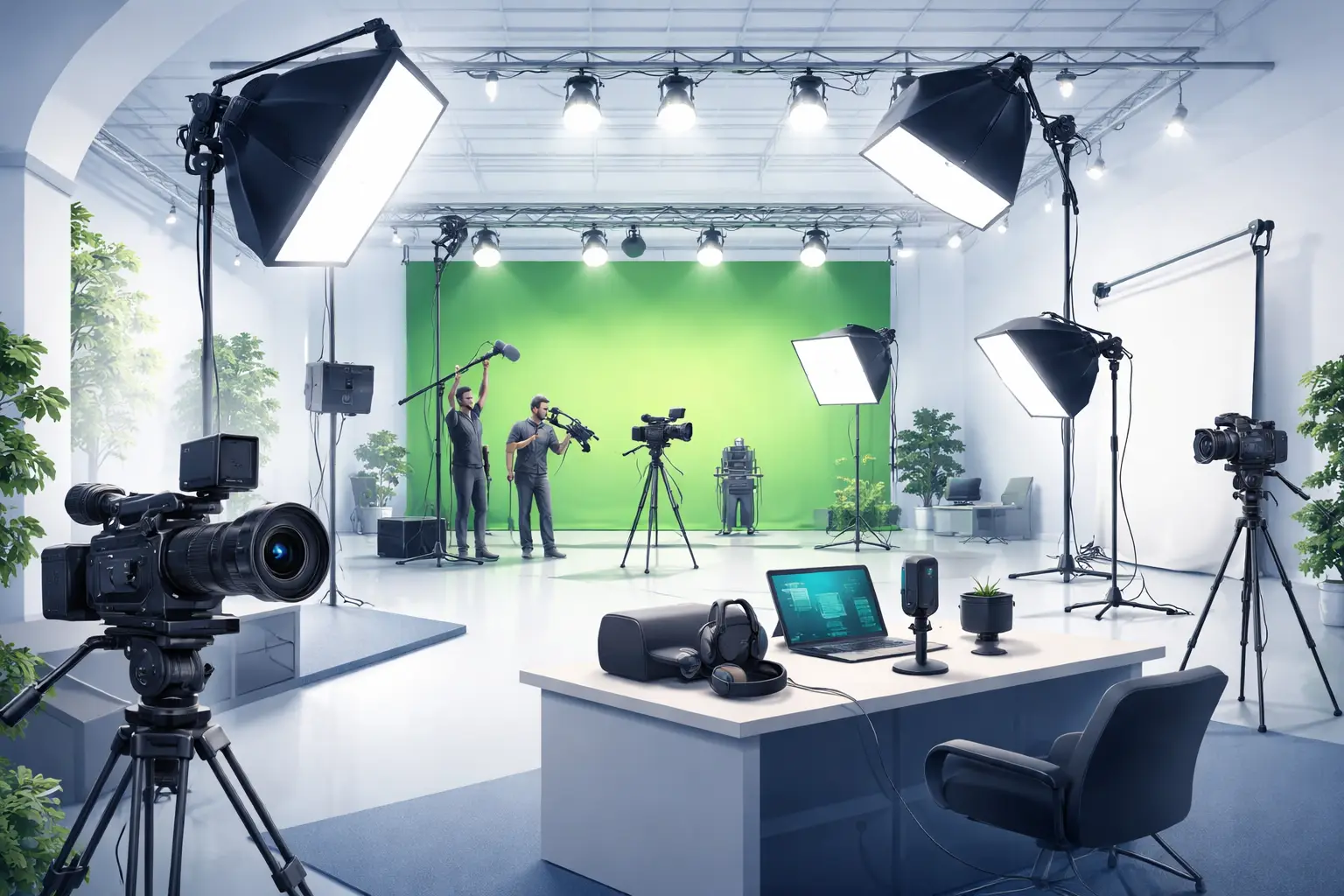
film studio London advantages at Ravenor Farm Studios
When a production brief demands flexibility, reliable technical support and a short travel time between Central London and Heathrow, hiring a multifunctional studio can save time and reduce risk. Ravenor Farm Studios in Greenford positions itself as a practical choice for film makers, photographers, podcasters and content teams seeking a single location to cover multiple production needs. This article explains the real, scenario-driven advantages of a multifunctional film and photography studio, how it changes day-to-day workflows, and practical steps to convert a studio visit into a confident booking.
Benefits of film studio London at Ravenor Farm Studios
Choosing a multifunctional site means you can move between shoots without changing locations. A film studio London that also supports photography, podcasting and live streaming reduces load-in time, lowers travel logistics and consolidates crew rates. For example, a single production day can include a morning product photography session, an afternoon corporate interview on a video set and an evening podcast recording with a live stream — all without relocating equipment across town.
How production studio hire London simplifies logistics
When you book a production studio hire London, you buy access not only to space but to known technical standards. That includes consistent power supply, stage lighting rigs, DMX patching, secure loading access and familiar floor plans that make scheduling predictable. A single site that handles multiple formats lets producers reuse grip and lighting setups, reducing downtime between setups and avoiding repeated risk assessments for each new location.
Why content studio hire London is better for multi-format projects
Content teams producing short-form video, stills and social edits benefit from a content studio hire London that offers dedicated edit bays, playback systems, and simplified data offload. Instead of relying on on-location internet or staggered post workflows, teams can ingest media, perform quick colour checks and publish near-final cuts during the same booking window.
Practical scenarios that show real advantages
Below are three common production scenarios and how a multifunctional studio improves each one.
- Commercial shoot with mixed deliverables — A brand needs hero product photography, a 90-second product video and behind-the-scenes social clips. At a multifunctional studio you can shoot stills on a small cyclorama, switch to a two-camera video rig for the hero spot and capture BTS with a compact gimbal team. The continuity of lighting and background options speeds the shoot, and a shared kit inventory reduces rental complexity.
- Documentary interview plus location cutaways — Producers capture sit-down interviews, need B-roll and require a high-quality audio recording for later voiceover. A studio with both an interview-ready set and a sound-treated podcast booth lets teams record pristine audio and video back-to-back, eliminating synchronization risks and repeated calibration of lavalier mics between locations.
- Music video day with photography and live rehearsal — A director wants staged performance footage, promo stills and a short rehearsal livestream. Using one venue reduces time lost to travel and provides a single production contact for technical coordination, staging and power management.
Technical and on-site advantages explained step by step
Multifunctional studios align infrastructure and staff so you can focus on creative decisions instead of resolving technical unknowns. Key operational benefits include:
- Consolidated kit access — Lighting, grip and camera systems stored on-site cut ordering complexity and reduce the risk of missing components on shoot day.
- Experienced in-house tech support — Technicians who understand both film and photography workflows speed troubleshooting and enable smoother transitions between formats.
- Dedicated audio spaces — A treated podcast or voice-over booth removes the need to re-treat a film set for dialog recording.
- Flexible floor plans — Adjustable cyc, configurable rigs and multiple power circuits let you stage varied scenes without costly set rebuilds.
- On-site data handling — Secure data ingest and temporary storage, with access to edit bays, accelerates dailies processing and QC checks.
How video studio hire London reduces hidden costs
While a single hire fee is obvious, the hidden costs of moving between multiple locations (transport, repeated setup, duplicated crew hours) add up. Booking a video studio hire London that supports multiple production modes minimizes those elements and shortens the production schedule.
Podcast studio hire London for creators who also need video
Many modern podcasts include video components. When you book a podcast studio hire London inside a multifunctional facility, you can record broadcast-quality audio and simultaneously capture multi-camera video without switching premises. That convergence removes the friction of coordinating separate AV teams and provides a consistent technical chain for both audio and visual deliverables.
Booking workflow and on-site coordination
Follow this practical booking workflow to reduce surprises:
- Define your deliverables and list what must be recorded together (audio, stills, video, livestream).
- Confirm technical requirements (camera formats, lens choices, lighting, power, data offload) and request the studio’s equipment list.
- Reserve contiguous time blocks that cover load-in, setup, shoot, wrap and data archiving to avoid rushed handovers.
- Request a site visit or a technician call to walk through shot plans, playback needs and any special rigging.
- Ask for on-site contacts for logistics, health & safety and equipment sign-off to ensure a single point of escalation.
On-the-day tips that save hours
- Bring labelled media and carry redundant recording media for camera and sound devices.
- Schedule the most lighting-intensive scenes first while crew energy is high.
- Use the studio’s ingest station to back up footage at lunch and at the end of the day.
- Confirm streaming bandwidth and test a dry run for any live elements before the public stream.
For creators seeking deeper guidance on podcast-specific bookings, a related post on our site covers Podcast Studio Greenford benefits and setup strategies. For photographers preparing complex shoots, consult our Photography Studio Hire London guide on the blog. If you are planning an event or a multi-day production, see our Event Venue Booking Guide West London for Productions.
Podcast Studio Greenford Benefits for Creators in West London
Photography Studio Hire London Guide for Perfect Shoots
Event Venue Booking Guide West London for Productions
Staffing and crew coordination
Because multifunctional sites host varied productions, they tend to maintain flexible staffing rosters: lighting technicians familiar with both film and photographic workflows, audio engineers who operate broadcast consoles and streaming technicians experienced with live encoders. This reduces the need to hire separate specialist teams and shortens prep times for hybrid shoots.
Measuring success after the booking
Assess the hire by these practical KPIs: adherence to scheduled turnaround (did setups finish on time?), quality of recorded audio and video (were there sync or noise issues?), and the ease of data handover (were dailies ingested and backed up according to plan?). Use those outcomes in your brief for future bookings to ensure the studio matches your production rhythm.
Diagnosis and Action Checklist
This checklist helps you verify uncertain details that typically affect bookings and technical delivery. Follow each step to gather authoritative answers.
- Unclear item — Studio equipment inventory and exact availability for your dates.
- Search for these words/sections in the studio’s official materials: “equipment list”, “kit list”, “availability” and “hire terms”.
- Collect: a dated PDF or webpage that lists cameras, lenses, lighting and audio kit; confirmation emails for equipment holds.
- Use official sources: the studio’s equipment page, a signed hire agreement or an emailed inventory from the studio’s technical manager.
- Unclear item — Power capacity and rigging weight limits for special builds or suspended lighting.
- Look for: “power”, “electrical”, “generator”, “amp”, “rigging”, “load capacity”.
- Collect: a technical spec sheet, photos of power distribution boards, or a written confirmation from the studio’s facilities manager.
- Use official sources: technical specification documents, site plans, or a facilities safety officer email.
- Unclear item — Acoustic performance of podcast/voice booths vs main stages.
- Search for: “acoustic treatment”, “sound booth”, “STC”, “noise levels”, “isolation”.
- Collect: sample recordings, booth dimensions, and any test recordings provided by the studio.
- Use official sources: technical pages, test audio files hosted by the studio, or direct sound engineer confirmation.
- Unclear item — Data handling and secure media offload procedures.
- Search for: “data ingest”, “backup”, “media transfer”, “edit bays”, “storage”.
- Collect: written ingest workflow, available connection types (USB3, Thunderbolt, NAS), and sample turnaround times.
- Use official sources: studio tech spec, service descriptions, or a technician’s confirmation email.
- How to decide between scenarios — If several scenarios are possible (e.g., bring your own kit vs use studio kit), compare:
- Time impact: total load-in and setup estimated in hours for each option.
- Cost impact: crew overtime risk and transport needs (collect quotes if needed).
- Risk factors: missing spare parts, compatibility of connectors, and data security.
- Choose the scenario with the lowest combined risk and shortest schedule impact as your primary plan; keep the alternative documented in writing.
Final recommendation
For producers needing cross-discipline capability, booking a multifunctional facility reduces friction across mixed shoots and shortens overall schedules. Use the checklist above to confirm technical specifics before booking and structure your day so that stills, video and audio tasks flow logically. When you combine a focused brief, a technician walkthrough and a clear data plan, a single hire can replace multiple location moves and simplify production delivery.