


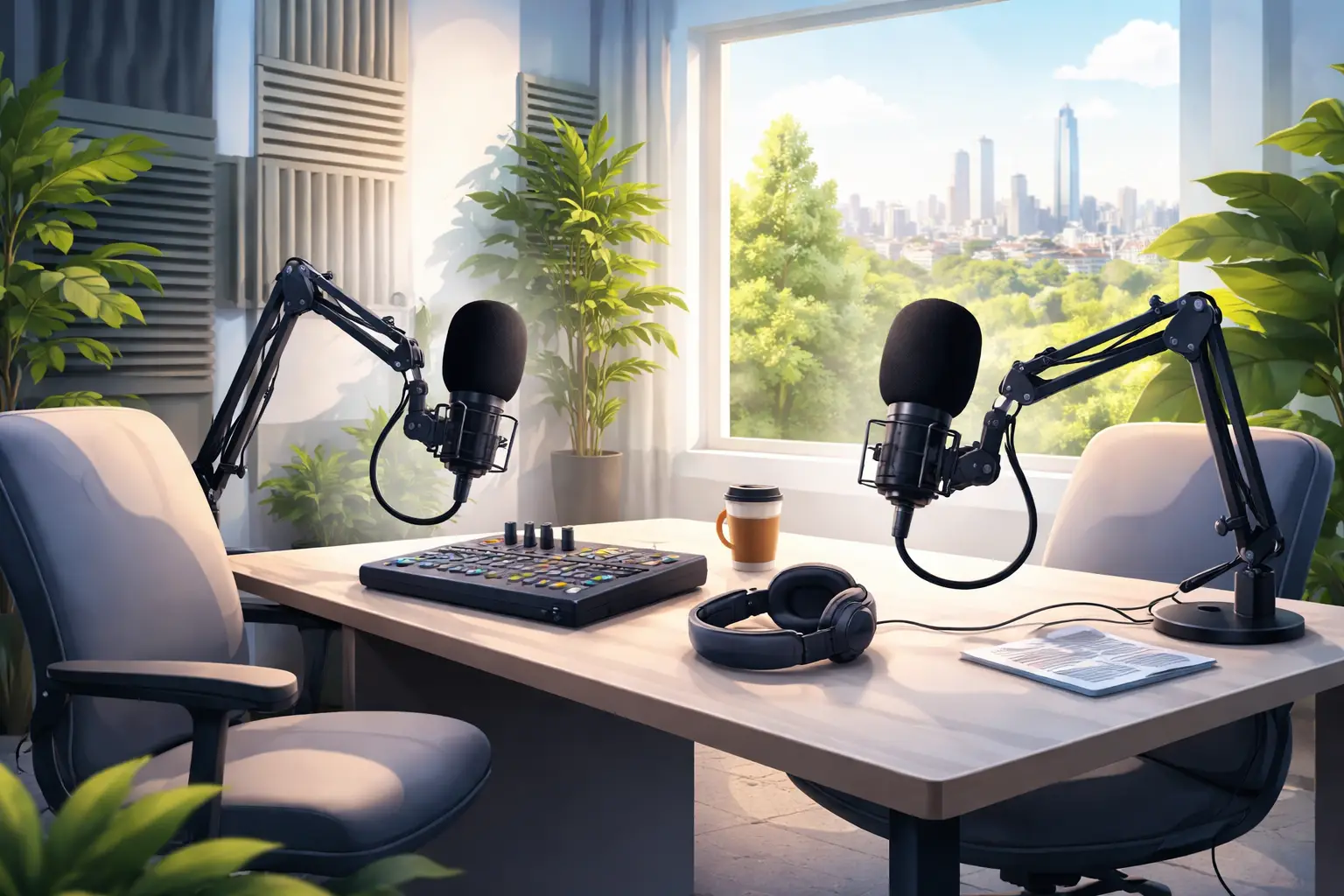
Podcast Studio Greenford Benefits for Creators in West London
Creators who move from ad hoc home setups to a dedicated, soundproof studio in West London often see immediate gains in audio quality, productivity and creative confidence. This article explains the practical benefits of booking a soundproof podcast room in Greenford, describes real-world scenarios, and gives step-by-step guidance for preparing a session so you get broadcast-level results without guesswork.
podcast studio Greenford
Booking a podcast studio Greenford removes the biggest unpredictable factor in production: environmental noise. Whether you record interviews, narrative episodes, live-stream panels or video podcasts, a properly treated space keeps traffic, HVAC hum and neighbouring activities out of your recordings. That alone reduces editing time and prevents “do-over” sessions.
1. Better audio, faster turnaround
Soundproofing and acoustic treatment mean cleaner raw files. In practice that translates to fewer passes in post, less time spent on noise reduction plugins and more time on creative choices like pacing, music and storytelling. For commercial creators and agencies, that time saved directly reduces delivery schedules and cost of post work—important when you deliver weekly shows or social media video production London projects under tight deadlines.
2. Consistent acoustics for brand quality
When you record in the same treated room each time you build a consistent sonic identity. A reliable room signature helps editors match episodes, simplifies batch processing, and maintains listener expectations. For creators producing branded content or working with marketing agencies, that consistency supports professional positioning on platforms and client pitches.
3. On-site technical support and equipment
Studio hire Greenford often includes access to broadcast microphones, mixers, monitoring and engineers. That means you can focus on performance and interview flow instead of mic placement and gain staging. If you need multi-mic setups for roundtable discussions, or video capture for social clips, the available kit and an experienced engineer speed setup and reduce common technical risks.
4. Flexible production for mixed media
Ravenor Farm Studios and similar West London facilities support more than podcasting. If your shoot needs a film studio Greenford for a linked promo, a photography studio Greenford for cover art, or post production services London to finalise a polished edit, booking a versatile venue keeps the whole workflow co-located. That saves transit time and simplifies logistics for teams and talent.
5. Controlled environment for live and hybrid events
For creators running live shows, hybrid recordings, or branded panels, a soundproof space reduces the chance of interruptions and poor audience audio. A studio with reliable internet and live-streaming infrastructure supports social media content studio London workflows and makes it easier to repurpose recordings into social clips, reels and long-form uploads.
6. Privacy, focus and performance
Many podcasters report better interviews and more focused performance away from home distractions. A booked session creates a production mindset for guest talent and hosts—improving pacing, fewer retakes and a stronger final episode. For commercial clients and course creators, that professional setting also improves perceived value.
Booking and preparing a session step by step
- Define the session goal. Single-host episode, guest interview, multi-panel discussion, or video podcast. This determines room size, mic count and whether you need a camera rig.
- Choose the right space. For small interviews a single treated booth is ideal; for multi-guest shows pick a larger control room or studio hall. Mention whether you need live-streaming or audience seating when enquiring.
- Confirm kit and support. Ask which microphones, headphone monitors, mixer or audio interface and engineer time are included. If you need camera capture for social cutdowns, request multi-camera or single-camera support.
- Send prep materials to the engineer. Scripts, episode rundown, guest bios, and timing for breaks make setup quicker and reduce the chance of technical surprises.
- Rehearse remote connections. If you record remote guests, test connections and latency before the session to avoid lost time.
- Plan deliverables. Agree on session capture formats, file naming and post production responsibilities to accelerate final delivery.
Real scenarios and example workflows
Scenario A — Solo podcaster aiming for weekly episodes: book a compact treated booth for a consistent two-hour slot each week. Use an on-site engineer for the first three sessions to lock in gain structure and monitor mixes; after that you can move to dry hire if you prefer self-managed sessions.
Scenario B — Agency producing branded audio and short social videos: combine a larger studio day for a multi-mic interview and hire camera capture for B-roll clips. Use the session to capture long-form audio while simultaneously generating punchy social media edits for campaign delivery, leveraging the venue as a social media content studio London resource.
Scenario C — Film or music teams needing multi-use space: plan a morning audio session in the podcast area and an afternoon photography or rehearsal call in the same facility. Facilities that advertise film studio Greenford and photography studio Greenford services let teams cross-use spaces efficiently.
How booking changes the economics of production
When you factor in reduced editing time, fewer re-records, faster approvals from clients and better repurposing of content into social clips, studio time often pays for itself within a few episodes. Using a content creation studio London as a centralized production base means you can consolidate crew, kit hire and post production relationships—simplifying billing and scheduling for repeat projects.
For creators who travel, Greenford’s position between Central London and Heathrow reduces transit unpredictability and makes it simpler to host visiting guests or talent arriving from outside London.
Preparing guests and hosts for a studio session
- Send a clear arrival time and parking or transport instructions.
- Provide brief guidance on clothing (avoid noisy fabrics) and bringing any notes or devices needed for the show.
- Offer a short technical check 15–30 minutes before recording to test levels and address comfort with headphones and mic technique.
Use the internal booking link to review studio hire options and technical briefs before you confirm a date. If you need guidance specific to podcast setup or package inclusions, consult the facility’s podcast booking page for standard inclusions and optional upgrades.
You can read a practical guide to booking and optimising sessions in our related post Podcast Studio Hire West London for Professional Creators and learn about photography prep in Photography Studio Hire London Guide for Perfect Shoots.
Diagnosis and Action Checklist
If you need to verify specific room performance, equipment capability or service inclusions, follow this checklist step by step.
- What is uncertain
- Whether the room’s sound insulation and acoustic treatment meet your needs for the intended recording type.
- Exact equipment model availability and whether on-site engineering time is included.
- Internet upload stability for live streaming or remote guest feeds.
- Availability of combined services (for example, photography, film or post production on the same day).
- Where to look in official sources
- Search the studio’s technical spec sheet or facility PDF for terms: “sound insulation”, “acoustic treatment”, “control room”, “ISO booth”, “microphone list”, “engineer included” and “internet bandwidth”.
- Check the facility’s booking terms and equipment rider for exact inclusions and any listed upgrade packages.
- Look at the studio’s gallery and session walkthroughs for photos or video that show mic placements, cabling and physical room dimensions.
- What to measure or collect
- Request the studio’s technical spec sheet and equipment list as a downloadable file or email attachment.
- Collect sample audio files recorded in the room (if available) or ask for a short test recording with your remote guest to evaluate room sound.
- Run a short pre-booking test call to check the on-site internet connection and remote guest latency.
- Document booking terms that specify engineer hours, setup time, and cancellation or rescheduling rules.
- How to distinguish likely scenarios
- If the spec sheet lists professional microphones, an audio interface and engineer hours, you can expect studio-managed sessions with technical support.
- If the listing shows only room dimensions and “dry hire” wording, plan for self-managed sessions and bring your preferred kit and operator.
- If sample recordings or walkthrough videos show visible acoustic panels, bass traps and a staffed control room, the space is suited to broadcast-style production and multi-mic setups.
- For streaming, a successful pre-booking test with the same remote configuration you plan to use is the best indicator of reliable performance on the day.
Next steps and practical tips
When you’re ready to book, outline your session goals, participant list and deliverables in the enquiry. Ask for a written equipment list and a slot to run a technical check before the paid session. If you frequently produce mixed-media content, prioritise studios that list film studio Greenford and photography studio Greenford capabilities so you can centralise shoots and reduce transit time.
Moving from a noisy home setup to a professional podcast studio Greenford transforms both the technical quality and the creative process. For creators aiming to scale, improve client confidence, or speed up social media video production London workflows, a dedicated studio is an investment that streamlines every step from capture to publish.
If you want actionable help planning a session at Ravenor Farm Studios, request a consultation through the studio’s booking page and include a brief of the episode format, approximate run time and any camera or streaming needs.