


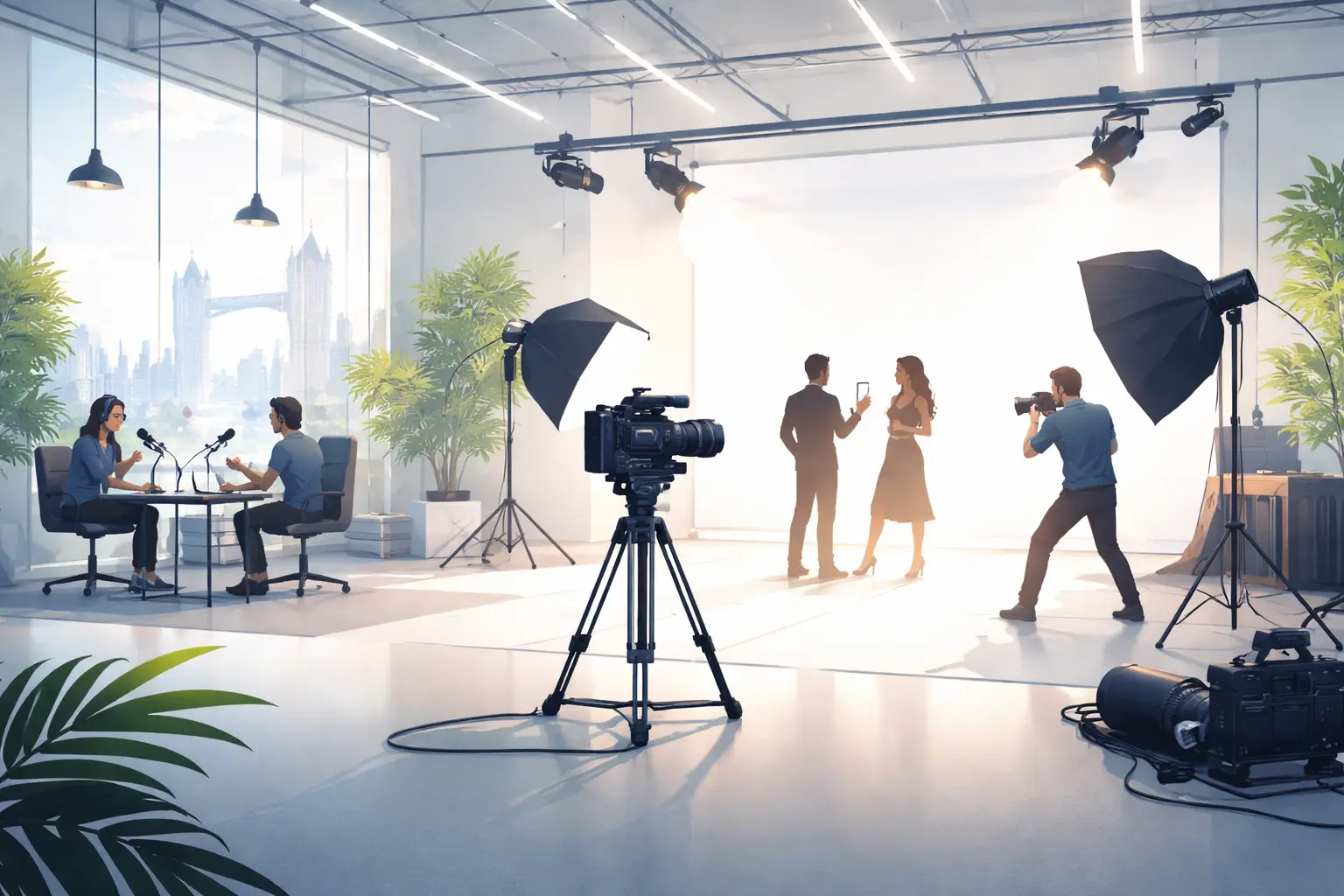
Film studio London advantages for indie projects in West London
Independent filmmakers often work with tight budgets, compact crews and ambitious creative goals. Hiring a professional studio can transform a modest production into something that looks and feels far bigger. This guide explains how studio hire in West London can help independent film projects with practical, scenario-based steps you can apply at pre‑production, shooting and post stages. Where relevant, I refer to local benefits around Greenford and general studio capabilities you should expect from a production studio hire London facility.
Why choose a film studio London base for a small crew
Using a dedicated space gives you control: consistent lighting, sound isolation and predictable power — things that reduce shoot days and post costs. For example, a two‑day interior shoot that would take four days on location because of daylight changes and noise interruptions can often be completed in two days in a studio through controlled lighting and a prepared set. That time saving translates directly to lower rental, crew and equipment costs.
Key production advantages and scenarios
1. Predictable lighting and faster setups
When you hire a photography studio London or film studio London you gain access to rigging points, blackout facilities and professional lighting grids. Scenario: you need to shoot an evening interior scene and a morning breakfast scene. In a studio you can set both and switch lights quickly, avoiding repeated location move-ins and repeated permits.
2. Sound control and recording options
Noise is a common independent production killer. A podcast recording studio London or a multi-use studio space eliminates street noise and gives you options for professional on-site audio recording. If your project requires post-dub or ADR on the day, check the studio offers isolated booths or adjacent podcast studio London spaces to minimise turnaround time.
3. Access to kit and technical support
Independent crews often travel light; hiring a production studio hire London facility often includes camera packages, lighting, grip, grip trucks and technical staff. That access reduces logistics complexity: instead of sourcing multiple suppliers, you can book gear and technical assistance in one place. Example: a small crew saving a day of time because a studio grip team handled a complex rigging task.
4. Scalable set builds and storage
Studios provide space for building and storing sets between shooting days. If you are shooting multiple sequences with the same set dressed differently (e.g., a living room through three decades), a photography studio London or film studio London lets you keep elements in place and return quickly between shoots. This reduces strike and rebuild time.
5. Controlled environment for VFX and green screen
For projects using green screen or controlled VFX plates, studio hire removes variables like changing sunlight and reflections. A controlled space speeds up visual effects workflows and lowers the number of takes needed for clean keys.
Operational benefits that save money and time
- Consolidated logistics — single site for kit, crew and catering reduces travel time and parking complexity.
- Flexible booking — hire hourly or daily to match production tempo and avoid paying for unused location time.
- On-site technical knowledge — experienced studio staff can advise power, rigging and camera placement, reducing risk of errors that cause reshoots.
- Insurance and safe working — studios commonly have safety procedures and space risk assessments available to integrate with your production insurance.
How to plan a studio day for an indie film shoot
- Pre-production walkthrough: reserve a time at the studio to walk the space with your DP, gaffer and production manager. Confirm rigging points, door sizes for set pieces and access for vehicles.
- Technical rider and power load: create a simple technical rider listing major lighting and camera power draws so the studio can confirm distribution and bring extras if needed.
- Schedule with buffer: plan a realistic call sheet with setup, camera rehearsals and contingency for unexpected rigging. Studios reduce many unknowns, but you should still allow time for fine adjustments.
- On-call technical support: agree who on the studio side will be available for electrical, rigging or sound issues and include their contact on the call sheet.
- Storage and strike plan: allocate space and time for set storage between days and a final strike so the venue can schedule other clients accordingly.
Production case studies and quick examples
Scenario A — Low budget narrative short: A director with a crew of six needed three interior locations. Hiring a single studio allowed a room to be dressed three ways and shot over two days rather than booking three separate locations. The result saved on location fees and travel time.
Scenario B — Music video with practical effects: The team used a film studio London space to rig overhead motion rigs safely and to control smoke and lighting. On-site technical support reduced risk and allowed a tight turnaround for multiple camera setups in one day.
Choosing the right studio and what to ask
When evaluating options, shortlist studios that can demonstrate relevant experience and technical capability. Ask for:
- Floor plans and rigging specs (height, grid load limits).
- Power distribution details and breaker layouts.
- Sound treatment and test recordings if audio is important.
- In-house kit lists and any preferred suppliers they work with.
- Previous projects or showreels that match your production scale.
If you need photography services as well, look for venues that advertise photo studio hire London or photography studio London capabilities so the same space can serve dual purposes without moving gear.
How Ravenor Farm Studios fits West London productions
Ravenor Farm Studios in Greenford offers a practical location between Central London and Heathrow, suited to productions that need quick airport access or reduced travel time for cast and crew. Their combination of flexible spaces, dry hire and technical support is designed for filmmakers, podcasters and photographers who need a single reliable base for production or hybrid shoots. For podcast-focused shoots, availability of podcast recording studio London or adjacent podcast studio London facilities speeds audio workflows and keeps schedules tight.
If your project mixes photography and moving image, a venue that offers both photography studio London and film studio London capabilities will reduce changeover time and vendor coordination.
Budgeting tips when hiring a studio
Break costs into clear categories: space hire, tech support, equipment rental, and ancillary services (catering, parking). Negotiate a package where possible: multi-day rates, bundled kit and staff time can provide savings. Also plan for contingency days — a single extra day in a controlled studio is usually cheaper than unscheduled reshoots on location.
Practical checklist for a successful studio booking
- Confirm door dimensions and load-in logistics for your largest set piece.
- Get a printed rigging and power diagram from the studio and circulate to department heads.
- Schedule a sound check during the same weekday/time as your shoot to replicate expected ambient noise conditions.
- Ask for on-site technical contact details and confirm turnaround time for technical interventions.
- Document storage needs and clear any local rules about overnight storage or vehicle parking.
Diagnosis and Action Checklist
- What is uncertain: studio power capacity, rigging load limits, local noise restrictions, required permits for overnight vehicle parking, and exact kit availability for your shoot.
- Where to look in official sources: search the studio’s technical specification or facilities page for terms like “power distribution”, “load capacity”, “rigging points”, and “sound insulation”; consult the venue’s booking contract for “noise policy” and “vehicle access” clauses.
- Data to collect or tests to run:
- Ask the studio for a detailed power schedule and measure your department’s total amperage needs (list each lamp, camera, monitor with wattage/amp values).
- Obtain a floor plan with heights and rigging load ratings and list all set-build weights to verify against rated loads.
- Request or perform a site sound test at anticipated shoot times and record ambient dB levels for 10–15 minutes.
- Photograph access routes (doors, corridors) with a tape measure to confirm fit for largest props or set pieces.
- How to distinguish plausible scenarios:
- If measured power demand is less than the studio’s rated distribution by a comfortable margin, you can plan normal operations. If demand approaches the rated limit, arrange a dedicated distro or stagger lighting use.
- If rigging loads exceed rated capacities, plan to reduce suspended weight or request certified riggers and alternative anchor points from the studio.
- If ambient noise tests exceed acceptable levels for dialogue recording, schedule shoots for quieter times or reserve an isolated booth or a podcast recording studio London space for audio capture.
- If vehicle access measurements show the largest vehicle won’t fit, communicate early to the studio to arrange alternative load-in via smaller vehicles or temporary removal of doors/panels.
Related reading and next steps
To explore booking logistics and specific hire options at Ravenor Farm Studios, see the studio’s guides for booking and related hire pages. For focused needs, consult pages on photography and podcast facilities, or read case studies on affordable filming options in West London to compare outcomes and pricing approaches.
Suggested internal reads:
- photo studio hire London at Ravenor Farm Studios West London
- Podcast Studio Greenford for Professional Audio Production
- Filming Studio Hire London Affordable Options in West London
- Studio hire West London near Heathrow for media production
Hiring a studio is an investment in predictability. For independent film projects that need quality results on tight schedules, the right studio in West London will cut risk, simplify logistics and give your production room to focus on storytelling.