


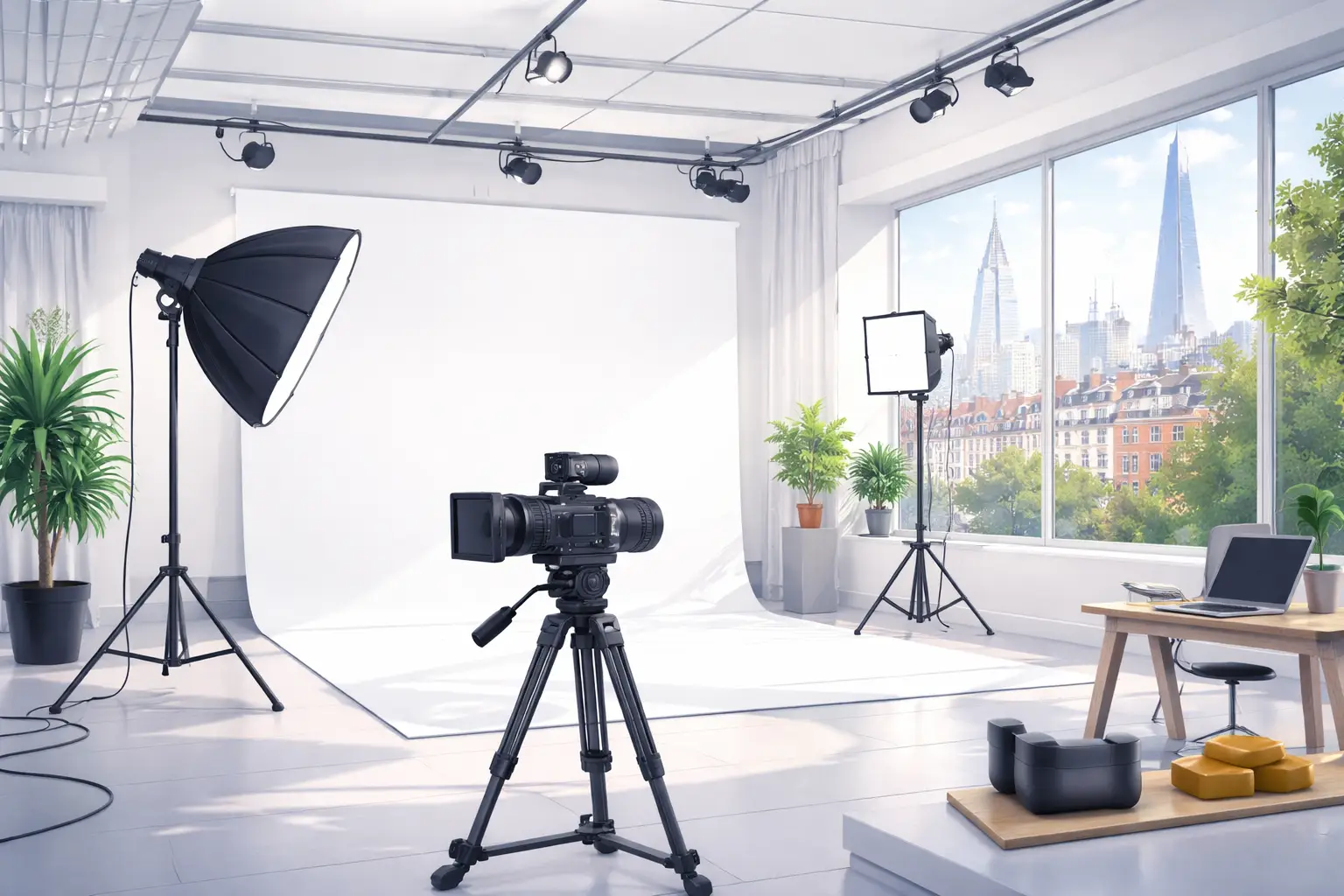
Filming studio hire London that fits your West London shoot
Choosing the right studio for content creation in West London is more than location and price—it’s about matching space, acoustics, power, access and crew workflow to the creative brief. This guide walks producers, creators and agencies step-by-step through practical checks and scenarios so you can book a space that reduces friction on shoot day and raises production value. Examples and checklists reflect professional needs for filming, podcasting, photography and live streaming at Ravenor Farm Studios in Greenford and similar West London facilities.
filming studio hire London checklist for producers
Start with the brief: determine what the shoot absolutely needs (size, background, sound control, lighting rigs, catering, audience). Use the checklist below to translate those needs into measurable studio requirements.
Space and set requirements
- Measure the required floor area and ceiling height for sets, cranes, dollies and grip wings. If you need cyc walls, confirm wall dimensions and corners.
- Plan load-in and set build time—ask for exact door dimensions and load-in bay specs so your truck and rigging fit on arrival.
- If you plan product shots, check whether the studio supports product photography setups and has backgrounds and copy stands available.
Technical and power needs
- List mains distribution requirements: total amps, single-phase or three-phase, and preferred distro panel locations.
- Confirm available rigging points and safe working loads if you will hang lights, speakers or a green screen rig.
- Check whether on-site technical support or a stage manager is available for camera, lighting and sound coordination.
Acoustics and sound control
- For podcasts, voiceovers and live streaming, verify soundproofing, HVAC noise levels, and whether isolation booths or treated rooms exist.
- Test for noise bleed from neighboring areas—this is critical for multiroom facilities where events may run simultaneously.
Equipment and rental options
- Decide what you will bring vs. what to rent from the studio: cameras, lenses, grip, lighting, audio consoles and streaming encoders.
- If you need broadcast or multi-camera live streaming, confirm available kit and whether the studio supports encoder setup and dedicated upload bandwidth.
Support services
- Check catering, waste handling, security and parking for crew and talent.
- Ask whether a rehearsal day is available and if dry hire options exist if you prefer to bring your own team and equipment.
Common production scenarios and recommended studio choice
Different projects demand different studios. Below are typical scenarios and the studio attributes to prioritise.
Small interview or podcast episode
- Prioritise soundproof studio spaces, comfortable seating, and simple lighting setups. A treated room or a podcast studio with isolation is ideal.
- Example focus: filming location London options with easy parking and short load-in for compact crews.
Commercial photography or product work
- Product photography benefits from controlled lighting, backgrounds and a photography desk/shot table. Check availability of power and tethering points for studio computers.
- Search for product photography studio hire London when you need dedicated photography kit and cyc walls.
Music video or complex shoot
- For choreography, moving camera rigs and live playback, pick a large, clear-span studio with high ceilings, rigging points and good backstage areas.
- Use music video studio hire London queries if you require staging, band monitoring, and multi-room production flow.
Operational checks to run before booking
Before confirming a date, run these operational checks with the studio manager and include them in your production schedule or rider.
- Confirm exact access times for load-in, setup, rehearsal and strike.
- Request a floor plan, power map and photo of the studio empty and with a standard set-up.
- Ask for a point of contact for technical questions during the week leading up to the shoot.
- Request clear policies on overtime, damage liabilities and cancellation terms in writing.
Diagnosis and Action Checklist
This checklist helps you resolve common uncertainties without guessing. Follow each step and collect the specified evidence to make a confident booking decision.
-
Uncertainty: Is the studio acoustically suitable for voice recording?
- Search terms in official source: “room acoustic treatment”, “reverberation time”, or “sound insulation” on the studio’s technical spec or facility PDF.
- Data to collect: ask the studio for a noise report, an audio sample recorded on-site, HVAC dB level at idle, and whether rooms are treated with absorptive panels.
- Testing: schedule a short on-site visit and record a sample voice take using your mic and recorder to check for background noise and reverb.
- How to decide: if the sample shows minimal background noise and acceptable clarity for your project, proceed. If not, request an isolation room or consider a different space.
-
Uncertainty: Will power capacity support my lighting and grip load?
- Search terms in official source: “power distribution”, “amperage”, “three-phase power” on studio technical specs or equipment pages.
- Data to collect: total wattage of lamps and dimmers, peak current draw of cameras, and the studio’s supplied amps per circuit.
- Testing: request a power map and confirm sockets and distro points; if possible, run a load test during a rehearsal day.
- How to decide: match your peak draw to studio capacity with margins; if insufficient, request additional distro or generator options.
-
Uncertainty: Do I need permits for filming at the location?
- Search terms in official source: the local council or “filming permission” pages for the London borough where the studio sits.
- Data to collect: whether the studio holds standard film permits, event licences, or requires street closures; collect contact details for the studio’s permit liaison.
- Testing: contact the studio’s production coordinator to confirm whether the studio handles permits or if you must apply directly.
- How to decide: if the studio manages permits, request written confirmation; if not, follow the council’s guidance and timeline to apply.
-
Uncertainty: Is the space suitable for live streaming with reliable upload bandwidth?
- Search terms in official source: “upload speed”, “network SLA”, “streaming encoder support” on the facility’s tech spec.
- Data to collect: measured upload bandwidth, presence of wired Ethernet, number of concurrent streams supported and on-site IT contact.
- Testing: request a speed test from the studio at typical weekday hours and, if possible, a short streamed rehearsal.
- How to decide: accept if sustained upload meets your stream bitrate plus overhead; otherwise arrange a dedicated line or alternative venue.
Booking workflow and day-of production plan
Follow this practical workflow to turn a shortlist into a confirmed booking and smooth shoot day.
- Shortlist 2–3 studios that meet the brief. Request floor plans, equipment lists and a contact for technical queries.
- Run a site visit with key crew: technical director, line producer, director of photography and production designer.
- Compile a production rider that includes access times, power requirements, parking and load-in plan; send it to the studio 10–14 days before the shoot.
- Schedule a tech rehearsal or dry hire day if the show requires complex rigging, camera moves or audio routing.
- Confirm final crew list, call times, and emergency contacts 48 hours before the shoot.
Equipment and crew checklist for content shoots
Keep this concise checklist to share with your studio contact and crew.
- Cameras, lenses, mounts, batteries and chargers
- Grip and lighting kit, softboxes, stands and gaffer supplies
- Audio: microphones, booms, recorders, headphones and spare XLR cables
- Power distro, extension cables, UPS for critical devices
- Playback and monitoring: clients often require a calibrated monitor and comfortable viewing area
- Streaming: encoder, wired Ethernet, and a test stream set for the rehearsal
For photography-specific bookings, search or mention product photography studio hire London when you request background sizes, table stands and tethering points. For larger narrative shoots, use film location hire London and filming location London queries when talking to location managers or local production services so they understand you need full production logistics and possibly space for cast and props. If you are a music video team, include music video studio hire London in your initial brief so the studio can advise on performance areas, playback systems and sound monitoring.
Ravenor Farm Studios in Greenford offers flexible spaces and production support tuned to West London needs: large clear-span rooms, podcast booths, photography setups and dry hire options that serve creators, agencies and production companies. For a focused look at photography-specific facilities, see the studio’s booking notes on photo studio hire London at Ravenor Farm Studios West London. To understand the advantages for indie film projects in the area, review practical tips at Film studio London advantages for indie projects in West London.
Final decision guide
Rank candidate studios by how many critical checkboxes they pass (space, power, sound, access, support). A studio that meets at least 80% of the must-have list and offers clear mitigation plans for remaining gaps is typically the best practical choice. Prioritise a clear technical contact and a signed hire agreement with the operational details you need.
Using the steps in this guide will reduce last-minute surprises, protect your production schedule, and help you choose a studio that supports creativity and reliable delivery for content creation in West London.