


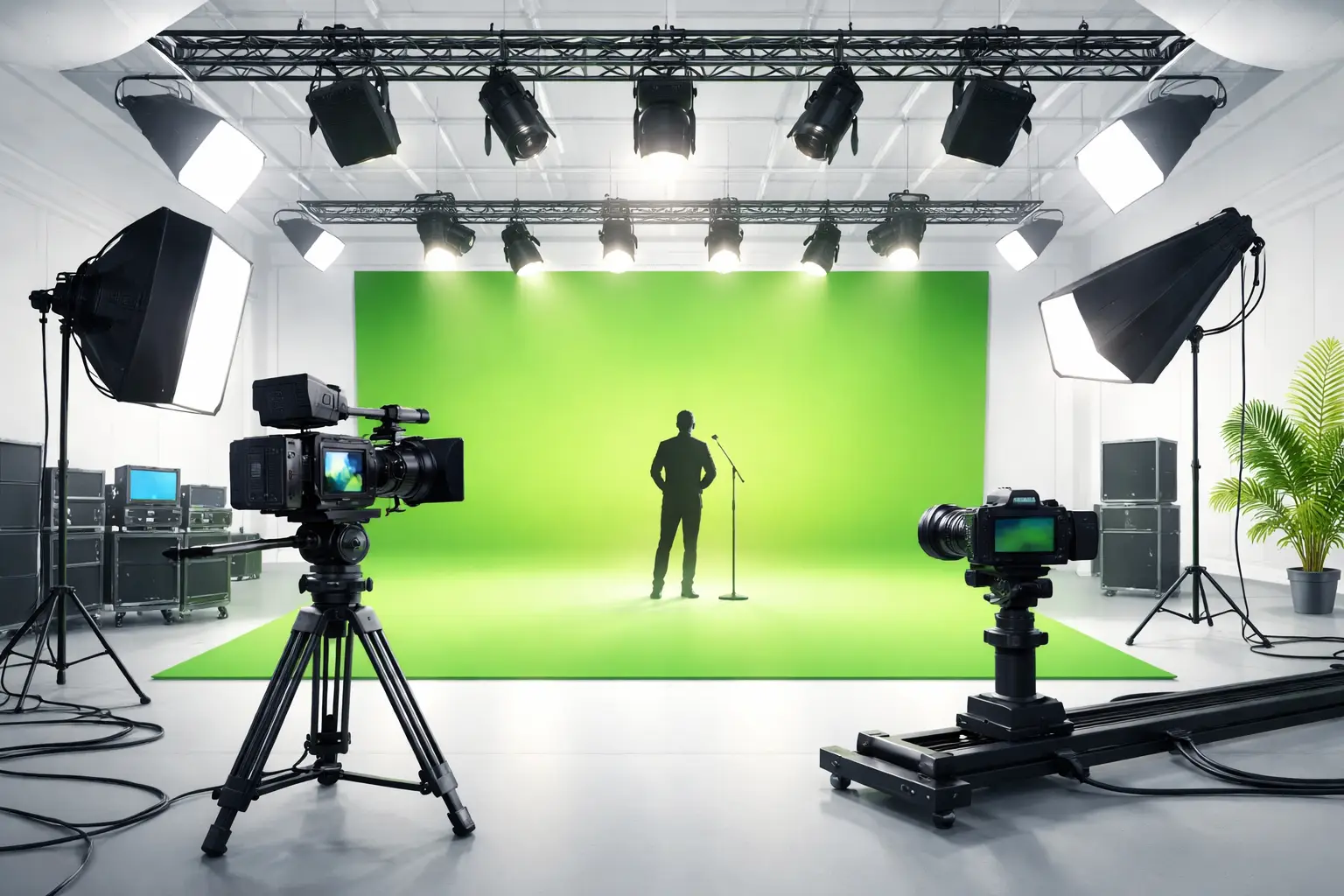
Music Video Studio Transformation at Greenford Studios
Turning Ravenor Farm Studios in Greenford into an ultimate music video production space requires a production-first plan that balances creative flexibility with technical reliability. This guide walks through practical, scenario-based steps: planning the floorplate and zoning, preparing acoustics and power, choosing lighting and camera workflows, and packaging services so you can offer dry hire studio London clients, full technical crew bookings, or hybrid options for bands and filmmakers.
Start with a clear production brief and zones
Begin by defining three core zones for a typical music video shoot: a main performance set, a green screen area for visual effects, and a technical control area for video playback, streaming and monitoring. Depending on the script and choreography, reserve adjacent space for dressing, makeup and equipment storage so video setups don’t block artist movement.
Example scenario: a one-take performance with camera tracking. Prioritise clear sightlines for the track, plan lighting rails to avoid shadows on the lenses, and allocate a separate audio booth for scratch vocals or live monitoring. For clients focused on imagery, advertise capabilities for product photography studio hire London or commercial photography studio London bookings alongside music video packages.
green screen studio hire London setup
If you plan to offer green screen shoots, design the area for seamless chroma-keying. Use a single-color cyclorama with even lighting and no visible seams. Build a modular rig so panels can be moved to create different lens distances and background sizes without repainting a permanent surface. Include blackout options to control spill and professional-grade LED fixtures that provide soft, even coverage for both talent and background.
Practical layout steps
- Mark the safe shooting footprint on the floor and map where stands, rails and camera tracks will go.
- Designate at least one wall or freestanding rig that can be repainted or replaced with alternative backdrops fast.
- Plan cable runs to the technical area so camera and audio feeds are tidy and accessible to the vision mixer or director.
Acoustics and soundproofing for music shoots
For live vocal takes or scratch tracks recorded on set, minimise noise and reverb. Present soundproof studio hire London options by combining temporary absorbers with dedicated isolation booths. Use movable bass traps and absorption panels to shape room tone for both on-camera performance and playback monitoring.
On-set audio workflow
- Use a dedicated talkback feed between control and performance zones.
- Separate playback speakers from on-camera microphones to prevent bleed—use timecode and in-ear monitoring for performers when necessary.
- Route multichannel audio to the control area and record isolated stems so editorial has clean files for mix.
Lighting, grip and rigging for cinematic looks
Design rigs that support quick reconfigurations: overhead grids for soft key lighting, C-stands for practicals, and scaffold points for heavy fixtures. LED sources with adjustable colour temperature speed up setup and reduce heat on talent. Include flags, nets and diffusion for contrast control, and plan dimmers or remote control systems to enable program changes from the control area during rehearsals.
Example lighting scenarios
Scenario A — High-contrast dramatic clip: use focused fresnels or ellipsoidals for rim light and narrow beams, paired with softbox key that can be lowered to change falloff during successive takes.
Scenario B — Dreamy, music-driven montage: use wide soft sources and low-frequency flicker units for atmosphere, combined with haze machines managed from the tech area for depth.
Camera, lenses and capture workflow
Plan camera positions to maximise coverage with the fewest setups. Use a primary camera on a dolly or remote head, a second locked-off wide, and a handheld or gimbal for dynamic inserts. Capture a clean ISO on each camera when possible and sync everything to timecode for post. Create a simple paperwork checklist for the DIT: lens metadata, frame rates, codec choices, and backup drives ready to ingest at the end of the day.
live streaming studio London capability
Many bands and labels expect multi-platform livestreams. Build a small broadcast rack with an encoder, a hardware or software vision mixer, and a dependable network connection. Offer packages that combine multi-camera switching with live graphics and a director to operate cuts and mixes. Promote Ravenor Farm Studios as suitable for live streaming studio London clients who need both creative staging and technical reliability.
Network and redundancy
- Provide at least one dedicated wired connection for the encoder and a secondary failover if available.
- Run regular bandwidth tests before a paid stream and include a rehearsal slot in the booking.
Dry hire and flexible bookings
To appeal to a broad market offer dry hire studio London where producers can bring their own crew but rely on studio infrastructure: lights, grip, sound playback, dressing rooms and a safe load-in procedure. List clear kit inventories so clients know what’s available and which extras require a technician.
For photographers and commercial shoots, promote product photography studio hire London and commercial photography studio London alongside music video packages. A flexibly configured cyc or backdrop wall that works for both music shoots and product photography increases booking opportunities.
Production staffing and day plans
Create scalable crew packages: minimal (studio manager and tech), standard (DoP, gaffer, sound, stagehand), and full-service (director, producer, editor, live-stream tech). Pair each package with a sample day plan that outlines setup, rehearsal, camera blocking, takes, and wrap to help clients visualise the schedule and estimate turnaround time for post-production.
Health, safety and logistics
Plan for safe rigging, load-in routes and emergency access. Keep a named health-and-safety contact on every booking and ensure duty holders are briefed on fire exits and electrical isolation points. For shoots with smoke, moving sets or elevated platforms, schedule a technical rehearsal and capture a signed risk assessment from the client.
Editing, grade and delivery workflows
Offer an end-to-end route: dailies ingest, offline edit, color grade and online deliverables. Make it clear what the studio provides in-house and what is subcontracted. For clients who need fast turnaround, offer expedited edit blocks and clear transfer procedures for assets and LUTs.
Internal resources and related services
For more on choosing the right studio layout and bookings, see our guide to studio hire in Greenford and content creation workflows: Studio Hire Greenford for Content Creation and Production. If commercial shoots are part of the brief, our photography guide explains setup considerations: Photography Studio Hire London Guide for Perfect Shoots. For location and logistics planning, read: Filming Location London Guide for Studio Hire in Greenford. For creators who also host audio projects, our podcast facilities are detailed here: Podcast Studio Hire West London for Professional Creators. To support broadcast-style shoots, review our broadcast options: TV studio hire London choose the right broadcast studio.
Diagnosis and Action Checklist
This checklist helps resolve common uncertainties when converting a studio to a full music-video facility. Use it step by step and collect the specified evidence before you confirm bookings or make structural changes.
-
Uncertain item: Structural rigging points and ceiling load capacity.
- Search terms in official sources: “structural engineer report”, “roof loading capacity”, “building control certification”.
- What to measure/collect: ceiling joist spacing, existing rigging anchor data, measured point loads and sketches of proposed fixture positions.
- Which official sources to consult: a qualified structural engineer report, local authority building control records, and manufacturer’s rigging specifications.
- How to decide scenarios: if engineer confirms rated load for hanging lights and track, proceed; if not, install independent scaffold or ground-supported truss systems.
-
Uncertain item: Electrical supply capacity for lighting and stage equipment.
- Search terms in official sources: “electrical load assessment”, “consumer unit rating”, “Part P electrical safety”.
- What to measure/collect: breaker ratings, number of dedicated circuits, single-phase or three-phase supply details, planned fixture power draw list.
- Which official sources to consult: certified NICEIC or NAPIT electrician report, equipment datasheets, and building service records.
- How to decide scenarios: if electrician confirms adequate circuits, schedule installations; otherwise plan temporary distro with certified power distribution units or upgrade supply via building services.
-
Uncertain item: Acoustic performance and suitability for recording.
- Search terms in official sources: “sound insulation rating”, “acoustic treatment specification”, “BS EN acoustic standards”.
- What to measure/collect: room impulse responses, reverberation and noise floor measurements, sources of external noise during representative hours.
- Which official sources to consult: acoustic consultant reports, manufacturer specs for absorbers and doors, and local authority planning if external noise is a concern.
- How to decide scenarios: if measurements show problematic noise or reverb, implement staged treatment (temporary absorbers, isolation booths) or schedule live vocals in controlled hours.
-
Uncertain item: Network bandwidth and streaming reliability.
- Search terms in official sources: “internet speed test”, “uplink bandwidth”, “ISP SLAs”.
- What to measure/collect: sustained upstream throughput tests from the studio, traceroutes during peak hours, and evidence of previous stream performance if available.
- Which official sources to consult: ISP service agreement, internal IT logs, and encoder manufacturer recommendations for bitrate.
- How to decide scenarios: if sustained upstream bandwidth meets combined bitrate needs plus headroom, greenlight streaming; if not, schedule lower resolution streams or arrange temporary dedicated connections.
Wrap and client-facing offer
Package clear options: dry hire studio London listings with kit inventories, full technical days with crew, and combined live-stream packages. Emphasise turnaround pathways for edit, grade and delivery. Use rehearsals to lock technical needs ahead of production and include a pre-shoot technical meeting as part of every booking to confirm load-in, parking and logistics.
Ravenor Farm Studios’ location in Greenford positions it well for bands and production teams travelling between Central London and Heathrow. Present flexible packages, clear technical briefs and a confident production workflow to convert enquiries into bookings and to make the studio a dependable choice for music video producers.